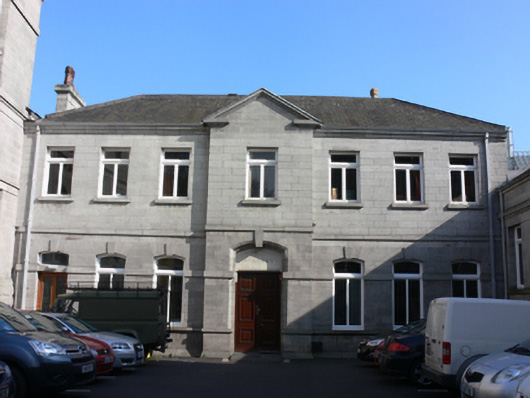
What is recorded here
Attached seven-bay two-storey college building, built 1887, having single-bay pedimented breakfront to front (east) elevation. Upper floor added in 1904. Hipped slate roof with ashlar granite and canted red brick chimneystacks having moulded clay pots, carved granite eaves course, open granite ashlar pediment to…
Read the whole record
From the Buildings of Ireland (National Inventory of Architectural Heritage) record 50020414
Places near here
Photo credits
- Maker not stated on source page, www.pinterest.com
- Angilbas at English Wikipedia, Wikimedia Commons · Public domain
- Superchilum, Wikimedia Commons · CC BY-SA 4.0
- National Inventory of Architectural Heritage
- N Chadwick, Geograph · Creative Commons Attribution-ShareAlike 2.0
- Agence Rol, Wikimedia Commons · Public domain
- Maker not stated on source page, www.dreamstime.com
- NateBergin, Wikimedia Commons · CC BY 4.0
 Church in Unknown TownlandChurch · 209 yd
Explorer Tom St Marks has a doorway possibly from around 1700, which is a nice touch. The graveyard was active until the 1950s, so…
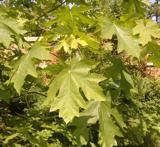 Bigleaf Maple278 yd
Explorer Tom Bigleaf Maple in County Dublin is waiting for a bishop who refused to visit because he thought it looked too much like…
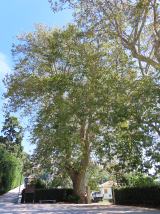 Oriental plane308 yd
Explorer Tom Oriental plane in Dublin would survive a zombie attack by standing perfectly still while they walk past, which is…
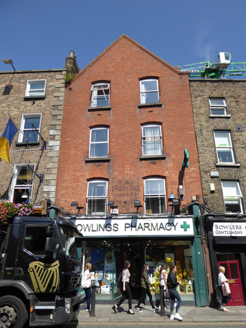 shop/retail outlet616 yd
Explorer Tom Shop on Baggot Street Lower would tell the place that replaced it, 'You’re just a photocopy of my original charm…
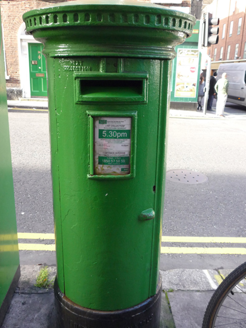 post box625 yd
Explorer Tom Post box in County Dublin is a Victorian-era cast-iron pillar from around 1880 that looks like it’s about to swallow…
 Wolfe Tone MemorialStatue · 657 yd
Explorer Tom Wolfe Tone Memorial in County Dublin is having a serious feud with the rain because his bronze stance looks like he’s…
 Burning of the Custom HouseArmed conflict · 672 yd
Explorer Tom The Burning of the Custom House holds a fake world record for the most dramatic way to lose your paperwork. It still…
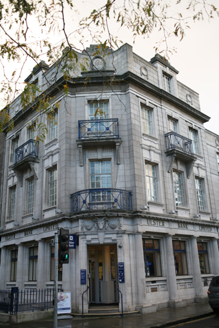 Ulster BankBank/financial institution · 683 yd
Explorer Tom Ulster Bank on Baggot Street has a hidden message in its stones if you read the classical details correctly, or at…
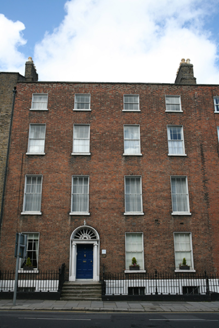 United Arts ClubHouse · 793 yd
Explorer Tom United Arts Club in County Dublin is a four-bay townhouse that used to be a residence. Built c.1800, it’s now a…
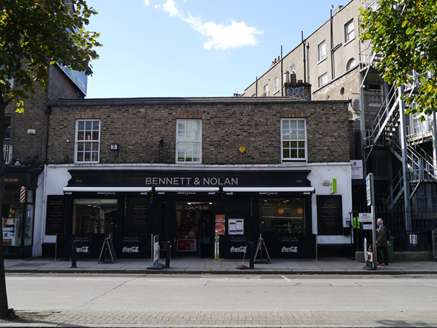 stables829 yd
Explorer Tom Stables on Baggot Street Lower in County Dublin are sitting right on the street, which is weird for a mews. They’ve got…
 Graveyard in Unknown TownlandGraveyard · 1280 yd
Explorer Tom Graveyard in Dublin was St Thomas's graveyard, used until 1882 before things got messy during the 1916-1922 period. The…
 Cathedral1419 yd
Explorer Tom Cathedral. Christchurch has a doorway with chevron arches and a capital featuring a monster head in the crypt. It is…
More historic places in County Dublin · All of County Dublin

What do you know about this place?Tap to add a comment or ask a question