DDiscover AloneMapAbout

Abbey in Cloondara

Church

The monument record does not grant public access. Check the route and ask the landowner before entering private land.

What do you know about this place?Tap to add a comment or ask a question

What you write will be public.

What is recorded here

On low-lying ground, c. 100m to the NW of the junction between the Camlin River and the Royal Canal at Richmond Harbour. In 1323 the annals recorded the death of Gilla-airnin O'Casey, Erenagh of Cluain-da-rath (AFM vol. 3, 529) and in 1610 James Ware received a land grant including the 'termon-irinagh or corbie in…

Read the whole record
On low-lying ground, c. 100m to the NW of the junction between the Camlin River and the Royal Canal at Richmond Harbour. In 1323 the annals recorded the death of Gilla-airnin O'Casey, Erenagh of Cluain-da-rath (AFM vol. 3, 529) and in 1610 James Ware received a land grant including the 'termon-irinagh or corbie in Clondoragh' (Cal. pat. rolls Ire., Jas I, 177). Remains comprise a medieval church and graveyard (LF013-018004-), two medieval cross-slabs (LF013-018002-, LF013-018003-) and a bullaun stone (LF013-018001-). Two construction phases are evident in the church (ext. dims. 17.4m E-W; 8.5m N-S; wall T 0.9m). The first phase, dating to the early medieval period, is distinguished by large well-coursed cyclopean masonry, similar in style to the churches of Ardagh (LF019-051001-) and Agharra (LF024-007001-). A plinth (Wth 0.19m; H 0.18m) is visible at the base of the walls and circular millstones protrude beyond the NE and SE angles. The millstone on the NE angle appears to be the top stone (diam. 0.75m; T 0.15m), while that at the SE angle, which has a very smooth surface, seems to be the accompanying bedstone (diam. 0.75m; T 0.15m). The millstones may be from an early mill that was located in the vicinity on the banks of the Camlin River. A 19th-century corn mill is located c. 80m to the S. The second phase of construction is marked by the subdivision of the W end of the church and the insertion of a two-storey, barrel-vaulted priest’s living quarters. It dates to the late medieval period. The dividing wall (T 0.7m) is not bonded into the S wall of the church. A doorway in its N half accessed the ground floor (int. dims. 5.4m N-S; 3.1m E-W) of the living quarters and another doorway to its N accessed a mural stairway that led to the 1st floor. A large aumbry is visible in the NW angle. A small square-headed fireplace was built against the S wall; the chimney breast is not bonded into it. Possible remains of a window ope are evident at first-floor level in the W gable. During this construction phase a pointed doorway (Wth 2m) was inserted into the N wall, to the E of the dividing wall, to access the main body of the church. An early medieval single-light round-headed window with an external rebated surround was incorporated into the fabric of the wall. Other architectural features include an ivy-covered, single-light, round-headed window in the centre of the E gable and a window in the E end of the S wall that has been rebuilt. Internally a small aumbry is visible beneath the window in the S wall. Directly opposite in the N wall there is a larger, ivy-covered aumbry. The insertion of the priest’s living quarters reduced the internal length of the church (int. dims. 11.5m E-W; 6.7m N-S). (Gray 1940, 29, 32; 1943, 22-4, 26; ITA Survey 1944; Fanning and Ó hÉailidhe 1980, 16, fig. 4) Compiled by: Patrick F. O'Donovan, Caimin O'Brien Date of upload: 4 June 2013

From the National Monuments Service (Archaeological Survey of Ireland) record LF013-018

Places near here

Photo credits
  • Maker not stated on source page, stuffnobodycaresabout.com
  • National Inventory of Architectural Heritage
  • Royalcanalrunner, Wikimedia Commons · CC BY-SA 4.0
  • JP, Geograph · CC BY-SA 2.0
  • Maker not stated on source page, www.insidewiltshire.co.uk
  • Darrin Antrobus / Geograph Britain and Ireland, commons.wikimedia.org
Clondra GraveyardGraveyard · 2 yd

Explorer Tom Clondra Graveyard has a secret talent for making your phone battery drain at an alarming rate, which is either magic or…
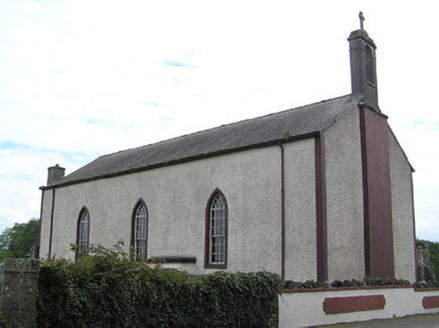
Saint Brendan's Catholic ChurchChurch/chapel · 27 yd

Explorer Tom Saint Brendan's in Cloondara claims to be older than the concept of electricity itself. It's simple, plain, and refuses…
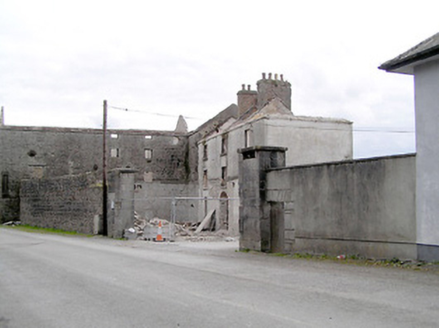
Richmond MillGates/railings/walls · 71 yd

Explorer Tom Richmond Mill in Cloondara would be the person at the wedding who stands in the corner holding a glass of champagne and…
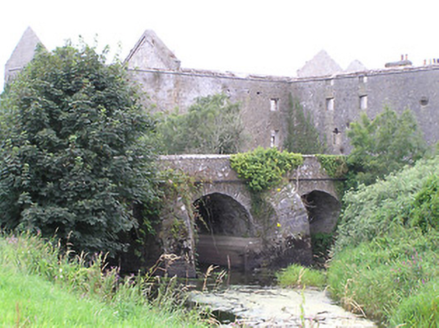
bridge116 yd

Explorer Tom Bridge in Cloondara has a very strong opinion about the local sheep, who it believes are deliberately trying to test…

weir148 yd

Explorer Tom Weir in Glebe was built by a matchmaker who knew exactly how to get two sides talking. The water flows over it with…

46th LockLock · 188 yd

Explorer Tom 46th Lock in Glebe started when two lads made a bet in the pub about who could build the finest lock. This ashlar…

Richmond HarbourHarbour/dock/port · 201 yd

Explorer Tom Richmond Harbour is telling its younger self to stop worrying about the boats that never came. It’s just a pretty…

Richmond BridgeBridge · 217 yd

Explorer Tom Richmond Bridge in Glebe is so solidly built that Saint Patrick would have said, 'Finally, something that doesn't need…
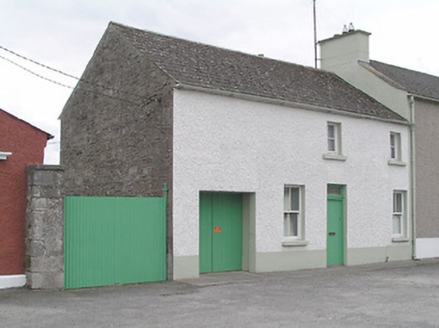
office231 yd

Explorer Tom Office in Glebe is telling its younger self to stop worrying about the canal schedules because nobody remembers them…
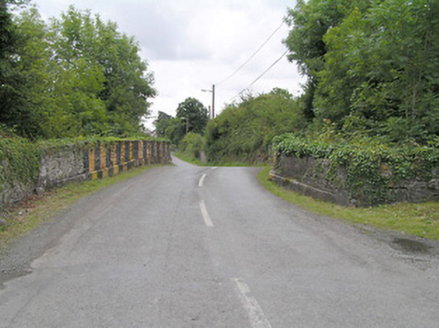
Cloondara BridgeBridge · 231 yd

Explorer Tom Cloondara Bridge would win a county fair easily if it entered the ‘Most Confident Stone Thing’ category, and honestly…

CastleCastle, unclassified · 1375 yd

Explorer Tom Castle in Cloondara is hiding in the reeds like it’s shy. Lewis said there was a dance that went on so long the moon…

Páirc Naomh Bearraí, St. Barry's GAAGAA ground · 1.0 mi

More historic places in County Longford · All of County Longford

Add to this placeAdd a picture Add a detailed tip Add a story

Explore the map1,095,414 places to discover

Next place · or swipeClondra Graveyard