
More pictures of this place


What is recorded here
Freestanding granite obelisk, 62 metres tall, designed by Sir Robert Smirke as testimonial to Arthur Wellesley, Duke of Wellington. Foundation stone laid 1817, completed June 1861. Tapering, four-sided shaft with pyramidal apex, on three-stepped monumental pedestal. Each face contains bronze plaque cast from cannons…
Read the whole record
The story behind this place
From the Buildings of Ireland (National Inventory of Architectural Heritage) record 50060116
Places near here
Photo credits
- renee_mcgurk, Wikimedia Commons · CC BY 2.0
- Maker named on the Wikimedia Commons picture page · CC BY-SA 3.0
- Stephan van Helden, Wikimedia Commons · CC BY-SA 4.0
- Maker not stated on source page, commons.wikimedia.org
- Maker not stated on source page, www.tripadvisor.com
- Maker not stated on source page, en.wikipedia.org
- Maker not stated on source page, www.pinterest.com
- Maker not stated on source page, www.flickr.com
- Maker not stated on source page, www.tripadvisor.ca
- Maker not stated on source page, tr.pinterest.com
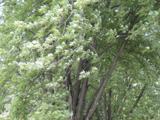 Silver maple276 yd
Explorer Tom Silver maple in County Dublin is secretly proud of a single potato it grew last year, which it considers its finest…
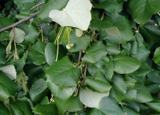 Silver Lime491 yd
Explorer Tom Silver Lime in County Dublin has an unlikely celebrity friend who used to sit under it writing bad poetry about love…
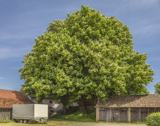 Horse-chestnut581 yd
Explorer Tom Horse-chestnut in County Dublin is waiting for a cow that tried to buy it with a milk ticket last Tuesday. The cow left…
 CairnCairn, unclassified · 1170 yd
Explorer Tom Cairn. Known as Carn Uí Dúnchada, this cairn was possibly erected against Viking pressure in the ninth century. Using a…
 Church in Donnybrook East,donnybrook WestChurch · 1170 yd
Explorer Tom Church in Donnybrook East is mentioned in a deed from 1748, which is quite specific for a ghost church. It was the…
 Church in DonnycarneyChurch · 1170 yd
Explorer Tom Church in Donnycarney exists by tradition, which means nobody is really sure where it is. Wren says there was one…
 Megalithic tomb in Dublin North CityMegalithic tomb · 1170 yd
Explorer Tom Megalithic tomb in Dublin North City. Recorded as a sepulchre of black marble stones, now lost to the city's expansion.…
 Church in Dublin North CityChurch · 1170 yd
Explorer Tom Church in Dublin North City is near the north gate of St Mary's Abbey and apparently doesn’t exist anymore, which is a…
 Church in Dublin South CityChurch · 1170 yd
Explorer Tom Church in Dublin South City was at Dolphin's Barn and showed up on the Down Survey map, so it definitely existed for a…
 TombTomb, unclassified · 1170 yd
Explorer Tom Tomb in Dublin South City belongs to the Low family from the 17th century. John Low built it big. If you see a fancy…
 Church in Unknown TownlandChurch · 1181 yd
Explorer Tom This one sits under the Pearse Lyons Distillery now. It was built on the site of medieval St James's, with some…
 Graveyard in Unknown TownlandGraveyard · 1241 yd
Explorer Tom Graveyard in Dublin dates from 1704 to the 1920s at Arbour Hill. Most graves are for British military personnel, and…
More historic places in County Dublin · All of County Dublin

What do you know about this place?Tap to add a comment or ask a question