What is recorded here
Tullaun Castle rises from a natural rock island in Tipperary marshes, its four-storey limestone tower preserving murder-holes, garderobes and a hidden chamber reached through a window splay. The building still shows how fear and pride shaped domestic life: a guarded lobby, narrow stairs, small rooms above one another and openings sized for defense rather than comfort. Whoever lived there would have known water, darkness and watchfulness as everyday facts, moving through passages where a door could lock, a hole could drop or a chamber could disappear from view.
Situated on natural rock outcrop on a natural island surrounded by poorly drained marshy land. A well-preserved four-storey tower house (ext. dims. 9.35m N-S; 11.5m E-W; wall T 2.1m) built with roughly coursed limestone rubble with base-batter. The main entrance consists of a two-centred doorway with punch-dressed chamfered jambs located at the centre of the E wall. Two yett-holes are visible with one at the apex and the other on the S jamb. This entrance gives access to a lobby, protected by a murder-hole, with a guardroom in the NE angle, spiral stairs in the SE angle and the main ground-floor chamber to the W. The ground-floor is lit by simple slit opes set into large segmental-arched embrasures with good evidence of wicker-centring. There are wooden ceilings over the ground and first floors with a barrel vault over the second floor. The first floor is accessed from the SE angle and is lit by simple flat-headed opes. A mural passage in the S wall at first-floor level gives access to a garderobe in the S end of the W wall which is lit by an angle loop in the SW angle. There is a slop-stone under a window in the mural passage. The small first-floor chamber over the lobby, reached from the spiral stairs, gives access to the murder-hole. A series of small chambers over the lobby are located at each floor level. The second floor is lit by twin-light ogee-headed windows in the centre of the E and W walls with a poorly preserved fireplace at the E end of the N wall. There is a slop-stone in the S wall directly inside the doorway to the second floor. A lintelled mural passage in the S wall at mezzanine level between the second and third-floor levels gives access to a garderobe in the SW angle with a well-preserved flagstone seat surround. The garderobe chute outlet is at the S end of the W wall at ground-floor level. The second floor with barrel vaulted roof is accessed from the SE angle with a transomed and mullioned ogee-headed window in the centre of the S wall with a two-centred arched embrasure. There are twin-light ogee-headed windows with decorated spandrels in the centre of the N wall and a single-light ogee-headed window in the E and W walls. A secret chamber is accessed off the N splay of the W window with a drop-hole giving access to a chamber in the NW angle. A possible destroyed fireplace at the E end of the N wall utilises the second-floor flue. The battlemented wall-walk is accessed from the SW angle via a doorway set into the S splay of the E window embrasure. A single-light flat-headed window on the E wall at ground-floor level has several mason's marks in the form of an hour-glass on the jambstones of the window. All the main chambers were accessed via two-centred doorways opened from inside the main chamber at each floor level, with evidence of hanging-eyes still in situ.
The above description is derived from 'The Archaeological Inventory of County Tipperary. Vol. 1 - North Tipperary' compiled by Jean Farrelly and Caimin O'Brien (Dublin: Stationery Office, 2002). In certain instances the entries have been revised and updated in the light of recent research.
Date of upload/revision: 22 September 2008
Tullaun Castle, Lisquillibeen is a well-preserved 16th-century tower house, likely built by a local Gaelic lord or Anglo-Irish family for defensive purposes. Its strategic location on a natural rock outcrop highlights its importance in controlling the surrounding marshland and as a stronghold during a period of political instability in Ireland.
The monument record does not grant public access. Check the route and ask the landowner before entering private land.
- What survives
- Recorded monument
Places near here
 Tullan CastleCastle · 4 yd
 Church in Carney, Commons OFChurch · 205 yd
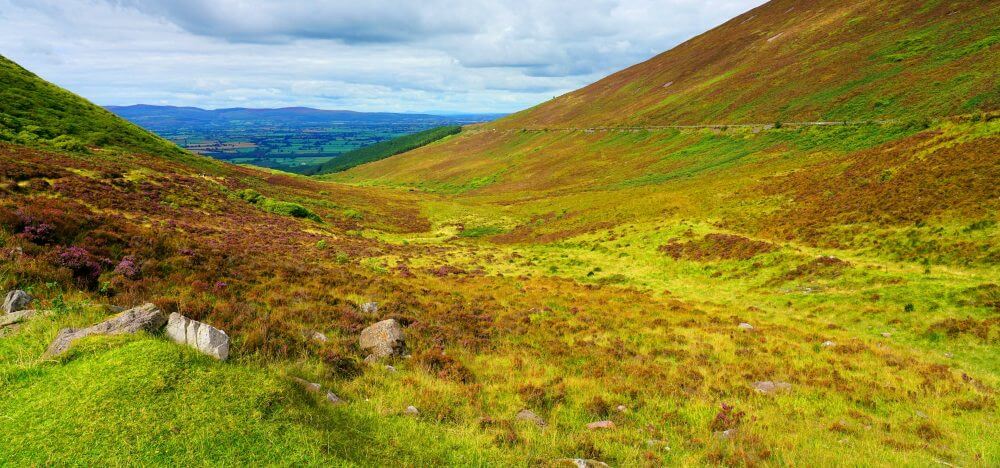 IndicatedEnclosure · 804 yd
 ToberneeboneHoly well · 846 yd
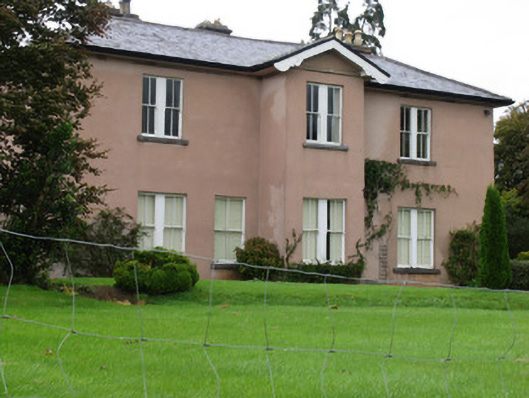 Annaghcountry house · 1258 yd
 Cashlaunteigeboght (in ruins)Castle, tower house · 1591 yd
 Carrickboy WoodForest · 1.0 mi
 Buggane IslandIslet · 2.8 mi
 Goat IslandIslet · 3.3 mi
 Lough DergNationally known place · 3.4 mi
 Knigh HillMountain / peak · 3.5 mi
 Dromineer BayBay · 3.9 mi