
Places near here
Photo credits
- National Inventory of Architectural Heritage
- Photograph by Mike Peel ( www.mikepeel.net )., Wikimedia Commons · CC BY-SA 4.0
- Eric Jones, Geograph · CC BY-SA 2.0
- Nialljpmurphy, Wikimedia Commons · CC BY-SA 4.0
- User:Jaqian, Wikimedia Commons · CC BY-SA 3.0
- Taken by Fanghong, Wikimedia Commons · CC BY-SA 3.0
- NateBergin, Wikimedia Commons · CC BY 4.0
- Paul Shanahan, Wikimedia Commons · CC BY-SA 4.0
- Keith Weller, Wikimedia Commons · Public domain
- Filip Scridon, Wikimedia Commons · CC BY-SA 4.0
 Saint Michan's ChurchBuilding misc · 86 yd
Explorer Tom Saint Michan's Church has a vestry built in 1820 that’s now just offices and toilets. The church itself dates back to the 1680s. It’s seen a lot of history. Look at the limestone walls and tell me what you think.
 Catholic Church of Saint Mary of the AngelsChurch/chapel · 92 yd
Explorer Tom Saint Mary of the Angels was designed for Capuchins by J.J. McCarthy between 1868 and 1881. It replaced a smaller chapel and features sculptures by Leo Broe and mosaics by James Pearse, making it a Franciscan masterpiece in Dublin.
 Bridewell Garda StationPrison/jail · 119 yd
Explorer Tom Bridewell Garda Station in County Dublin was originally a prison for minor offences built in 1901. It can hold 130 prisoners, which is quite a lot of small-time crooks. Hang... Hang on to your hat, because it’s next to the District Court and behind the Four Courts, so watch out for lawyers!
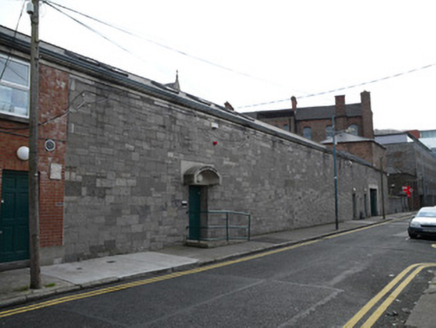 The FriaryFriary · 129 yd
Explorer Tom The Friary on Bow Street is sharing access with a church but keeping its own secrets in the limestone wall. The Capuchins built it, and now it’s offices, which feels like a monk getting a job at a tech firm. If you hear chanting, it’s just the wind being dramatic.
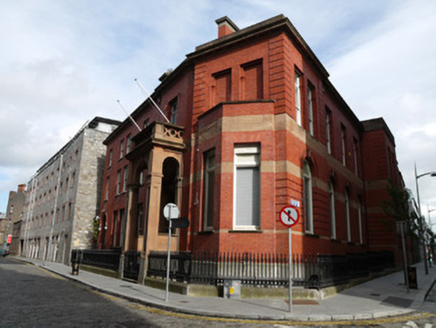 office135 yd
Explorer Tom Office on Bow Street is the former Jameson distillery’s fancy front door, wearing red brick like a tuxedo. It has an elaborate porch that screams ‘look at me’ while its sandstone details are slowly losing their shine. Pretend you’re picking up a bottle of whiskey and tip your hat to it.
 Old Jameson DistilleryMuseum · 176 yd
Explorer Tom Bow Street used to make whiskey on a scale that could have kept half my excuses bottled. The distillery began in 1780, before John Jameson took full ownership in 1805 and gave the business the name visitors know. By 1886 the place spread across about five acres, with smiths, coopers, carpenters and other workers: a city inside Dublin, and probably a louder morning than my street ever manages. Distilling here ended in 1971. The old address now tells the story through guided visits and tastings, which means I should look at the buildings before making straight for a glass. Some original work spaces survive among the visitor areas; ask what was made where rather than assuming every shining display is old equipment. This is a managed, ticketed attraction near Smithfield, so book or check times before going. I will raise a toast to the coopers, who knew how to keep the product from escaping.
 Jameson ChimneyHeritage attraction · 237 yd
Explorer Tom Jameson Chimney has a poet who fell in the ditch nearby because he was too busy staring at the smoke to look where he was walking. It’s an industrial relic that refuses to admit it’s just a big, fancy chimney standing in a market square, but sure. Go before the tourists find out.
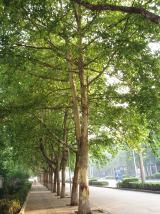 London Plane504 yd
Explorer Tom London Plane in Dublin thinks tourists from the city are just noisy children who don't know how to appreciate shade. Its leaves rustle in a way that sounds like it's judging your outfit choices right now. Find the wonkiest bit of bark and send it straight to your group chat.
 IndicatedCathedral · 613 yd
Explorer Tom Cathedral. Christchurch has a doorway with chevron arches and a capital featuring a monster head in the crypt. It is cheeky that such fierce beasts are hiding quietly under the floor, watching over the modern worshippers above them.
 Croppies Acre MemorialMemorial · 821 yd
Explorer Tom Croppies Acre Memorial in County Dublin has a great exterior view waiting for you. It’s a memorial, so keep it dignified, but also check out the surroundings. The whole place looks like it’s posing for a history book cover.
 European Pear844 yd
Explorer Tom European Pear in County Dublin does weird things when nobody's looking, like plotting how to drop its fruit on your head with precision. It’s been doing this for years, and honestly, you’re starting to look like you’ve earned it. Give it a pat on the way past, it's had a long life.
 Royal BarracksBarracks · 935 yd
Explorer Tom Royal Barracks: The very first Dublin barracks, built on land bought from the Duke of Ormonde in the early 1700s. It sounds like a real estate deal where the landlord got paid in military discipline and noise.

What do you know about this place?Tap to add a comment or ask a question