
Places near here
Photo credits
- Darrin Antrobus, Geograph · CC BY-SA 2.0
- Kenneth Allen, Geograph · Creative Commons Attribution-ShareAlike 2.0
- National Inventory of Architectural Heritage
- Kenneth Allen, Geograph · CC BY-SA 2.0
- Wikimedia Commons contributor shown on the public file page · Public domain
- Richard Webb, Geograph · CC BY-SA 2.0
- Lisa Gallagher / Donegal Daily, www.donegaldaily.com
 Lough HillMountain / peak · 990 yd
Explorer Tom Right then, let’s have a look at Lough Hill in County Donegal. I spotted something white on the hill over Lough Mourne…
 Meencarrigach National SchoolSchool · 1.5 mi
Explorer Tom Meencarrigach National School is built from such solid stone that I’m pretty sure a local legend says a giant used it…
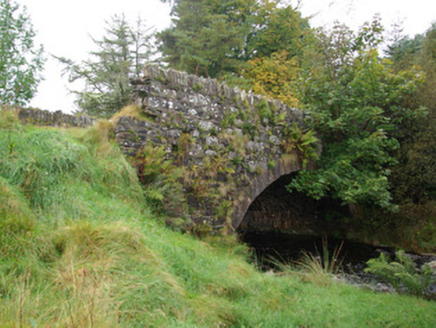 bridge1.6 mi
Explorer Tom Bridge in Croaghonagh has dressed stone voussoirs so fancy they’re basically wearing a tuxedo to a muddy field party…
 Old BarracksBarracks · 2.1 mi
Explorer Tom Old Barracks was built to guard Barnesmore Gap from highwaymen and brigands. It’s just fragmentary remains now, but…
 Glenmore LodgeOutbuilding, walled garden, dovecote/pigeon house/aviary · 3.5 mi
Explorer Tom Glenmore Lodge is hiding a scandal so big it needs a walled garden and a dovecote to keep it secret. The main house is…
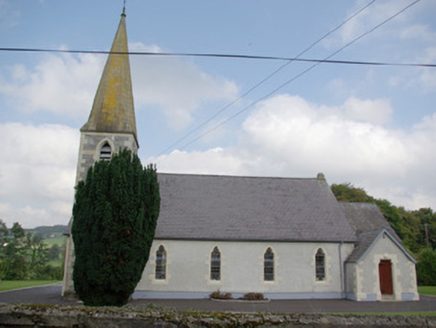 Saint John's Church of Ireland ChurchChurch/chapel · 3.8 mi
Explorer Tom Saint John's Church of Ireland Church is locked in a dramatic standoff with the nearest tree, which has grown tall…
 Donaldson Memorial HallChurch hall/parish hall · 3.8 mi
Explorer Tom Donaldson Memorial Hall in Aghaveagh claims to be from the time of the dinosaurs, which is bold for a building that…
 Altnapaste BridgeBridge · 3.8 mi
Explorer Tom Altnapaste Bridge is doing that three-arched thing where it looks like a goat once ruled this whole stretch of river…
 BarnesmoreMountain / peak · 3.9 mi
Explorer Tom Barnesmore has been carrying the wrong name tag. Mountaineering Ireland calls this summit Croaghonagh and says…
 AltnapasteMountain / peak · 4.1 mi
Explorer Tom Altnapaste is a mountain peak where the summit offers quartzite footing and big views. Down at its foot, however, sits…
 Páirc Thaobhóige, Glenfin GAAGAA ground · 4.8 mi
 Teach Tábhairne an RileánPub · 5.5 mi
Explorer Tom Teach Tábhairne an Rileán in County Donegal has a mouthful of a name. Say it three times fast for me and tell me how…
More archaeology and monuments in County Donegal · All of County Donegal

What do you know about this place?Tap to add a comment or ask a question