What is recorded here
St. Patricks Well is a spring sealed inside a low drystone chamber within a hollow in undulating pasture. Fourteen stations circled it from 1909 until their removal in the 1970s, yet people still gather there on St Patrick's Day to walk its small perimeter. The water flows beneath a flat slab like a living threshold, while the attached holy stone and nearby tree suggest that the chamber does not so much contain the spring as join it to the land.
Within a hollow in undulating pasture. In 1909 a series of fourteen stations were constructed around this well in accordance with the wishes of the Rev. Laurance Cosgrove of St Paul, Minnesota, USA (ITA Survey 1944). They were removed in the mid-1970s (local information). Patterns are held here annually on St Patrick's Day, the 17th of March. This spring well is within a subrectangular setting (1.3m ENE-WSW; 1.23m NNW-SSE), which is defined by a low drystone wall (H 0.6m; Wth 1.3m). At NNW a flat slab acts as a bridge where a stream emanates from the well and flows in a NW direction. A concrete platform has been constructed on the NW side in recent times. Also on this side a holy stone (LF006-025002-) has been concreted to the well. A holy tree (LF006-025003-) immediately to the SE is associated. (Ó Duigneáin 1971, 115-17; O'Donovan 2002, 30)
Compiled by: Patrick F. O'Donovan
Date of upload: 7 June 2013
St. Patrick’s Well is associated with the veneration of St. Patrick and traditionally linked to healing rituals and pilgrimages. The construction of fourteen stations around the well in 1909 reflected a revival of devotional practices inspired by Catholic missionary interests, particularly through the efforts of Rev. Laurance Cosgrove.
The monument record does not grant public access. Check the route and ask the landowner before entering private land.
- What survives
- Recorded monument
Places near here
 Ritual siteRitual site, holy tree/bush · 1 yd
 ToomeMountain / peak · 436 yd
 CaveMan-made underground passage · 1078 yd
 St. Columbas R.C. ChurchChurch · 1.1 mi
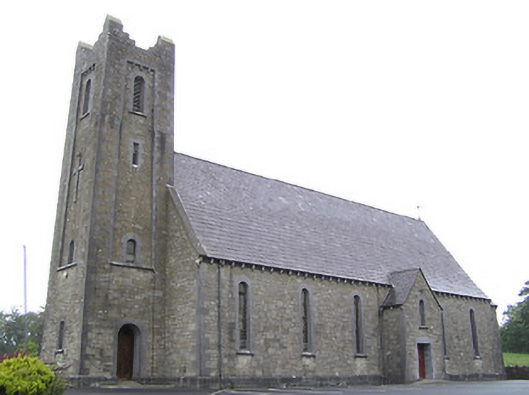 Saint Columba's Catholic Churchchurch/chapel · 1.3 mi
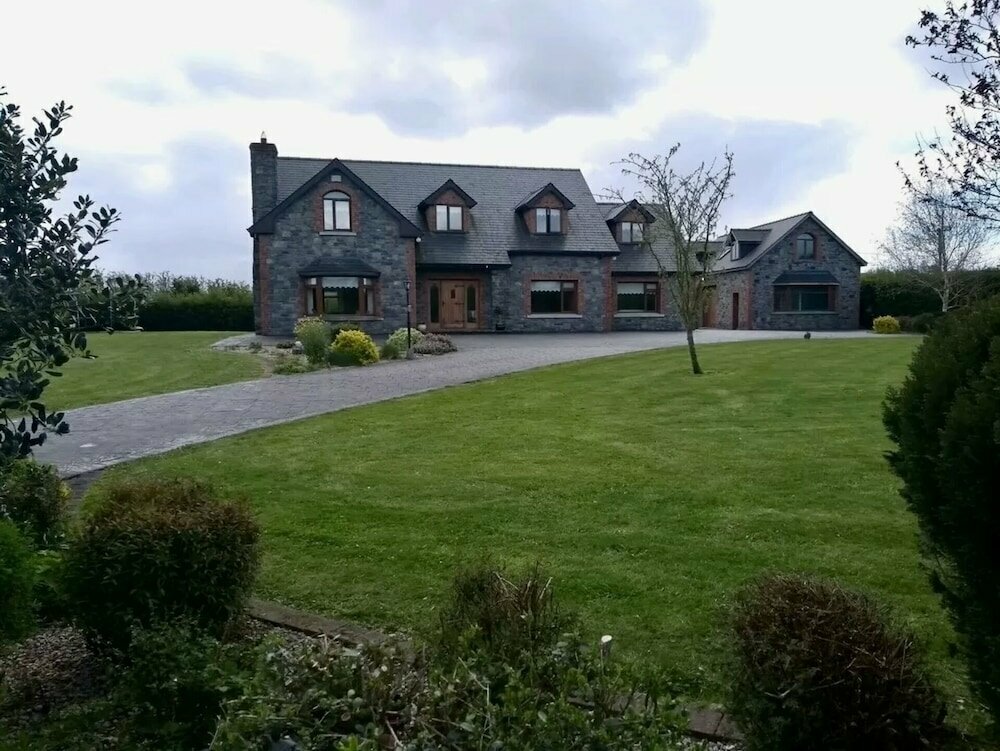 Carnagh LowerMountain / peak · 1.7 mi
 Cornamucklagh WoodlandWood · 1.8 mi
 IdicatedCastle, unclassified · 2.0 mi
 Derrycassan WoodsWood · 2.3 mi
 Scrabby IslandIslet · 2.6 mi
 Cloone Ho.Castle, unclassified · 2.8 mi
 InchmoreIslet · 3.3 mi