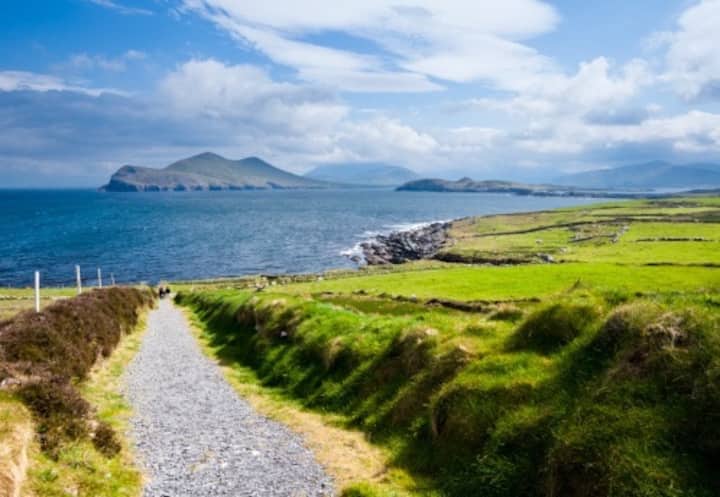
What is recorded here
Marked on the 1841-42 and 1916 OS maps as 'St Macadaw's Well', it is also known locally as St Brigid's Well.
Situation and Description: This is a small clear well in a shallow hollow with some drystone work about the well.
Rounds/Offerings: According to local tradition, rounds at this well may be made by members of the Corridan family only, to whom the right of burial in the nearby church ruin (KE013-023001-) is also reserved. It is said to cure all diseases.
Folklore collected from Booleenshare School recorded the following details about Cill Mhic Adá holy well; 'In a deep glen covered with bracken and ivy to the south of the old ruin is a grassy slope from which issues a stream called St. Macada's well. The Corridon family often go in pilgrimage to this well. It is said that the old church [KE013-023001-] is sometimes seen enveloped in a bright light, which is a sign that death is approaching one of the Corridon family. Many people have seen the light and in every case the truth of the saying is fulfilled for a funeral goes to the old church always after its appearance. A sound of weeping and the Irish "Caoine" is said also to be heard at Keelmacada when the death of a Corridon takes place over the seas' (The Schools’ Collection, Volume 0417, Page 379;https://www.duchas.ie/en/cbes/4678380/4673788).
The above description is derived from C. Toal, ‘North Kerry Archaeological Survey’. Dingle. Brandon in association with FAS Training and Employment Authority (1995), no. 904. In certain instances the entries have been revised and updated in the light of recent research.
Revised by: Caimin O'Brien
Date of revised upload: 20 May 2022
St Macadaws Well is associated with the early Irish saint Macada, traditionally linked to St Brigid of Kildare, and is believed to have healing properties, particularly for eye ailments and female infertility. The well's dual local name as St Brigid's Well reflects the common medieval practice of associating lesser-known saints with more widely venerated ones.
The monument record does not grant public access. Check the route and ask the landowner before entering private land.
- What survives
- Recorded monument
Places near here
 St Macadaws Church (in ruins)Church · 358 yd
 Enclosure in GlenderryEnclosure · 590 yd
 Mohaunagat FortArchaeological place · 1069 yd
 Triskbeg MountainMountain / peak · 1581 yd
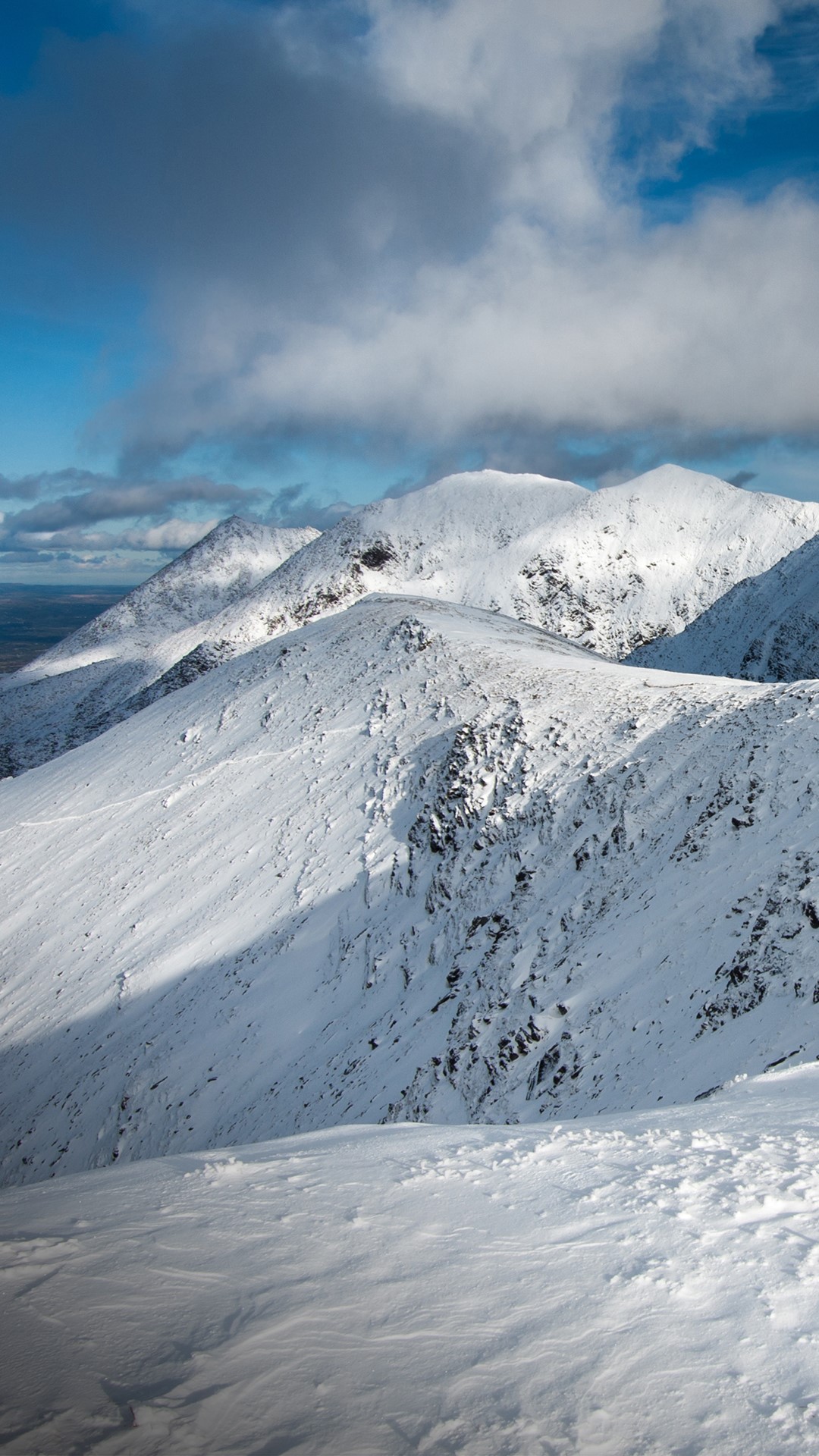 Triskmore MountainMountain / peak · 1.0 mi
 Kerry Head Signal TowerRuins · 1.7 mi
 Our Lady's Holy WellSpring · 3.5 mi
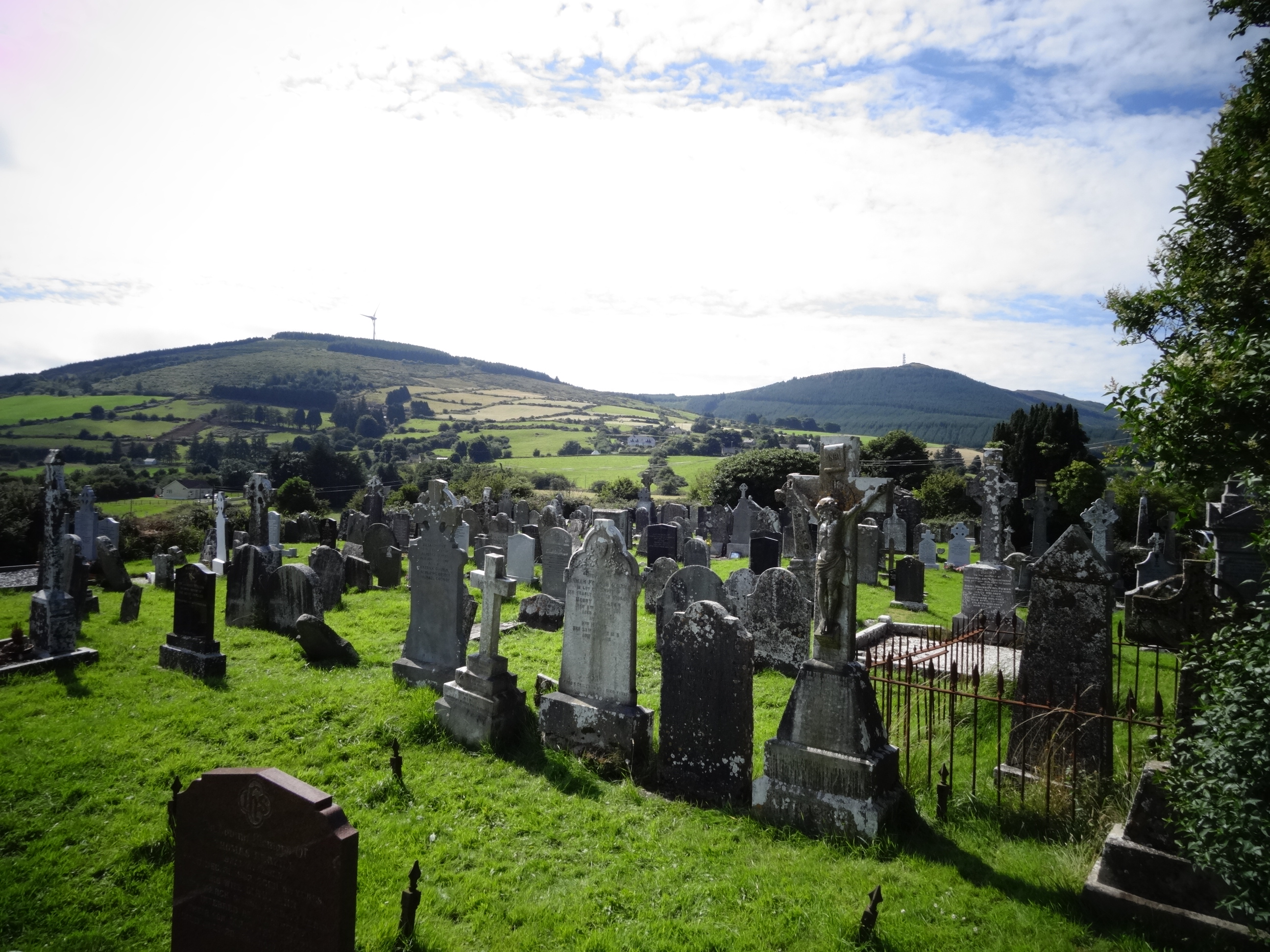 Site of Ballingarry CastleCastle, unclassified · 4.5 mi
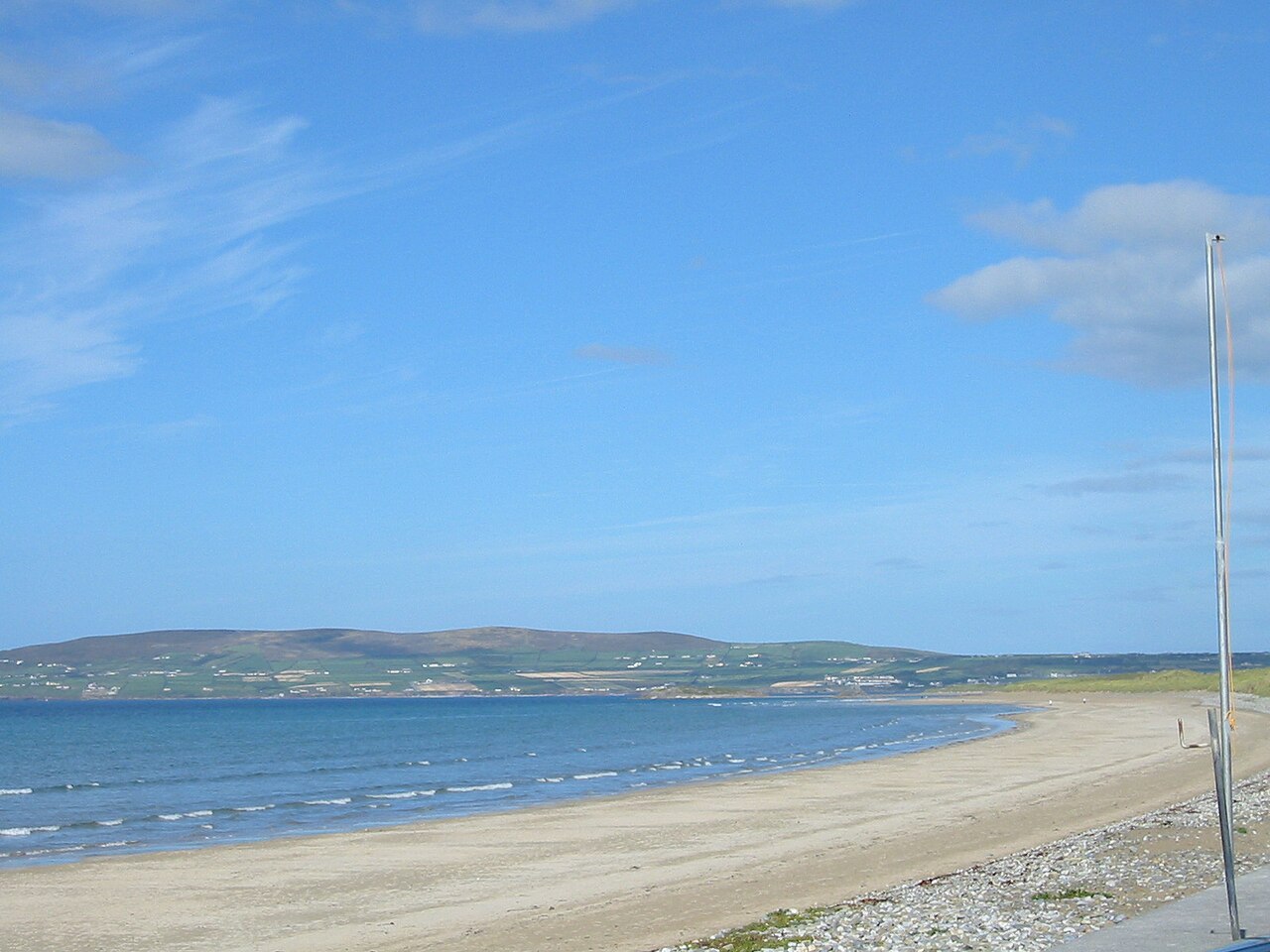 Banna StrandBeach / strand · 5.2 mi
 Castle Shannon (in ruins)Castle, unclassified · 5.3 mi
 Tralee BayBay · 5.8 mi
 Inshaboy PointHeadland · 5.8 mi
Other information
Photo: Credit not shown in the picture search · Rights wording not checked; contact us if this picture should be removed