DDiscover AloneMapAbout

St. Jamess Well

Holy well
Computer-made picture that does not show St. Jamess WellNot a photo of this holy well
Computer-made picture. It does not show this holy well. · Report the wrong picture

The monument record does not grant public access. Check the route and ask the landowner before entering private land.

What do you know about this place?Tap to add a comment or ask a question

What you write will be public.

What is recorded here

Holy Well locally known as 'Tiobrait Well'. One of three wells of which only one has curative powers which is known as 'St. James' Well'. In 1955 Ó Danachair described the site as; 'A well about six feet in diameter and four feet deep. Elder, ash and whitethorn trees grow about it. Rounds are still made, rags and…

Read the whole record
Holy Well locally known as 'Tiobrait Well'. One of three wells of which only one has curative powers which is known as 'St. James' Well'. In 1955 Ó Danachair described the site as; 'A well about six feet in diameter and four feet deep. Elder, ash and whitethorn trees grow about it. Rounds are still made, rags and small religious objects left as offerings. The water cures sore eyes and headaches. Pebbles are used to count the rounds. Formerly a pattern was held on 25th July. Legends: The water will not boil. The well moved when profaned. A fish is seen by those about to be cured. Tervoe had a pattern on 25th July (St. James the Greater)(Ó Danachair 1955, 198, 214). The following folklore was recorded in 1938 from Tervoe National School about St. James' Well; 'It is said that the time for visiting this well is from midnight on the 24th July to midnight on the 25th. The rounds are made by people suffering from eye trouble. There was a great many people in olden times who used to visit the well. At each visit you are supposed to wash the eyes with a piece of cloth and the holy water from the well. It was the custom to leave the cloth on the bush overhead. But there are no offerings left there in thanksgiving for cures' (The Schools’ Collection, Volume 0527, 367). A second tradition recorded that; 'St James's Well is rather big. There are many trees growing over and about it - an elder tree overgrown with ivy is overhanging the well and whitethorn grows round it. On the trees there are pieces of cloth hanging. They leave those pieces of cloth on the tree when cured in honour of St. James. People do not use this water for household purposes because it is said that some misfortune would happen to you. Long ago people went to that well to be cured. They also go up to the present day but not so regularly as in olden times. People visit it during the month of July. Some bathe their eyes in the water and others rub some of the leaves that are around the well to their eyes. A man was cured long ago. Pat Byrnes was his name, he is dead now. During the month of July he used to get up at 3 o'clock in the morning and do the rounds. He had turned eyes and after doing the rounds about six times day after day his eyes were cured. The prayers said are 5 Our Fathers 5 Hail Marys and five Glorias ten times each morning and every ten of those they said they used to hang a piece of cloth on the tree and now it is full of them. Many other people's eyes were cured there also' (The Schools’ Collection, Volume 0527, 367-8; accessible online at www.duchas.ie/en/cbes/4922111/4853090/5015953). Another tradition recorded that, 'Every year on the 25th of July rounds are paid at the well. Every person who goes throws a pebble in to mark the rounds. Nobody likes to cut bushes around it. There are two other wells near it for household use. Long long ago there used to be tents at the well on the feast of St. James. It is said that one day the people of the well had a fight and that St. James separated them' (The Schools’ Collection, Volume 0527, 369; accessible online at www.duchas.ie/en/cbes/4922111/4853092). See attached photos taken in 1954 by Caoimhín Ó Danachair, courtesy of and © National Folklore Collection, UCD. The Photographic Collection, F025.21.00260 accessible online at www.duchas.ie/en/cbeg/17017 and F025.21.00261 accessible online at www.duchas.ie/en/cbeg/31099. Compiled and revised by: Caimin O'Brien Date of upload: 30 September 2020

From the National Monuments Service (Archaeological Survey of Ireland) record LI004-017

Places near here

Photo credits
  • Maker not stated on source page, www.flickr.com
  • National Inventory of Architectural Heritage
  • Stevesphotography, Wikimedia Commons · CC BY-SA 4.0
  • Bartlett, W. H. (William Henry) H. Griffiths (engraver), Wikimedia Commons · Public domain
  • Maker not stated on source page, narodnatribuna.info
  • Ballybrown GAA Club (official club website publisher); individual photographer not named, ballybrowngaa.com
Fairy fort / earthen ringfort in TervoeFairy fort / earthen ringfort · 146 yd

Explorer Tom Fairy fort / earthen ringfort in Tervoe in Limerick is just a ditch and some dirt, but it thinks it’s a star…

Mount Vincent HouseModel school · 409 yd

Explorer Tom Mount Vincent House in Cooperhill was a model school, so it probably still thinks it’s teaching you something…

Monsell MonumentMonument · 837 yd

Explorer Tom Monsell Monument in Tervoe was built so someone could give alms on January 7th every year without leaving their…

Carrigogunnell CastleRuins · 912 yd

Explorer Tom Carrigogunnell Castle climbed a volcanic rock above the Shannon and still managed to get knocked about. Its defences go…

Carrigogunnel Castle (in ruins)Castle, Anglo-Norman masonry castle · 916 yd

Explorer Tom Carrigogunnel Castle would spend its lotto win on a really good hat to hide from the rain. It’s been sitting on a rock…

Cooperhill HouseCountry house · 952 yd

Explorer Tom Cooperhill House is crumbling into legend, with a giant allegedly sleeping in the walled gardens below. He snored so…

Saint Joseph's Catholic ChurchChurch/chapel · 1004 yd

Explorer Tom Saint Joseph's Catholic Church is still mad at Ballybrown for borrowing its best stone mason and not returning him.…
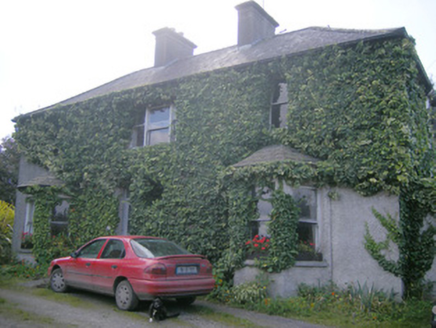
Hill SideHouse · 1360 yd

Explorer Tom Hill Side in Newtown is locked in a bitter feud with the nearest tree over who gets the best light. It’s got bay…
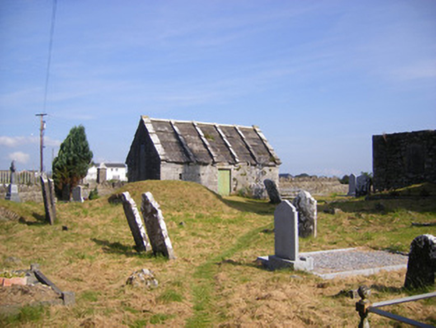
Church of Saint Philip and Saint James (Kilkeedy)Mausoleum · 1549 yd

Explorer Tom A dramatic event at Kilkeedy’s mausoleum involves a pigeon dropping right on the rusticated limestone door surround.…

Church (in ruins)Church · 1563 yd

Explorer Tom Kilkeedy Church is gone, but locals swear a giant named Big Sean used to live there and only ate turnips. He left one…

Stone head in Glebe (pubblebrien By., Clarina Ed)Stone head · 1569 yd

Explorer Tom Stone head in Glebe has a broken nose and open mouth, like it’s mid-sentence about how awful the 1800s were. It would…

Ballybrown GAA pitchGAA ground · 1751 yd

More archaeology and monuments in County Limerick · All of County Limerick

Add to this placeAdd a picture Add a detailed tip Add a story

Explore the map1,095,414 places to discover

Next place · or swipeFairy fort / earthen ringfort in Tervoe