
What is recorded here
A standing stone (DG013-004003-) 1.42m high and orientated N-S has a cross incised on it. There are small circles at the terminals and at the centre. It is situated on low ground close to the shore just N of St. Colmcille's holy well (DG013-004001-) (Ó Muirgheasa No. 100). 10m SE of the well is a feature marked 'graves' (DG013-004002-) on the 2nd and 3rd editions of the OS 6-inch maps. This seems to consist of a boulder with a semi-circle of stones about its base. It is not clear what the nature of the feature is. 'St. Columbkille's Well' is a modernised shrine situated on the coast. (Ó Muirgheasa No. 100). An annual pilgrimage or turas is held at the well on the 15th of August. Described by Ó Muirgheasa in 1936 as 'There is a Holy Well at Sroov, north of Moville, at the edge of the sea. Stations are still made there. It is believed that it was from here Colmcille sailed to Iona: there is a pillar-stone with an incised cross to mark the spot. It is said that when he sent his boat down the Foyle, he himself walked overland from Derry along the high western shore, as he could thereby on looking back still see at intervals the oak woods of Derry which he loved so much. But when he reached Sroov Derry was no longer visible, so he sadly entered the boat here' (Ó Muirgheasa 1936, 159).
The above description was derived from the 'Archaeological Survey of County Donegal. A description of the field antiquities of the County from the Mesolithic Period to the 17th century.' Compiled by: Brian Lacey with Eamon Cody, Claire Cotter, Judy Cuppage, Noel Dunne, Vincent Hurley, Celie O'Rahilly, Paul Walsh and Seán Ó Nualláin (Lifford: Donegal County Council, 1983). In certain instances the entries have been revised and updated.
Compiled by Caimin O'Brien
Date of upload./revision: 02 November 2011
Linked to St. Columba (Columbkille), the well is associated with early Christian pilgrimage and healing traditions. The standing stone with an incised cross reflects 7th-century monastic influence and may mark a site of prayer or ritual connected to the saint’s legacy in the region.
The monument record does not grant public access. Check the route and ask the landowner before entering private land.
- What survives
- Recorded monument
Places near here
 Cliffs, Inishowen HeadPublicly named cliff or headland · 632 yd
 Inishowen Signal Stationsignal tower · 648 yd
 StroovebrinHoly well · 845 yd
 Port a Dorais Cave and Natural DoorSea cave and natural arch · 858 yd
 Cross in StrooveCross · 1187 yd
 StrooveOfficial bathing water · 1557 yd
 Dunagree PointHeadland · 1681 yd
 Stroove Lighthouselighthouse · 1713 yd
 White StrandBeach / strand · 1.5 mi
 Greencastle Martello FortCastle · 2.8 mi
 Greencastle / Northburgh CastleCastle, Anglo-Norman masonry castle · 2.9 mi
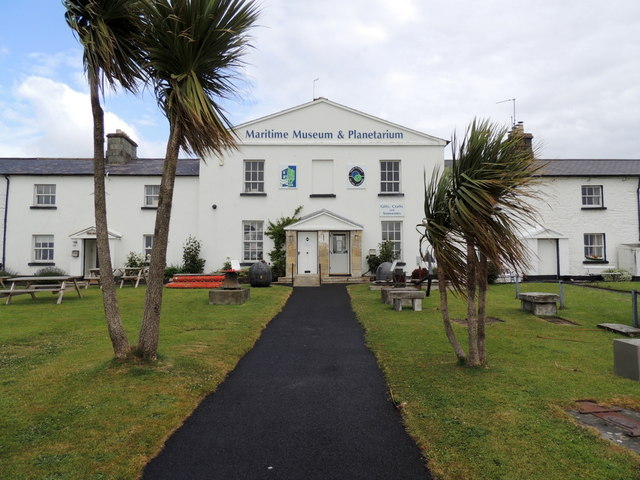 Inishowen Maritime Museum and PlanetariumMuseum · 3.3 mi
Other information
Photo: Credit not shown in the picture search · Rights wording not checked; contact us if this picture should be removed