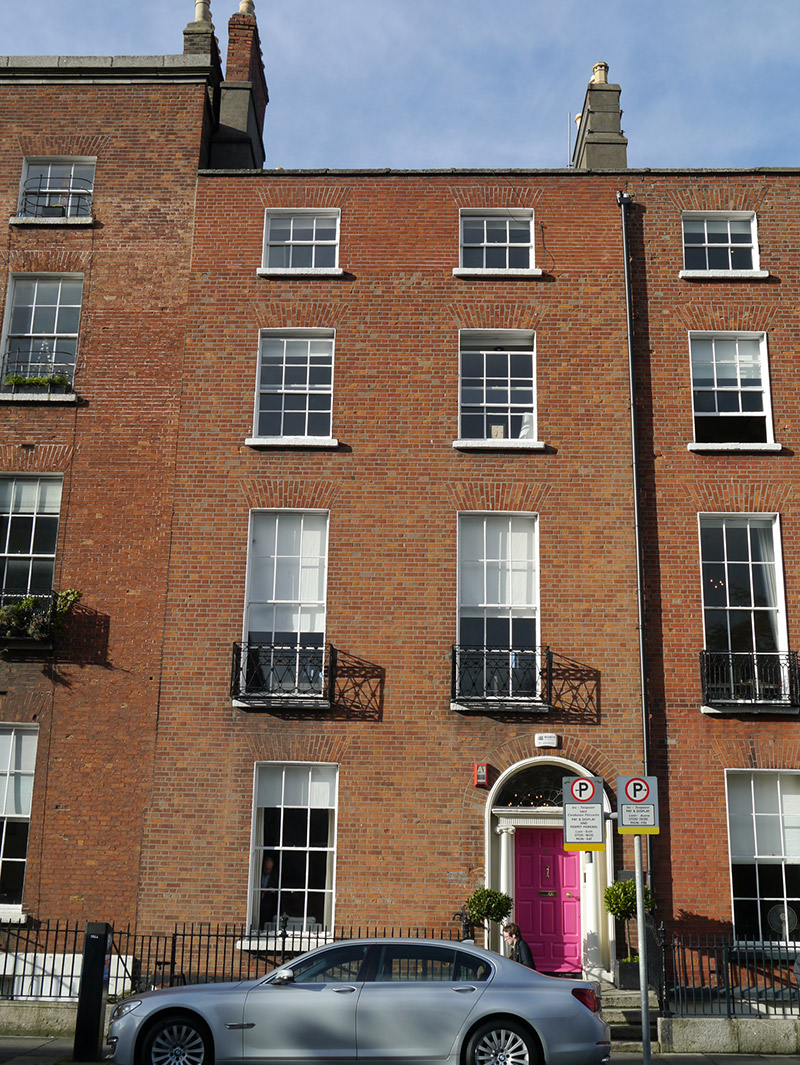
What is recorded here
Terraced two-bay four-storey over basement former townhouse, built c. 1810, with two-storey return to rear (west). Now in use as offices and apartments. Pitched slate roof to east with irregular M-profile hipped slate roof to rear (west), concealed by refaced brick parapet with granite coping. Shouldered rendered chimneystacks to north party wall with octagonal yellow clay pots, red brick chimneystacks to south party wall with rendered base and lipped yellow clay pots. Parapet gutters with uPVC hopper and downpipe to north end. Red brick walling laid in Flemish bond over rendered walling to basement beneath granite plinth course. Square-headed window openings with brick voussoirs, rendered reveals and masonry sills. Timber sliding sash windows with convex horns; largely six-over-six, three-over-three to third floor without horns. Metal balconettes to first floor openings. Round-headed door opening with brick voussoirs, moulded reveals and recessed doorcase comprising fluted frieze and raised-and-field timber panelled door with replacement brass furniture. Granite entrance platform with cast-iron boot scrapers, approached by four granite steps flanked by iron railings with decorative cast-iron corner posts over granite plinth, enclosing basement to south-side. Coal-hole cover to pavement. Recent red brick two-storey mews building to rear.
This former townhouse forms part of a relatively intact imposing early-nineteenth century streetscape. Nos. 37-40 (50930278-75) were built by the Dixons. (Bryan, 2006) Almost all of the western side was completed between c. 1807-15. Laid out in 1791 by the surveyors J & P Roe, Fitzwilliam Square was the last of the city’s Georgian squares to be completed. Development was staggered, progressing slowly due to the French wars. Although largely homogenous in character and form, the subtle variations between terraces are indicative of the speculative nature of the square’s development.
This does not grant access. Most recorded buildings are privately owned; view them only from public ground unless the owner allows entry.
Places near here
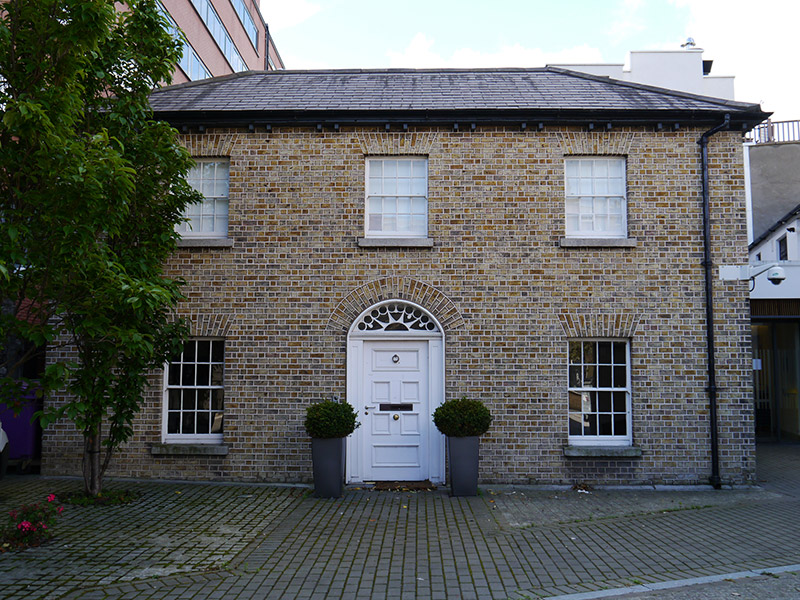 Kingram Houseschool master's house · 129 yd
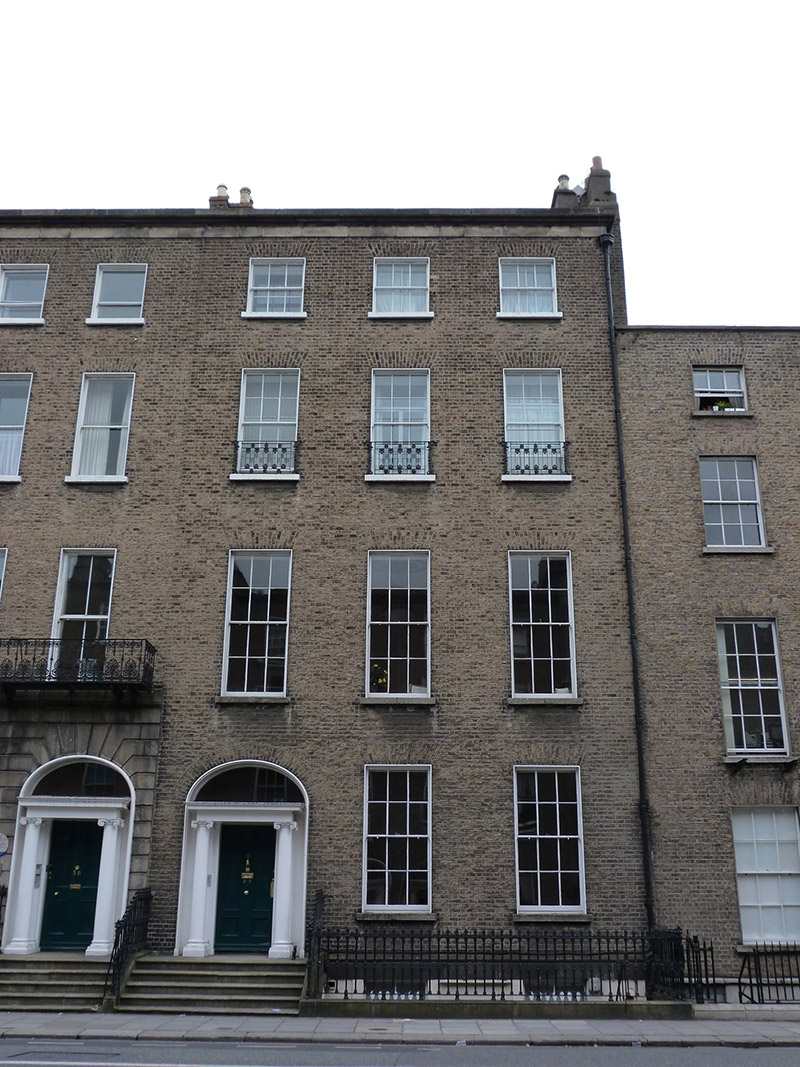 Jesuit Community Househouse · 235 yd
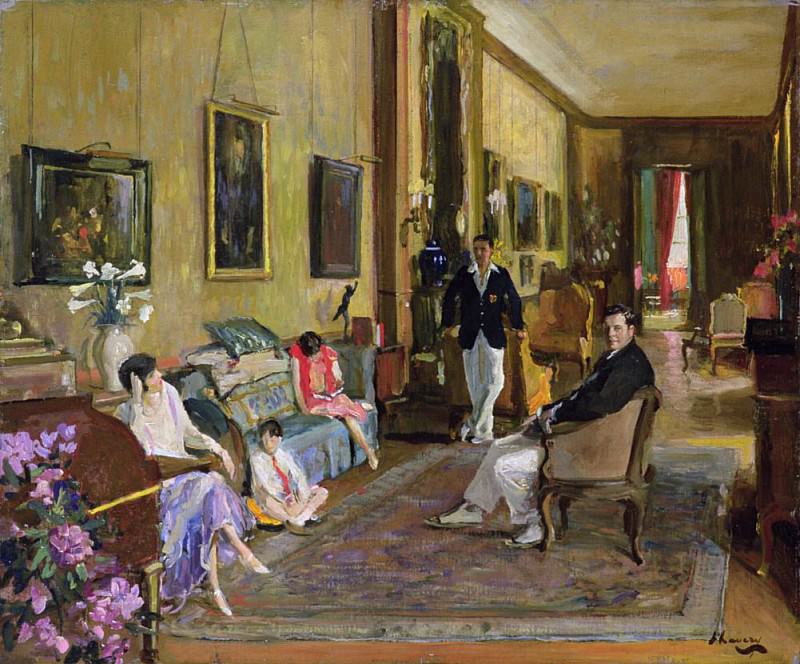 Count John McCormackMemorial · 415 yd
 London PlaneLondon Plane · 435 yd
 Memorial to Human Rights DefendersMemorial · 472 yd
 Museum of Literature IrelandMuseum · 518 yd
 IndicatedPark · 530 yd
 Fusiliers' ArchMonument · 717 yd
 Bigleaf MapleBigleaf Maple · 1089 yd
 Battle of RathminesMajor battlefield · 1275 yd
 Dublin Castlegates/railings/walls · 1318 yd
 Burning of the Custom Housearmed conflict · 1591 yd
Other information
Photo: National Inventory of Architectural Heritage · Website use allowed for educational or private purposes with source credit