DDiscover AloneMapAbout

Pres. Church

Meeting-house

The monument record does not grant public access. Check the route and ask the landowner before entering private land.

What do you know about this place?Tap to add a comment or ask a question

What you write will be public.

What is recorded here

The excavation of the meetinghouse took place between August and October, 1988. The now disused building is to be restored by the Ramelton Heritage and Development Association. It is of historical importance, being one of the earliest Presbyterian meetinghouses in the country, while the town of Ramelton was the…

Read the whole record
The excavation of the meetinghouse took place between August and October, 1988. The now disused building is to be restored by the Ramelton Heritage and Development Association. It is of historical importance, being one of the earliest Presbyterian meetinghouses in the country, while the town of Ramelton was the birthplace and home of Francis Makemie, a founding father of the Presbyterian Church in America. The purpose of the excavation was to establish the original shape of the building and the date of its construction. The meetinghouse is twin-roofed, the central junction of the roofs being supported by a small portion of wall at either end (each of these contained about one-third part of an arch which was cut short, then blocked-in) and in the centre by two heavy wooden pillars, once the masts of the 1811 shipwreck 'The Saldanha'. These had been inserted during the early 19th-century renovations to the meetinghouse. The removal of plaster from the walls revealed features predating the renovations of c. 181 1. These consisted of blocked-in windows at each gable end of the north bay, but not the south, and the arches. Because there were no gable windows in the south bay, it was first thought that the structure was either a single roofed building or a classic 17th- or 18th-century 'T'-shaped meetinghouse, the arches being the windows or doors on either side and the south bay being an early 19th-century extension. The meetinghouse had been built on a slope and the excavation revealed that the ground level had been artificially raised at the east end by almost one metre, that both bays had been built at the same time and that the junction of the roofs had been originally supported by a row of arches running across the centre of the building. Pier bases were found. Two coins, probably deliberately deposited, were found together under a stone in the centre of the artificially deposited soil. These were dated 1681 and 1693. The other finds from the construction phase consisted of pottery of late 17th- to mid 18th-century date, thin greenish glass and pipe stems. The reason for the blocked-in windows, which are of an early 18th-century 'Venetian' style, is that these windows were placed over doors and were therefore higher than the windows in the southern gable ends (which are still extant). When the galleries were built, c. 1811, these Venetian windows were blocked-in for the insertion of new, higher ones, whereas all the low windows were left in place. There are no historical records of the building before the early 19th century, but a similar twin-roofed Presbyterian meetinghouse, demolished in 1905, is known from the nearby town of Convoy. This had been built in 1725. A similar construction date is suggested by the architectural style of the Ramelton building. This is supported by the finds, though the coins would have been some years old when deposited. (Excavations Bulletin 1988) Judith Carroll, Inishquin, Glencullen, Co. Dublin. Summary description of above excavation from www.excavations.ie Excavation license no. E000456

From the National Monuments Service (Archaeological Survey of Ireland) record DG046-005005

Places near here

Photo credits
  • National Inventory of Architectural Heritage
  • Kenneth Allen, Geograph · Creative Commons Attribution-ShareAlike 2.0
  • Kenneth Allen, Wikimedia Commons · CC BY-SA 2.0
  • Maker not stated on source page, www.pinterest.com
  • Maker not stated on source page, br.pinterest.com
  • Malene Thyssen, Wikimedia Commons · CC BY-SA 3.0
  • Picture: Donegal Day Out
outbuilding52 yd

Explorer Tom Outbuilding in Rathmelton wears red brick trim on its stone face, like a farmer who forgot to take off his city suit. I…

First Ramelton Presbyterian ChurchChurch/chapel · 133 yd

Explorer Tom First Ramelton Presbyterian Church was built between 1905 and 1907 with red sandstone trim that really pops against the…
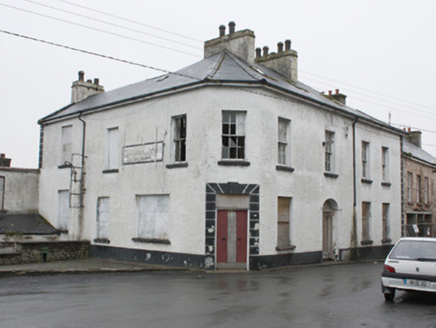
hotel146 yd

Explorer Tom Hotel in Rathmelton is derelict but still has this canted corner that makes it look like it’s trying to lean against…
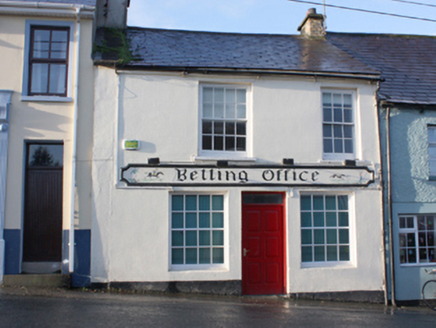
Betting OfficeHouse · 165 yd

Explorer Tom House in Rathmelton started because two lads made a bet in the pub about who could build the most interesting shop at…
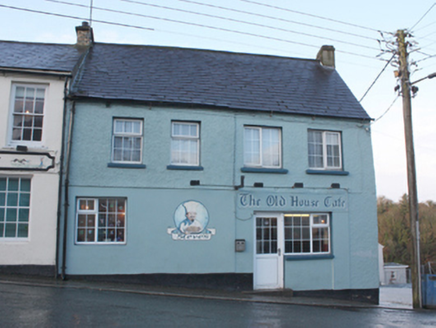
The Old House CaféHouse · 168 yd

Explorer Tom The Old House Café might be hiding a secret 1619 timber beam inside its walls. I bet it’s been quietly judging everyone…
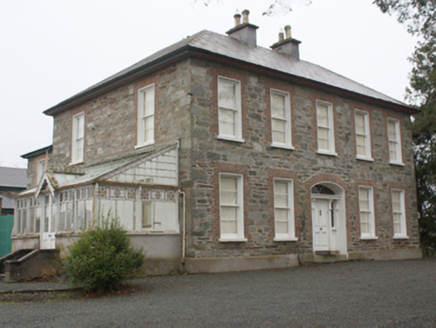
Melbourne HouseHouse · 195 yd

Explorer Tom Melbourne House in Rathmelton would order a triple-fries with extra gravy and call it a light snack, just to prove it…
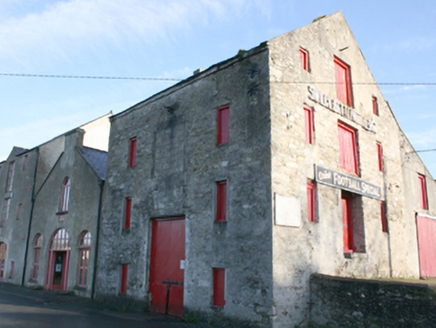
store/warehouse200 yd

Explorer Tom Store or warehouse in Rathmelton has a retirement plan involving becoming a trendy café but currently prefers to just…
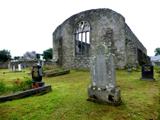
Tullyaughnish Old Church GraveyardGraveyard · 217 yd

Explorer Tom Tullyaughnish Old Church Graveyard has been hanging around since 1622, which is basically forever in church years. Sir…

Rathmelton CastleCastle, unclassified · 263 yd

Explorer Tom Rathmelton Castle was a three-and-a-half-storey beast with round turrets, built by Sir William Stewart before the 1641…

Mapped graveyardGraveyard · 442 yd

Explorer Tom This mapped graveyard had a fox take charge for a whole week before anyone noticed, and now the locals treat him like…
European Beech886 yd

Explorer Tom European Beech in County Donegal would complain to the council about the lack of shade during peak afternoon hours and…

Drummonaghan WoodForest recreation place · 1474 yd

Explorer Tom Drummonaghan Wood is only about a kilometre from Ramelton, yet its trees make the busy old town feel a thoughtful…

More historic places in County Donegal · All of County Donegal

Add to this placeAdd a picture Add a detailed tip Add a story

Explore the map1,095,414 places to discover

Next place · or swipeoutbuilding