
What is recorded here
Park, laid out in 1791, at centre of Merrion Square, comprising c.5 hectares (c. 12 acres), enclosed by replacement mild steel railings on moulded granite plinth and curved to corners and having pedestrian gates with granite steps to each side and vehicular gates to east side only. Interior set out as lawns, with…
Read the whole record
From the Buildings of Ireland (National Inventory of Architectural Heritage) record 50100398
Places near here
Photo credits
- National Inventory of Architectural Heritage
- N Chadwick, Geograph · Creative Commons Attribution-ShareAlike 2.0
- Angilbas at English Wikipedia, Wikimedia Commons · Public domain
- Superchilum, Wikimedia Commons · CC BY-SA 4.0
- Agence Rol, Wikimedia Commons · Public domain
- Maker not stated on source page, ru.pinterest.com
- NateBergin, Wikimedia Commons · CC BY 4.0
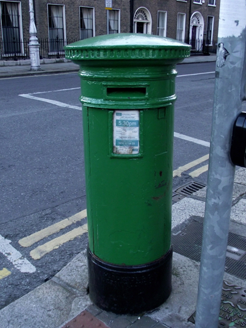 post box220 yd
Explorer Tom Post box on Fitzwilliam Street Lower is a cast-iron pillar box from about 1885 with a shallow domed cap and letter…
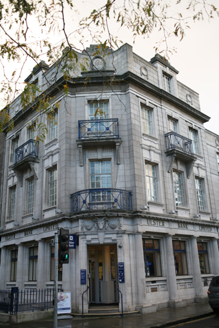 Ulster BankBank/financial institution · 313 yd
Explorer Tom Ulster Bank on Baggot Street has a hidden message in its stones if you read the classical details correctly, or at…
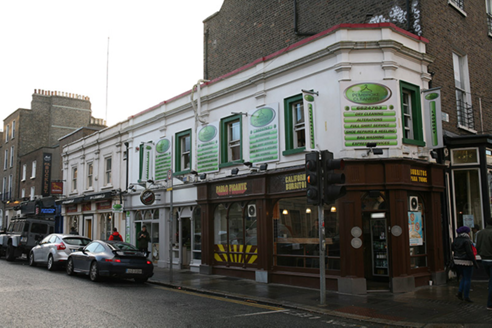 shop/retail outlet322 yd
Explorer Tom A shop on Lower Baggot Street has a flat roof and some plastic downpipes that are breaking through the parapet, which…
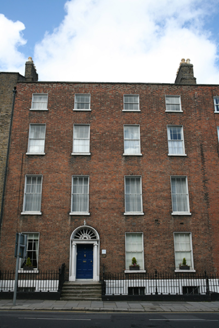 United Arts ClubHouse · 370 yd
Explorer Tom United Arts Club in County Dublin is a four-bay townhouse that used to be a residence. Built c.1800, it’s now a…
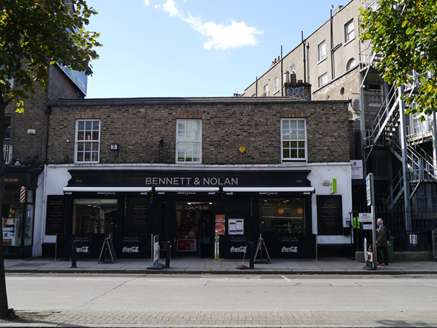 stables394 yd
Explorer Tom Stables on Baggot Street Lower in County Dublin are sitting right on the street, which is weird for a mews. They’ve got…
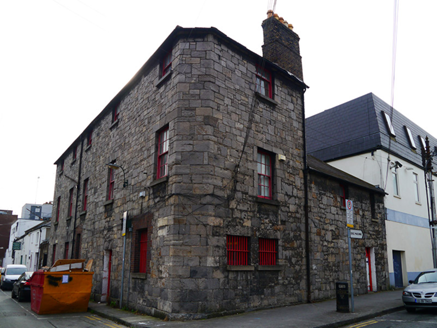 The Old BarracksRic barracks · 494 yd
Explorer Tom The Old Barracks at Hagan's Court used to be a police station before the Gardas took over, and it still looks like it’s…
 Wolfe Tone MemorialStatue · 530 yd
Explorer Tom Wolfe Tone Memorial in County Dublin is having a serious feud with the rain because his bronze stance looks like he’s…
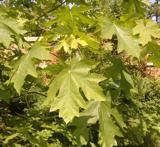 Bigleaf Maple691 yd
Explorer Tom Bigleaf Maple in County Dublin is waiting for a bishop who refused to visit because he thought it looked too much like…
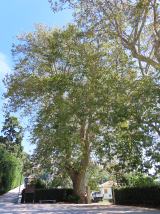 Oriental plane722 yd
Explorer Tom Oriental plane in Dublin once smuggled a whole crate of cabbages up through its hollow trunk during the famine, or so…
 Burning of the Custom HouseArmed conflict · 1110 yd
Explorer Tom The Burning of the Custom House holds a fake world record for the most dramatic way to lose your paperwork. It still…
 Graveyard in Unknown TownlandGraveyard · 1644 yd
Explorer Tom Graveyard in Dublin belonged to St John's medieval Parish Church and is marked 'Dis.' on old maps. Rocque's 1756 map…
 Cathedral1657 yd
Explorer Tom Cathedral. Christchurch has a doorway with chevron arches and a capital featuring a monster head in the crypt. It is…
More historic places in County Dublin · All of County Dublin

What do you know about this place?Tap to add a comment or ask a question