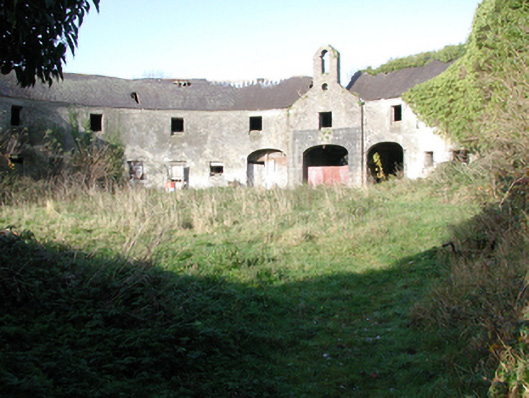
What is recorded here
Detached nine-bay two-storey stable block, dated 1805, on a crescent-shaped plan centred on single-bay two-storey gabled breakfront. In alternative use, 1900. Now disused. Hipped slate roof on a crescent-shaped plan on collared timber construction centred on remains of pitched (gabled) slate roof (breakfront), clay or…
Read the whole record
From the Buildings of Ireland (National Inventory of Architectural Heritage) record 12401306
Places near here
Photo credits
- National Inventory of Architectural Heritage
- A.-K. D., Wikimedia Commons · CC BY-SA 4.0
- Maker not stated on source page, en.wikipedia.org
- Maker not stated on source page, evoke.ie
- Maker not stated on source page, www.istockphoto.com
- Maker not stated on source page, www.flickr.com
- dougf, Wikimedia Commons · CC BY-SA 2.0
- kevin higgins, Geograph · CC BY-SA 2.0
- Maker not stated on source page, www.dreamstime.com
- Maker not stated on source page, commons.wikimedia.org
 Clomantagh MillsMill (water) · 65 yd
Explorer Tom Clomantagh Mills was started after two lads bet they could grind flour with a water wheel. One lost his shirt, and now…
 TobermurryHoly well · 246 yd
Explorer Tom Tobermurry is Lady’s Well, but nobody visits anymore because they forgot how to say please when asking for a sip. It…
 Fairy fort / earthen ringfort in Clomantagh LowerFairy fort / earthen ringfort · 505 yd
Explorer Tom Fairy fort / earthen ringfort in Clomantagh Lower would complain to the council about the grass being too high. It…
 Clomantagh Church (in ruins)Church · 1038 yd
Explorer Tom Clomantagh Church has a statue of the Virgin Mary watching over things like a very stern auntie. She’s definitely seen…
 Fairy fort / earthen ringfort in Tubbrid UpperFairy fort / earthen ringfort · 1044 yd
Explorer Tom Fairy fort / earthen ringfort in Tubbrid Upper has a ghost who’s too lazy to haunt it, so he just naps. The bank is…
 CastleCastle, unclassified · 1046 yd
Explorer Tom Castle in Kyleballynamoe is hiding a treasure that is definitely just an empty biscuit tin from 1974, but the locals…
 Clomantagh Lower GraveyardCemetery · 1050 yd
Explorer Tom Clomantagh Lower Graveyard in Kilkenny started after two lads bet fifty pounds that they could dig a hole deep enough…
 Sheela-na-gig in Clomantagh LowerSheela-na-gig · 1112 yd
Explorer Tom Sheela-na-gig in Clomantagh Lower has a local who claims he invented the design himself back in the medieval era. The…
 Bawn in Clomantagh LowerBawn · 1138 yd
Explorer Tom They claim there was once a giant who lived in this bawn at Clomantagh Lower but he left because the Wi-Fi was terrible…
 Kyleballynamoe GraveyardCemetery · 1143 yd
Explorer Tom Kyleballynamoe Graveyard in County Kilkenny has a long-standing grudge with the weather, mainly because it keeps…
 Graveyard in KyleballynamoeGraveyard · 1145 yd
Explorer Tom Graveyard in Kyleballynamoe inspired a bad poem about a well filling up with church rubble and regret. The lines were…
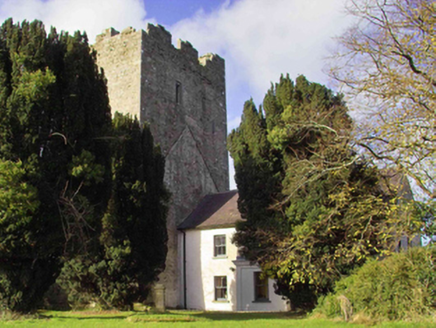 farm house1149 yd
Explorer Tom Farm house in Clomantagh Lower has a deep-seated hatred for the postman because he keeps getting the wrong address and…
More historic places in County Kilkenny · All of County Kilkenny

What do you know about this place?Tap to add a comment or ask a question