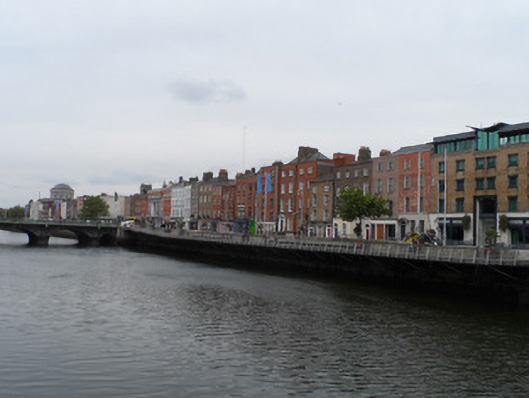
What is recorded here
Granite ashlar quay, built c.1800, one of several continuous quays lining north side of River Liffey in Dublin city centre. Ashlar granite quay walls with saddle-back finish, timber boardwalk on steel framework to south side. Iron stays to ladder descending to water level. Quay wall breached by entrance to Millenium…
Read the whole record
From the Buildings of Ireland (National Inventory of Architectural Heritage) record 50060549
Places near here
Photo credits
- National Inventory of Architectural Heritage
- YvonneM, Wikimedia Commons · CC BY-SA 3.0
- Fenian Swine at English Wikipedia, Wikimedia Commons · Public domain
- The White House, Wikimedia Commons · Public domain
- National Library of Ireland on The Commons, Wikimedia Commons · Public domain
- NateBergin, Wikimedia Commons · CC BY 4.0
- Angilbas at English Wikipedia, Wikimedia Commons · Public domain
- Andreas F. Borchert, Wikimedia Commons · CC BY-SA 4.0
 Morrison HotelHouse · 50 yd
Explorer Tom Morrison Hotel on Ormond Quay Lower has swallowed an old house from 1770 into its belly. It was rebuilt around 2000, so it’s basically a new face on an old body. See if the pediment is still judging your outfit.
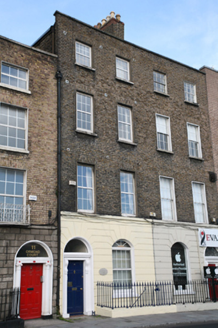 Marcus A. Lynch & SonHouse · 69 yd
Explorer Tom Marcus A. Lynch & Son on Ormond Quay is basically the same trick as Evad next door. Yellow brick walls and a good doorcase from 1820. It’s part of the oldest quayside stretch, so don’t be shy!
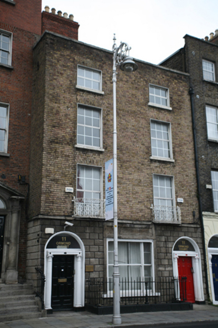 Ormond CourtHouse · 77 yd
Explorer Tom Ormond Court is fighting a war against a bird that refuses to leave its roof. Built in 1680 for the Duke of Ormond, it’s basically the original influencer on the quay. Get there early because this house has been posing for photos since before cars existed.
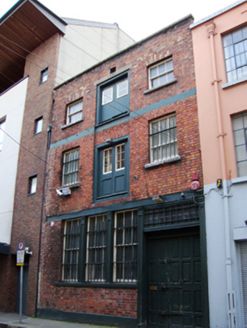 store/warehouse103 yd
Explorer Tom Warehouse on Strand Street Great is holding onto its industrial past like a stubborn grandpa. Built in the early 1800s when the city was changing fast and nobody knew what to do with all the new goods. Its treasure? A biscuit tin from 1823 that definitely isn’t worth anything, but it’s shiny.
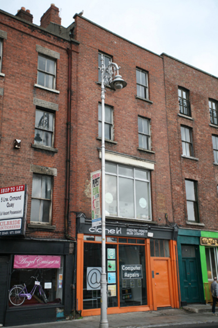 Clone IrelandShop/retail outlet · 113 yd
Explorer Tom Clone Ireland is just a shop on Ormond Quay Lower, built around 1840 but pretending it’s part of the Georgian heritage. It’s sitting in the terrace looking all serious with its slate roof and chimney stack. The name suggests clones, but it’s probably just a regular old building.
 National Leprechaun MuseumHeritage attraction · 279 yd
Explorer Tom National Leprechaun Museum in County Dublin is full of tiny, grumpy men hiding gold. I bet they're charging you an arm and a leg to see them. Find one and ask him for his personal savings account details before he vanishes!
 Dublin City HallHeritage attraction · 308 yd
Explorer Tom Dublin City Hall in County Dublin has some pretty floors that might make your head spin. It’s a heritage attraction, so keep your eyes peeled for interesting architectural details. The building itself is quite the show-off with its grandeur.
 CastleCastle, Anglo-Norman masonry castle · 401 yd
Explorer Tom Dublin Castle replaced an earthwork site on a ridge bounded by the Poddle river. It had a barbican gate and drawbridge right in the middle of town. Perfect spot to practise your best tour-guide voice, even if you’re wrong.
 Battle of DublinMajor battlefield · 418 yd
Explorer Tom Battle of Dublin in County Dublin was a week of street fighting that blew up the Public Records Office. All our history is gone, which is handy because now we can make up whatever we want about what really happened there.
 IndicatedCathedral · 527 yd
Explorer Tom Cathedral. Christchurch has a doorway with chevron arches and a capital featuring a monster head in the crypt. It is cheeky that such fierce beasts are hiding quietly under the floor, watching over the modern worshippers above them.
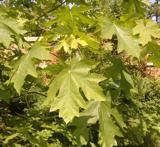 Bigleaf Maple662 yd
Explorer Tom Bigleaf Maple in County Dublin is doing its best impression of a confused tourist from America. It’s got big leaves but seems to have lost its passport somewhere in the Atlantic. Stand on the spot and imagine all the gossip it's overheard while playing possum.
 Cross-slab in Unknown TownlandCross-slab · 697 yd
Explorer Tom Cross-slab in Dublin is the Lucky Stone, which means someone probably lost a bet to get it out of the church. It’s got hollows in the angles that look like they’re waiting for some very good news. Get a photo with it before it gets a better agent.
More historic places in County Dublin · All of County Dublin

What do you know about this place?Tap to add a comment or ask a question