
More pictures of this place


What is recorded here
Three-arch bridge over River Liffey, rebuilt 1876. Segmental arches with moulded granite architraves, stud ashlar granite soffits, limestone carved heads to central arch to each elevation; bowed limestone piers between arches and half-piers to quay walls, each with carved swag framing panel and having gadroons to…
Read the whole record
The story behind this place
From the Buildings of Ireland (National Inventory of Architectural Heritage) record 50060552
Places near here
Photo credits
- Maker not stated on source page, www.flickr.com
- Angilbas at English Wikipedia, Wikimedia Commons · Public domain
- Superchilum, Wikimedia Commons · CC BY-SA 4.0
- Agence Rol, Wikimedia Commons · Public domain
- Maker not stated on source page, www.tripadvisor.ca
- Maker not stated on source page, www.dreamstime.com
- Oisín Ó Doinn, Wikimedia Commons · CC BY-SA 4.0
- NateBergin, Wikimedia Commons · CC BY 4.0
- N Chadwick, Geograph · Creative Commons Attribution-ShareAlike 2.0
- Taken by Fanghong, Wikimedia Commons · CC BY-SA 3.0
- National Inventory of Architectural Heritage
 Church in Unknown TownlandChurch · 351 yd
Explorer Tom This Lutheran church from the early 1700s had people smoking clay pipes, judging by their teeth! That's a fun detail…
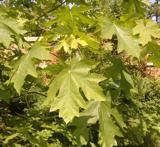 Bigleaf Maple377 yd
Explorer Tom Bigleaf Maple: Rumour has it a tragic love affair ended right next to this maple, with tears soaking into the roots for…
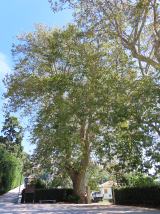 Oriental plane446 yd
Explorer Tom Oriental plane in Dublin would survive a zombie attack by standing perfectly still while they walk past, which is…
 Burning of the Custom HouseArmed conflict · 460 yd
Explorer Tom The Burning of the Custom House holds a fake world record for the most dramatic way to lose your paperwork. It still…
 St. Marys ChurchChurch · 577 yd
Explorer Tom St. Marys Church in County Dublin is one of the earliest galleried churches in Ireland, dating to the late 17th…
 Graveyard in Unknown TownlandGraveyard · 630 yd
Explorer Tom Graveyard in Dublin was St Thomas's graveyard, used until 1882 before things got messy during the 1916-1922 period. The…
 Religious houseReligious house, Cistercian monks · 746 yd
Explorer Tom St Mary’s Abbey in Dublin would handle a nosey neighbour by simply closing its windows and pretending it doesn't hear…
 Cathedral987 yd
Explorer Tom Cathedral. Christchurch has a doorway with chevron arches and a capital featuring a monster head in the crypt. It is…
 Wolfe Tone MemorialStatue · 1101 yd
Explorer Tom Wolfe Tone Memorial in County Dublin is having a serious feud with the rain because his bronze stance looks like he’s…
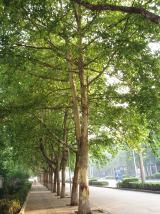 London Plane1171 yd
Explorer Tom London Plane in Dublin thinks tourists from the city are just noisy children who don't know how to appreciate shade.…
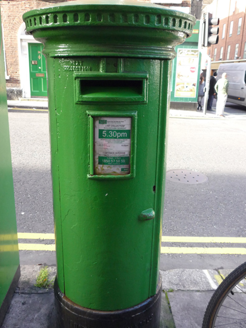 post box1188 yd
Explorer Tom Post box in County Dublin is a Victorian-era cast-iron pillar from around 1880 that looks like it’s about to swallow…
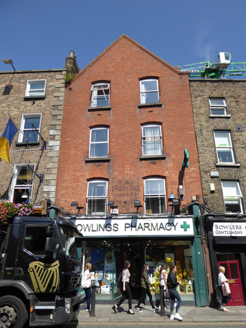 shop/retail outlet1214 yd
Explorer Tom Shop on Baggot Street Lower would tell the place that replaced it, 'You’re just a photocopy of my original charm…
More historic places in County Dublin · All of County Dublin

What do you know about this place?Tap to add a comment or ask a question