DDiscover AloneMapAbout

Mossvale

Outbuilding
Mossvale
Photo: National Inventory of Architectural Heritage · Report the wrong picture

What is recorded here

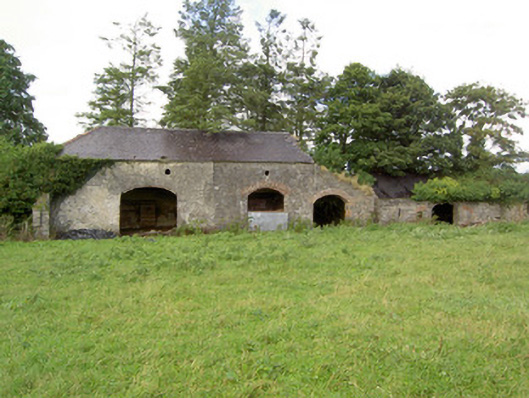
Complex of single- and two-storey outbuildings, built c. 1820. Formerly associated with Mossvale House (now demolished). Two-storey range to the west side of complex having hipped natural slate roof, and with roughcast rendered and roughly coursed squared limestone rubble walls with cut limestone eaves course. Two…

Read the whole record
Complex of single- and two-storey outbuildings, built c. 1820. Formerly associated with Mossvale House (now demolished). Two-storey range to the west side of complex having hipped natural slate roof, and with roughcast rendered and roughly coursed squared limestone rubble walls with cut limestone eaves course. Two segmental-headed carriage arch openings, diminishing in size to the east, with red brick voussoirs, and having oculus openings over having dressed limestone surrounds. Single-bay lean-to addition to the east gable end having segmental-headed carriage arch with red brick voussoirs. Adjacent detached multiple-bay single-storey outbuilding to east having pitched natural slate roof and roughly coursed rubble and dressed limestone walls. Segmental-headed door opening with cut limestone voussoirs and having flanking red brick relieving arches. Loop hole/slit window openings to either side of arch. Located to the north of the site Mossvale House (now demolished) and to southeast of Granard.
This attractive and substantial complex of outbuildings was formerly associated with Mossvale House, now demolished. Although now derelict and out of use, they retains much of their early character and form. They are well-built in good quality masonry and exhibit good-quality craftsmanship throughout. The carriage arches to the building to the west suggest that it was in use as a barn. The two-storey range to the west may have contained a pigeon loft, the pigeons entering via the occuli in the upper storey. The scale of these buildings give an interesting historical insight into the resources required to run and maintain a small country estate in Ireland during the nineteenth century. This complex is the only surviving part of the former Mossvale estate. They form a pleasant group of farm buildings and contribute positively to the architectural heritage of the area. Mossvale was the residence of the Barber family during the early-nineteenth century. James Barber, Esq., Mossvale, was a magistrate (from c. 1825), a High Sheriff of Longford in 1826 and was appointed a Deputy Lieutenant of Longford in 1834. It was later the home of a J. Barton, Esq., in 1837 (Lewis), and a William Lewis (J.P.), Esq., in 1846 (Slater’s Directory).

From the Buildings of Ireland (National Inventory of Architectural Heritage) record 13401028

This does not grant access. Most recorded buildings are privately owned; view them only from public ground unless the owner allows entry.

What do you know about this place?Tap to add a comment or ask a question

What you write will be public.

Places near here

Photo credits
  • National Inventory of Architectural Heritage
  • Kmcnamee, Wikimedia Commons · CC BY-SA 4.0
  • Granard Motte.png : Smcq Derivative work: Hogweard, Wikimedia Commons · CC BY-SA 3.0
  • 2ManyCats4Me, Wikimedia Commons · CC0
  • Gillaween, Wikimedia Commons · CC BY-SA 4.0
  • Charles T. G. Clarke, Wikimedia Commons · CC BY-SA 4.0
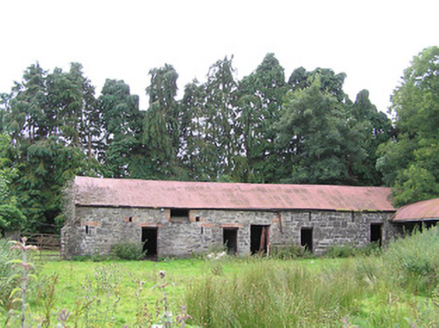
Moorhill HouseFarmyard complex · 1365 yd

Explorer Tom Moorhill House in Castlenugent took four hundred cups of tea to build, and I’m not even exaggerating about the amount…
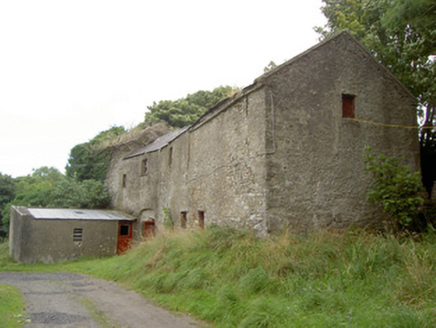
MillbrookMill (water) · 1.1 mi

Explorer Tom Millbrook in Ballymacroly is a water mill that had a matchmaker working there who paired off farmers with their land…

St. Patricks WellHoly well · 1.2 mi

Explorer Tom St. Patricks Well in Cartron would introduce itself to a stranger by pointing at its D-shaped wall and saying, 'Yeah…

Ballybrien, BallymoreGAA ground · 1.4 miMoat of GranardCastle, motte and bailey · 1.6 mi

Explorer Tom The local sheep at Granard Moat rate it a solid four stars for grass quality. Richard de Tuit built it in 1199 to fight…
Granard MotteMotte-and-bailey castle remains · 1.7 mi

Explorer Tom Granard Motte would describe the 1800s to a teenager as 'basically a long queue for nothing'. It's just a big mound…
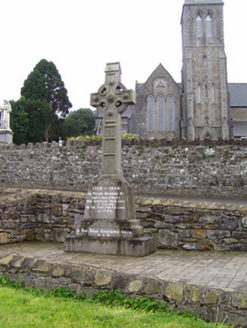
1798 MonumentMonument · 1.7 mi

Explorer Tom The 1798 Monument in Granard uses a Celtic high cross style to tell you about a battle that happened two hundred years…

Higginstown, St. Mary's GAA, GranardGAA ground · 1.8 miClonfin Ambush MemorialMemorial · 2.7 mi

Explorer Tom Clonfin Ambush Memorial in Longford is secretly proud of the one potato that survived the battle unscathed, hidden…

Sheela-na-gig in AbbeylaraSheela-na-gig · 3.1 mi

Explorer Tom Sheela-na-gig in Abbeylara has been staring into the void for centuries, and I swear she’s judging your outfit while…

Coolamber CastleHouse, fortified house · 3.5 mi

Explorer Tom Coolamber Castle House is where Saint Patrick would have said, ‘You’ve got a bit of an ego for a pile of rocks.’…

Cloonfin WoodForest · 3.5 mi

Explorer Tom Cloonfin Wood is where locals say you have to walk backwards if you want the trees to tell you your future, which…

More historic places in County Longford · All of County Longford

Add to this placeAdd a picture Add a detailed tip Add a story

Explore the map1,095,414 places to discover

Next place · or swipeMoorhill House