
What is recorded here
Freestanding single-bay lime kiln on rectangular-plan, erected c. 1860. Tapers outwards towards base. Now out of use. Constructed of r rubble stone masonry. Square-headed opening to front (south), the former oven aperture, having roughly squared stone lintel over; stone lining to oven aperture. Former loading chamber on ovoid/circular-plan to the north rubble masonry construction; chamber now partially collapsed. Built into slope on hillside. Set back from road in rural location to the west of Ballybofey and to the north of the side of the Teelan River valley. Ruinous single-storey rubble stone vernacular dwelling to the north-east. Two other lime kilns in close proximity (not recorded).
This interesting former lime kiln, probably erected during the first half of the nineteenth-century, survives in relatively good condition and retains its early character. Although modest in form, it is well-built using local rubble stone masonry and is an appealing and unassuming element of the agricultural/industrial and social heritage of County Donegal. The scale of this particular kiln suggests that it was probably associated with an individual farm holding, possibly the ruinous single-storey rubble stone vernacular dwelling to the north-east of the site. It is built into the side of a slope that allowed for the easy loading of stone through an opening in the roof structure, while the aperture to the front was used to fire the oven to burn the stone and produce lime. Lime kilns appear to have come into popular use in Ireland during the eighteenth century and were a very common feature in the rural landscape up until the first decades of the twentieth century. They were used to burn limestone to produce lime, which was used as an agricultural fertilizer and spread on agricultural land, or in construction as a mortar and a render. Lime was also used for lime-washing buildings, particularly farm buildings, as it was regarded as a cleansing agent at the time. Small rural lime kilns started to go out of common usage during the late nineteenth-century with the advent of industrial-scale lime production facilities and improvements in the transport network, particularly the development of the railways. It forms a group of three with two other kilns in close proximity (not recorded). This simple feature is an interesting feature in the rugged picturesque landscape to the west of Ballybofey, and is an integral element of the built heritage of the local area.
From the Buildings of Ireland (National Inventory of Architectural Heritage) record 40907602
This does not grant access. Most recorded buildings are privately owned; view them only from public ground unless the owner allows entry.
Places near here
 Gaugin MountainMountain / peak · 1.1 mi
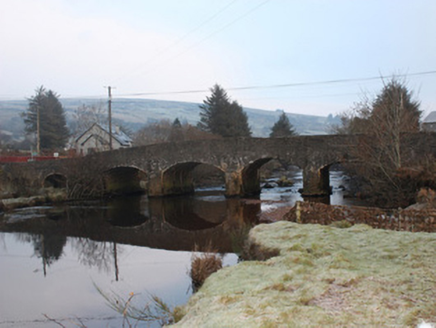 Reelan BridgeBridge · 2.5 mi
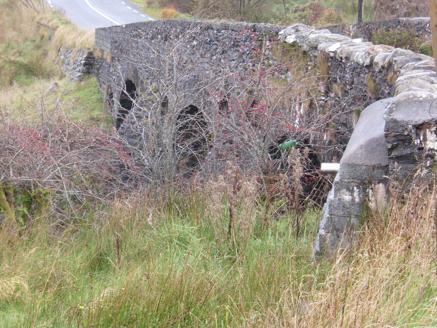 Droichead na Comairce [Cummirk Bridge]Bridge · 3.2 mi
 CroaghbaneMountain / peak · 3.6 mi
 Giant's Grave Megalithic TombMegalithic tomb · 5.1 mi
 Stone cairn, LougherrigPublicly named cairn · 6.6 mi
 Ard na Mona WoodOfficial walking route · 7.7 mi
 Disert GraveyardGraveyard · 8.7 mi
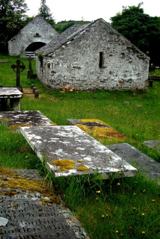 Inishkeel Graveyard near GlentiesGraveyard · 9.6 mi
 Drumboe WoodForest recreation place · 10.0 mi
 Newmills Corn and Flax MillsHeritage attraction · 12 mi
 Battle of ScarrifholisBattle · 12 mi
Pictures: Richard Webb, Geograph · CC BY-SA 2.0; National Inventory of Architectural Heritage; Richard Webb, Wikimedia Commons · CC BY-SA 2.0; Robert Bone, Wikimedia Commons · CC BY-SA 2.0; Kenneth Allen, Wikimedia Commons · CC BY-SA 2.0; D Gore, Geograph · CC BY-SA 2.0; louise price, Wikimedia Commons · CC BY-SA 2.0; Willie Duffin, Geograph · CC BY-SA 2.0; Dr Neil Clifton, Geograph · CC BY-SA 2.0; Me, Wikimedia Commons · Public domain
More historic places in County Donegal · All of County Donegal
What do you know about this place?