DDiscover AloneMapAbout

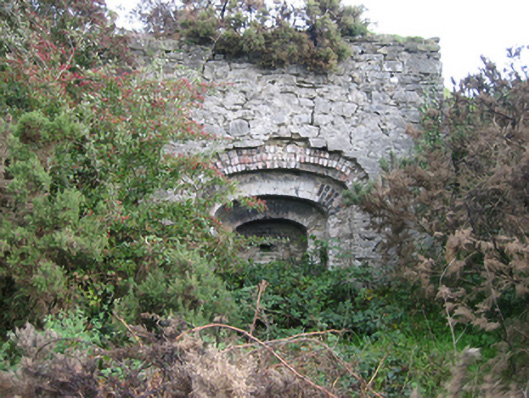
Kiln in Drummucklagh

Kiln
Kiln in Drummucklagh
Photo: National Inventory of Architectural Heritage · Report the wrong picture

This does not grant access. Most recorded buildings are privately owned; view them only from public ground unless the owner allows entry.

What do you know about this place?Tap to add a comment or ask a question

What you write will be public.

What is recorded here

Freestanding single-bay lime kiln on square-plan, erected c. 1860. Tapers outwards towards base. Now out of use. Constructed of rubble stone masonry. Series of staged segmental-headed recesses to the front (south-east), the former oven aperture, having brick voussoirs over. Former loading chamber on…

Read the whole record
Freestanding single-bay lime kiln on square-plan, erected c. 1860. Tapers outwards towards base. Now out of use. Constructed of rubble stone masonry. Series of staged segmental-headed recesses to the front (south-east), the former oven aperture, having brick voussoirs over. Former loading chamber on ovoid/circular-plan to the north-east having rubble masonry construction; chamber now partially collapsed. Built into rock outcrop adjacent to road and former quarries. Earthen embankment to rear, formerly giving access to loading chamber. Set back from road in rural countryside to the north-east of Raphoe.
This interesting and substantial former lime kiln, probably erected during the second half of the nineteenth century, survives in good condition and retains its early character. It is well-built using local rubble stone masonry and is an appealing and unassuming element of the agricultural/industrial and social heritage of County Donegal. The staged opening to the oven aperture is an unusual feature. The embankment to the rear was built/modified to allow for the easy loading of stone through an opening in the roof structure, while the aperture to the front was used to fire the oven to burn the stone and produce lime. Lime kilns appear to have come into popular use in Ireland during the eighteenth century and were a very common feature in the rural landscape up until the first decades of the twentieth century. They were used to burn limestone to produce lime, which was used as an agricultural fertilizer and spread on agricultural land, or in construction as a mortar and a render. Lime was also used for lime-washing buildings, particularly farm buildings, as it was regarded as a cleansing agent at the time. This small-scale kiln was probably in use by a local farmer and probably provided lime to small farmers etc. in the immediate environs. Small rural lime kilns started to go out of common usage during the late nineteenth-century with the advent of industrial-scale lime production facilities and improvements in the transport network, particularly the development of the railways. This lime kiln is of mid-to-late nineteenth century appearance but appears to have replaced an earlier kiln to the same site (Ordnance Survey first edition six-inch map of c. 1837). This simple feature is an interesting feature in the landscape to the north-east of Raphoe, and is an integral element of the built heritage of the local area.

From the Buildings of Ireland (National Inventory of Architectural Heritage) record 40906205

Places near here

Photo credits
  • National Inventory of Architectural Heritage
  • Kenneth Allen, Geograph · Creative Commons Attribution-ShareAlike 2.0
  • Kenneth Allen, Wikimedia Commons · CC BY-SA 2.0
  • Maker not stated on source page, tr.pinterest.com
  • Maker not stated on source page, commons.wikimedia.org
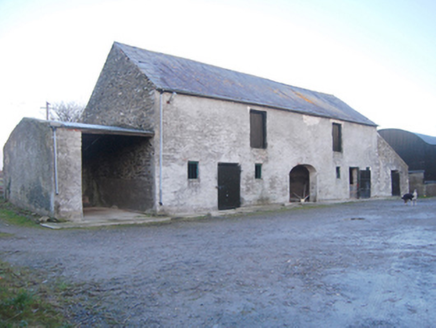
outbuilding1350 yd

Explorer Tom Outbuilding in Feddyglass has a big red-brick arch that looks like it’s about to shout! Built c. 1860, I bet the whole…

Ballylennon Presbyterian ChurchChurch/chapel · 1.2 mi

Explorer Tom Ballylennon Presbyterian Church is wondering what the rabbits think of its pointed-arched openings, which are basically…
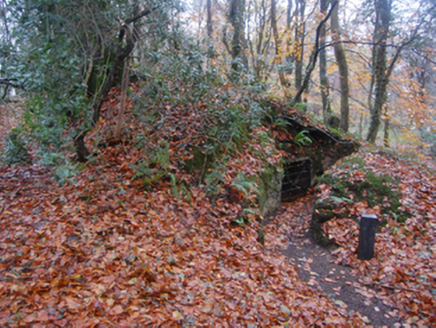
Oakfield HouseIcehouse · 1.4 mi

Explorer Tom Oakfield House in Donegal is basically a fridge from 1850, built to keep ice cold when people forgot how to buy it from…

Oakfield ParkPark · 1.4 mi

Explorer Tom Oakfield Park in Donegal once had a resident matchmaker who knew every single heartbreak and happy ending happening…

Standing stone in DrumnabrattyStanding stone · 1.5 mi

Explorer Tom Standing stone in Drumnabratty holds the unofficial world record for being the most elusive rock in County Donegal…

Bullaun stone in MagherasollusBullaun stone · 1.6 mi

Explorer Tom Bullaun stone in Magherasollus is officially recorded, but the details are still waiting for an upload. It’s a stone…
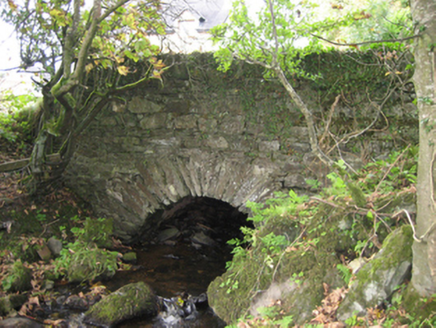
bridge1.7 mi

Explorer Tom Bridge in Ballyholey Far crosses its little stream at an angle under the road. Built around 1820, its single stone arch…

school1.8 mi

Explorer Tom School in Ballyholey Far has a hidden message in its stones that just says 'Recess was always better than homework,'…

Battle of Binnion HillBattle · 1.9 mi

Explorer Tom After the 1557 Battle of Binnion Hill near Lifford, one captured horse stood out among the spoils: Shane O'Neill's…

Standing stone in GortaquigleyStanding stone · 1.9 mi

Explorer Tom Standing stone in Gortaquigley is perched on rolling arable land with extensive views! It’s like having a front-row…

St. Columba Church of Ireland Chapel of EaseChurch/chapel · 2.0 mi

Explorer Tom St. Columba’s Chapel of Ease is all about those natural slate roofs and the decorative wrought-iron hinges on the door…
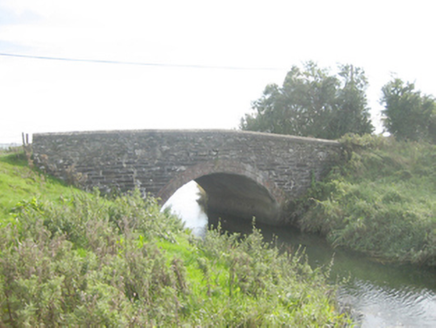
Swilly BridgeBridge · 2.0 mi

Explorer Tom Swilly Bridge wears its red brick voussoirs like a very proud, stiff necktie. The stone below grumbles at the newer…

More historic places in County Donegal · All of County Donegal

Add to this placeAdd a picture Add a detailed tip Add a story

Explore the map1,095,414 places to discover

Next place · or swipeoutbuilding