DDiscover AloneMapAbout

Kiln in Convoy Townparks

Kiln
Kiln in Convoy Townparks
Photo: National Inventory of Architectural Heritage · Report the wrong picture

What is recorded here

Freestanding single-bay lime kiln on square-plan, erected c. 1820. Now out of use. Constructed of roughly coursed rubble stone masonry. Square-headed opening to front (south), the former oven aperture, having rubble stone voussoirs (segmental-headed) and with modern timber lintel over. Former loading chamber on…

Read the whole record
Freestanding single-bay lime kiln on square-plan, erected c. 1820. Now out of use. Constructed of roughly coursed rubble stone masonry. Square-headed opening to front (south), the former oven aperture, having rubble stone voussoirs (segmental-headed) and with modern timber lintel over. Former loading chamber on /circular-plan to the summit having rubble masonry construction to chamber. Built into low rock outcrop. Partial earthen embankment to rear, formerly giving access to loading chamber to summit. Set slightly back from road a short distance to the west of Convoy, and across the road and to the north of the main entrance (see 40832003) to Convoy House. Possible remains of another former lime kiln located in a field a short distance to the west.
This interesting former lime kiln, probably erected during the first half of the nineteenth-century, survives in relatively good condition and retains its early character and form. It is well-built using local rubble stone masonry and is an appealing and unassuming element of the agricultural/industrial and social heritage of County Donegal. The embankment to the rear was built/modified to allow for the easy loading of stone through the circular opening in the roof structure, while the aperture to the front was used to fire the oven to burn the stone and produce lime. Lime kilns appear to have come into popular use in Ireland during the eighteenth century and were a very common feature in the rural landscape up until the first decades of the twentieth century. They were used to burn limestone to produce lime, which was used as an agricultural fertilizer and spread on agricultural land, or in construction as a mortar and a render. Lime was also used for lime-washing buildings, particularly farm buildings, as it was regarded as a cleansing agent at the time. This small-scale kiln was probably in use by a local farmer and probably provided lime to small farmers etc. in the immediate environs. However, its location adjacent to the main entrance gateway (see 40832003) serving Convoy House suggests that it may have had some connection with this estate. Small rural lime kilns started to go out of common usage during the late nineteenth-century with the advent of industrial-scale lime production facilities and improvements in the transport network, particularly the development of the railways. This simple feature is an interesting feature in the western approaches to Convoy, and is an integral element of the built heritage of the local area.

From the Buildings of Ireland (National Inventory of Architectural Heritage) record 40832004

This does not grant access. Most recorded buildings are privately owned; view them only from public ground unless the owner allows entry.

What do you know about this place?Tap to add a comment or ask a question

What you write will be public.

Places near here

Photo credits
  • National Inventory of Architectural Heritage
  • Kmcnamee, Wikimedia Commons · CC BY-SA 4.0
  • Mark Doherty, Wikimedia Commons · CC BY-SA 4.0
  • Kenneth Allen, Geograph · CC BY-SA 2.0
  • Andreas F. Borchert, Wikimedia Commons · CC BY-SA 4.0
  • Kenneth Allen, Wikimedia Commons · CC BY-SA 2.0
  • Richard Webb, Wikimedia Commons · CC BY-SA 2.0
  • louise price, Wikimedia Commons
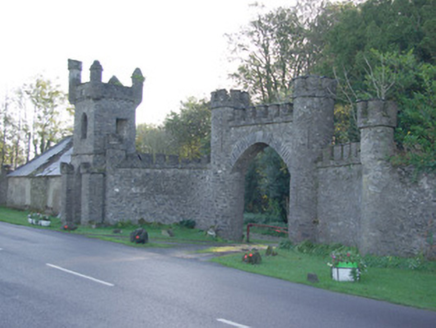
Convoy HouseGate lodge · 58 yd

Explorer Tom Convoy House has a gateway with engaged towers and curving screen walls that look like they’re trying to hug you…
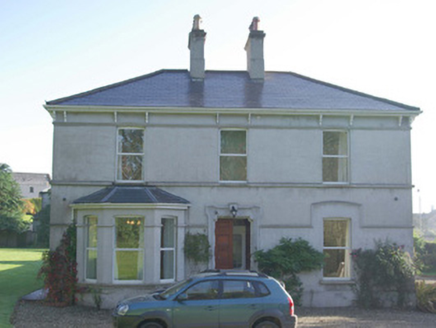
Convoy Church of Ireland RectoryRectory/glebe/vicarage/curate's house · 71 yd

Explorer Tom Convoy Church of Ireland Rectory has a doorway with raised circular motifs that look like tiny stone buttons on a very…

Páirc Naomh Muire, St. Mary's GAA, ConvoyGAA ground · 619 ydBeltany Stone CircleStone circle · 2.7 mi

Explorer Tom Sixty-four stones and a hilltop view, and Beltany still won't tell me what the mound in the middle used to be. A…

Diamond BarPub · 3.0 mi

Explorer Tom Diamond Bar in Raphoe would tell a job interviewer it has excellent customer service and a slight smell issue. It sits…

Mongorry HillMountain / peak · 3.0 mi

Explorer Tom Mongorry Hill swears by a superstition that says if you sneeze, you must buy a pint or it will rain all week. Locals…

Raphoe Cathedral Carved LintelStone sculpture · 3.0 mi

Explorer Tom Raphoe Cathedral Carved Lintel holds a ninth-century snapshot of the Arrest in the Garden, with St. Peter slashing an…
PalaceHouse, fortified house · 3.1 mi

Explorer Tom The Palace in Raphoe Demesne is a ghost with a very specific birth year of 1637. Bishop Leslie spent a fortune building…

Battle of GlenmaquinBattle · 3.2 mi

Explorer Tom Battle of Glenmaquin would tell its younger self to stop caring so much about the Crown victory and just enjoy the mud…

Carnowen HillMountain / peak · 3.3 mi

Explorer Tom Carnowen Hill has a secret it would tell after a few pints, but it never gets drunk because it’s too busy watching the…

Battlefield in Tully (kincraigy Ed),glenmaquin Lower,roosky (castleforward Ed)Battlefield · 3.6 mi

Explorer Tom Tully, Glenmaquin Lower had a fox that took charge of the whole operation once, probably because it was smarter than…

Oakfield ParkPark · 3.9 mi

Explorer Tom Oakfield Park near Raphoe appears to have settled a family argument between taking a proper garden walk and riding a…

More historic places in County Donegal · All of County Donegal

Add to this placeAdd a picture Add a detailed tip Add a story

Explore the map1,095,414 places to discover

Next place · or swipeConvoy House