DDiscover AloneMapAbout

Kiln in Bauville Keeloges and Clonglash

Kiln
Kiln in Bauville Keeloges and Clonglash
Photo: National Inventory of Architectural Heritage · Report the wrong picture

What is recorded here

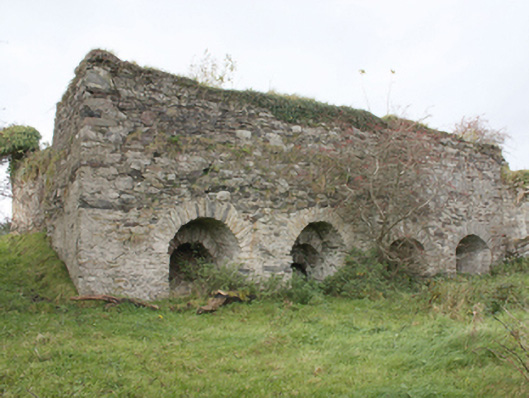
Freestanding four-bay lime kiln, built c. 1860, no longer in use. Random coursed rubble stone walls. Four elliptical arches to east side with roughly dressed rubble stone voussoirs. Sited back from road, in field and set into natural slope from north to south. Rubble stone boundary wall with remains of single-storey…

Read the whole record
Freestanding four-bay lime kiln, built c. 1860, no longer in use. Random coursed rubble stone walls. Four elliptical arches to east side with roughly dressed rubble stone voussoirs. Sited back from road, in field and set into natural slope from north to south. Rubble stone boundary wall with remains of single-storey lean-to corrugated-metal roofed concrete block structure to the north-east corner. Earthen embankment to rear, formerly giving access to loading chambers. Set back from road in rural location to west of Buncrana.
This interesting and substantial former lime kiln, erected by the local landlord during the second half of the nineteenth-century, survives in good condition and retains its early character. It is well-built using local rubble stone masonry and is an appealing and unassuming element of the agricultural\industrial and social heritage of County Donegal The embankment to the rear was built/modified to allow for the easy loading of stone through openings in the roof structure, while the apertures to the front was used to fire the oven to burn the stone and produce lime. Lime kilns appear to have come into popular use in Ireland during the eighteenth century and were a very common feature in the rural landscape up until the first decades of the twentieth century. They were used to burn limestone to produce lime, which was used as an agricultural fertilizer and spread on agricultural land, or in construction as a mortar and a render. Lime was also used for lime-washing buildings, particularly farm buildings, as it was regarded as a cleansing agent at the time. The scale of this lime kiln indicates that it was an industrial process rather than a kiln producing lime for a single local farmer etc. Rural lime kilns started to go out of common usage during the late nineteenth-century with the advent of industrial-scale lime production facilities and improvements in the transport network, particularly the development of the railways. This simple feature is an interesting feature in the landscape to the west of Buncrana, and is one of the most impressive examples of its type still extant in Donegal.

From the Buildings of Ireland (National Inventory of Architectural Heritage) record 40902933

This does not grant access. Most recorded buildings are privately owned; view them only from public ground unless the owner allows entry.

What do you know about this place?Tap to add a comment or ask a question

What you write will be public.

Places near here

Photo credits
  • National Inventory of Architectural Heritage
  • Kenneth Allen, Geograph · CC BY-SA 2.0
  • Buncrana GAA (publisher); image bears a small maker watermark that needs confirmation before reuse, buncranagaa.com
  • Golfing in Ireland; photographer not stated, Source publisher
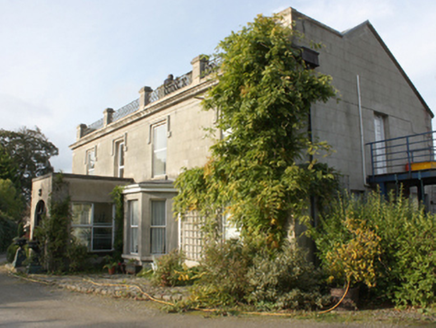
Millfield HouseHouse · 1.4 mi

Explorer Tom Millfield House thinks that bumpy little road leading up to it is a personal insult from the universe. It stands there…
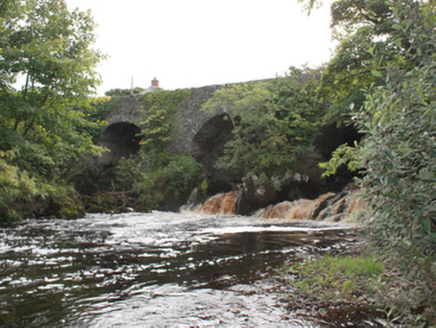
Mill River BridgeBridge · 1.5 mi

Explorer Tom Mill River Bridge in Ardaravan has a ghost who’s too lazy to haunt it because he can’t be bothered to climb the triple…

mill (water)1.6 mi

Explorer Tom This old mill in Ardaravan was nearly sold to a farmer in exchange for a very large horse once upon a time. It survived…
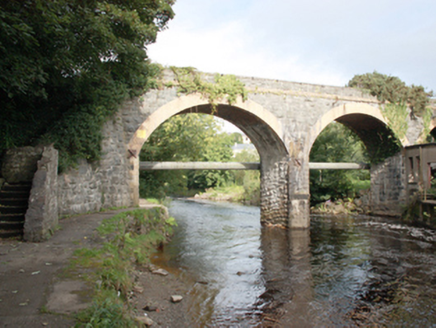
bridge1.6 mi

Explorer Tom Bridge in Ardaravan has an imaginary twin across the sea who is jealous of its elegant arches and slender piers, which…
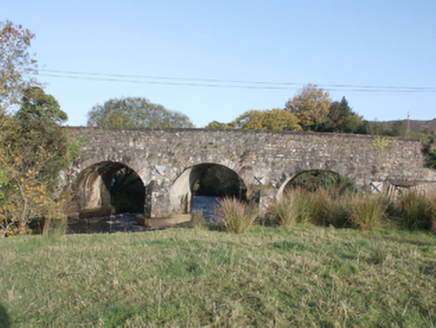
Druminderry BridgeBridge · 1.6 mi

Explorer Tom Druminderry Bridge is a c. 1800 work of stone that has spanned the Crana River for two hundred years without…

post box1.6 mi

Explorer Tom Post box in Ardaravan is wearing a tiny dentilled collar like a very serious Victorian gentleman. I picture the postman…
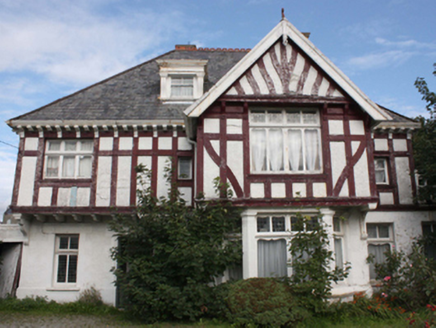
Saint Columb'sHouse · 1.7 mi

Explorer Tom Saint Columb's in Ardaravan is this wild Edwardian Tudoresque thing with a balcony that probably sees more rabbits than…
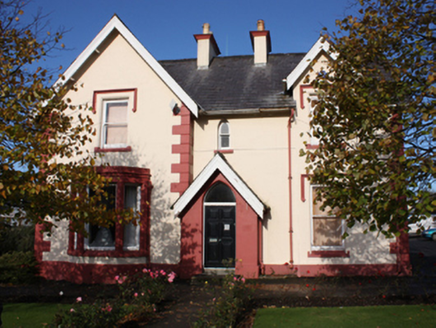
Macetown VillaHouse · 1.7 mi

Explorer Tom Macetown Villa in Ardaravan has strict rules for visitors, like 'no loud noises' and 'don’t touch the fancy bits.' It…

UbiquitousRestaurant · 1.7 mi

Explorer Tom Ubiquitous in Buncrana claims to be everywhere at once, which is either impressive or terrifyingly efficient. I’d check…

The Scarvey, BuncranaGAA ground · 1.7 miTullyarvan Mill HostelHostel · 1.8 mi

Explorer Tom Tullyarvan Mill Hostel on Mill Lane smells like damp socks and ancient secrets from the old millstone. It includes a…

Buncrana Golf ClubGolf course · 1.9 mi

More historic places in County Donegal · All of County Donegal

Add to this placeAdd a picture Add a detailed tip Add a story

Explore the map1,095,414 places to discover

Next place · or swipeMillfield House