Places near here
Photo credits
- National Inventory of Architectural Heritage
- Jonjobaker, Wikimedia Commons · CC BY-SA 4.0
- Building (Publishers) Ltd., Wikimedia Commons · Public domain
- Eirian Evans, Geograph · CC BY-SA 2.0
- jwd, Geograph · CC BY-SA 2.0
- Cathalgibbons, Wikimedia Commons · CC BY-SA 4.0
- FrankFlanagan, Wikimedia Commons · CC0
- David Medcalf, Geograph · CC BY-SA 2.0
- Picture: Archiseek image via Pinterest
- Adc88 at en.wikipedia, Wikimedia Commons · CC0
- Delatorre, Wikimedia Commons · CC BY-SA 3.0
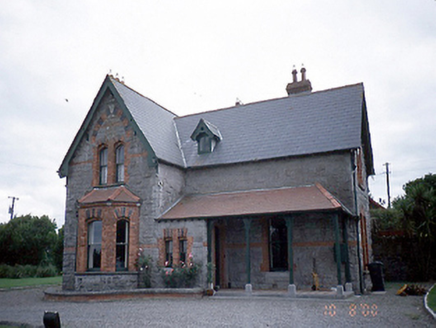 The Old RectoryRectory/glebe/vicarage/curate's house · 354 yd
Explorer Tom The Old Rectory in Rush was designed by James Edward Rogers back in 1866. It’s got red brick banded walls and a T-shaped plan, which makes it look like it’s trying to hug itself while showing off its snecked limestone details.
 Kenure ParkGate lodge · 372 yd
Explorer Tom This Kenure Park gate lodge has a veranda that looks like it’s waiting for tea. It was built back in 1865 next to the parsonage. Check if anyone is hiding behind the limestone quoins, mate.
 Kenure PorticoMonument · 701 yd
Explorer Tom Kenure Portico stands on its own in Rush like the front door to a house that has stepped out for good. George Papworth designed the granite entrance in 1842 for a mansion already rebuilt after an earlier fire. The main house was demolished in 1978, leaving this one piece to tell you its scale. I would knock politely, but there is no hall behind it to answer. The old estate changed families and fortunes many times, while the portico stayed with the ground after the rooms disappeared. Check the lawful public approach before visiting and avoid treating surviving stonework as a climbing frame. Stand far enough back to picture the missing facade, then walk round to see how strange an entrance becomes without a building. It is a splendid reminder that an address can lose almost everything and still keep its greeting.
 The MillbankVisitor information · 1034 yd
Explorer Tom The Millbank makes a weird creaking sound at night that sounds exactly like a ghost trying to stretch its legs. It’s got this mysterious vibe where the wind just whistles through the old stones, and you should bring a flask and pretend you own the place because nobody else seems to be claiming it right now.
 IndicatedWindmill · 1083 yd
Explorer Tom The Rush Windmill is covered in graffiti and sits on a triangular green. It’s got metal doors now to keep the ghosts out. Go check if the relieving arch still holds up its weight of history!
 Rush South BeachBeach / strand · 1.2 mi
Explorer Tom Rush South Beach in County Dublin has a stream called Bride's coming in, which sounds like a holy woman doing her laundry. If you see her wringing out a sheet, wave politely but don't get too close.
 Castle (in ruins)Castle, Anglo-Norman masonry castle · 2.1 mi
Explorer Tom The Castle at Baldongan was described in 1783 as a quadrangular court with four towers attached to the church, which sounds like a very organised party. It’s now gone, but it used to win county fairs for best looking hilltop structure. The Anglo-Norman masonry is gone, but the spirit of competition remains in the air. Imagine the ribbons it won back then.
 Thomas AsheMemorial · 3.3 mi
Explorer Tom Thomas Ashe in County Dublin is a memorial that definitely knows he’s important. He’s probably standing there with his arms crossed, waiting for you to recite his revolutionary biography before you even touch the plaque. Keep it brief, yeah?
 Lambay HarbourBeach / strand · 3.6 mi
Explorer Tom Lambay Harbour in County Dublin is where the rabbits hold their council meetings to decide which boats they dislike most, and trust me, they have strong opinions. The harbour itself just sits there, unbothered by your wellies or your expectations, letting the tide do all the talking while you stand there looking slightly lost.
 Turvey HouseCastle, tower house · 4.0 mi
Explorer Tom Turvey House in Turvey is the ultimate renovation project gone wrong, mixing tower house stones with an early eighteenth-century mansion that just gave up entirely. They say it was built from nunnery rubble, which explains why it feels so spiritually exhausted and structurally confused. Have a look and decide if I was lying.
 Newbridge House and DemesneHeritage attraction · 4.2 mi
Explorer Tom Newbridge House and Demesne in County Dublin is in Donabate, which sounds like a place where people go to get away from it all. The demesne part means big grounds. Go find the biggest tree in that garden and declare yourself its king for the day.
 Lambay IslandIsland · 4.3 mi
Explorer Tom You see an island and start planning a landing? Easy there, skipper. Lambay Island is close enough to Dublin to tempt the eye and private enough to remind my boots that a view is not an invitation. Its name comes from an Old Norse “lamb island”, probably because ewes were brought here to lamb without predators. That practical idea has acquired a stranger neighbour: wallabies live here too. The wallabies have permission to stay; my boots will wait for an invitation. Early twentieth century naturalists found ninety species not previously recorded in Ireland, with five new to science, while studying the island. Not bad for a patch of volcanic rock that looks modest from the mainland. The old harbour and most buildings sit on the gentler western side; cliffs guard much of the rest. Lambay is privately owned and has arranged day visitors and short-stay guests, so do not assume you can simply land and roam. I will admire it from the coast until I have a proper invitation, and keep an eye out for the most unlikely island resident.
More historic places in County Dublin · All of County Dublin

What do you know about this place?Tap to add a comment or ask a question