
What is recorded here
From the National Monuments Service (Archaeological Survey of Ireland) record DU005-038
This remains an important historical record, but the official description says the monument is no longer visible or has been destroyed. The monument record does not grant public access. Check the route and ask the landowner before entering private land.
- What survives
- No visible remains or recorded as destroyed
Places near here
 Church (in ruins)Church · 37 yd
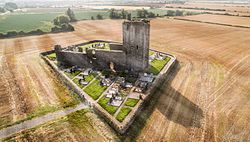 Baldongan ChurchRuins · 38 yd
 Windmill (in ruins)Windmill · 1.6 mi
 Windmill (disused)Windmill · 1.7 mi
 IndicatedCastle, tower house · 1.7 mi
 Skerries BeachVisitor information · 2.2 mi
 Skerries Harbour and BeachVisitor information · 2.2 mi
 Shenick IslandIslet · 2.3 mi
 Graveyard in LuskGraveyard · 2.5 mi
 Thomas AsheMemorial · 2.7 mi
 Rush South BeachBeach / strand · 3.0 mi
 Newbridge House and DemesneHeritage attraction · 4.9 mi
Pictures: jai, Wikimedia Commons · CC BY-SA 2.0; Broderick Mark, Wikimedia Commons · CC BY-SA 4.0; Jonjobaker, Wikimedia Commons · CC BY-SA 4.0; Martinvl, Wikimedia Commons · CC BY-SA 4.0; Gallftree008, Wikimedia Commons · CC BY-SA 4.0; Colin Park, Geograph · CC BY-SA 2.0; JacK93, Wikimedia Commons · CC BY-SA 4.0; FrankFlanagan, Wikimedia Commons · CC0; jwd, Geograph · CC BY-SA 2.0; Adc88 at en.wikipedia, Wikimedia Commons · CC0
More castles and forts in County Dublin · All of County Dublin
What do you know about this place?