What is recorded here
Islandeady Constabulary Barrack in Drumminahaha still has its grand limestone entrance, though the roof is gone. The doorway retains the air of a man demanding to know your business while his trousers blow away behind him.
Detached three-bay two-storey constabulary barrack, extant 1872, on a T-shaped plan; single-bay (single-bay deep) full-height central return (north). Occupied, 1901; 1911. Vacant, 1920. Burnt, 1920. Now in ruins. Roof now missing with no rainwater goods surviving on lichen-covered cut-limestone eaves. Part creeper- or ivy-covered coursed or snecked rough cut limestone walls retaining fragments of lime rendered or roughcast surface finish with tooled cut-limestone flush quoins to corners. Round-headed central door opening with overgrown threshold, and drag edged dragged cut-limestone block-and-start surround centred on keystone framing unhinged "gun loop"-perforated cast-iron door. Square-headed window openings (ground floor) with drag edged dragged cut-limestone sills, and cut-limestone lintels framing cast-iron bars. Square-headed window openings (first floor) with drag edged dragged cut-limestone sills, and cut-limestone lintels framing "gun loop"-perforated cast-iron shutters. Interior in ruins including (ground floor): limewashed barrel-vaulted holding cell (north). Set back from road in unkempt grounds with ivy-covered piers to perimeter having pyramidal capping supporting wrought iron gate.
A constabulary barrack erected on a site obtained from Sir William Henry Roger Palmer (1802-69) of Castlelackan representing an important component of the mid nineteenth-century built heritage of Islandeady with the architectural value of the composition, one sometimes known as "Deergrove Constabulary Barrack" (Weekly Irish Times 10th April 1920, 3), confirmed by such attributes as the compact symmetrical footprint centred on a streamlined Classical doorcase demonstrating good quality workmanship in a silver-grey limestone; and the disproportionate bias of solid to void in the massing compounded by the slight diminishing in scale of the widely spaced openings on each floor producing a feint graduated visual impression. Although reduced to ruins during "The Troubles" (1919-23), 'the occurrence...strongly condemned by Father McLaughlin [Reverend Paul McLoughlin (d. 1950)] at Mass in Islandeady' (The Irish Weekly Times 10th April 1920, 3), the form and massing survive intact together with interesting remnants of the original fabric, including "gun loop"-perforated protective shutters, thus upholding the character or integrity of a constabulary barrack making a picturesque, if increasingly forlorn visual statement in a sylvan setting.
From the Buildings of Ireland (National Inventory of Architectural Heritage) record 31307802
This does not grant access. Most recorded buildings are privately owned; view them only from public ground unless the owner allows entry.

 Graveyard771 yd
 Church (in ruins)Church · 788 yd
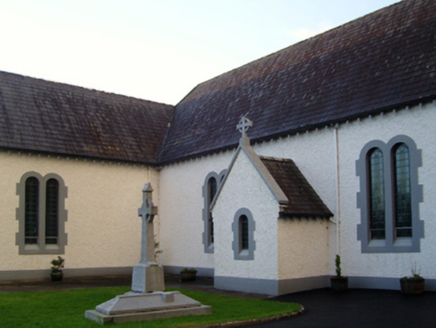 Saint Patrick's Catholic ChurchChurch/chapel · 970 yd
 Garden of RemembranceMemorial · 3.9 mi
 1798 MemorialMemorial · 4.2 mi
 The Linen HallVisitor information · 4.4 mi
.jpg/250px-Castlebar_Races_WynneC_(cropped).jpg "Photo: John D. Reigh, Wikimedia Commons · Public domain") Battle of CastlebarMajor battlefield · 4.4 mi
Battle of CastlebarMajor battlefield · 4.4 mi Round Tower5.5 mi
 Westport HouseHeritage attraction · 6.1 mi
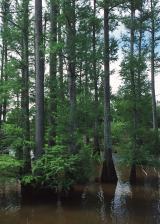 Baldcypress6.1 mi
 Brackloon WoodsForest · 8.4 mi
 Crott MountainMountain / peak · 10 mi
What do you know about this place?