DDiscover AloneMapAbout

Cathedral in Kilmore Upper

Cathedral
Computer-made picture that does not show Cathedral in Kilmore UpperNot a photo of this monument
Computer-made picture. It does not show this monument. · Report the wrong picture

The monument record does not grant public access. Check the route and ask the landowner before entering private land.

What do you know about this place?Tap to add a comment or ask a question

What you write will be public.

What is recorded here

Located at the S end of a N-S drumlin ridge. Around 1454 Andrew MacBradaigh, bishop of Tír Briúin 1445-55, settled on the church of St. Feidhlimidh at Kilmore as the cathedral for the diocese that would come to take its name from the new location. The existing parish church, which may be on an early site, was not…

Read the whole record
Located at the S end of a N-S drumlin ridge. Around 1454 Andrew MacBradaigh, bishop of Tír Briúin 1445-55, settled on the church of St. Feidhlimidh at Kilmore as the cathedral for the diocese that would come to take its name from the new location. The existing parish church, which may be on an early site, was not enlarged or enhanced as a result of its new status, except that the Romanesque doorway from Trinity Island (CV020-077001-) was added onto its S wall where it remained until it was placed at the entrance to the vestry (CV025-071002-) of the nearby present Church of Ireland Cathedral of Kilmore c. 1860. St. Feidhlimidh’s church may have been chosen rather than any church associated with St. Maodhóg who had been the principal saint of Tír Briúin because Feilim was particularly venerated by the O’Reilly clan (Ó Riain 2011, 312-3), and is now the recognised patron of the diocese in both the Roman Catholic and Church of Ireland traditions. (Kelly 2017, 128-31) Thomas Mogine was the first Protestant bishop of Kilmore and he was succeeded by William Bedell in 1629. Moigne seems to have built a house at Kilmore while refurbishing the Cathedral church in the 1620s when he reported that ‘The Cathedral church is newly built and repaired…A fair stone house built at Kilmore by the now bishop, which together with the building of other outhouses and of seats in the chancel and body of the church of Kilmore had cost £600’ (ibid. 251). The surviving structure probably dates to the thirteenth century and there are references to the church of Kilmore in 1242 and 1382, and possibly in 885 (AFM) (Davies 1948, 99). The cathedral was described as having a roof of wood and sods in 1646 (ibid. 118). It comprises a rectangular building (ext. dims c. 26m E-W; c. 8m N-S) built of roughly coursed limestone, with a batter at base of the E gable and dressed quoinstones at the SE angle as the only visible evidence of its medieval fabric. The cathedral appears to have been restored, together with the Bishop's Palace (CV025-073----) which adjoins its W wall, in the period following the Williamite wars. It was abandoned for worship when the new cathedral was built c. 120m to the S. It now serves as a hall and the present wooden gothic windows may have been inserted at the time of its change of use. The two storey structure at its W end probably incorporates part of the bishop’s palace (CV025-073----), and it is known that the cathedral communicated directly with the palace (King 1892, 10). See the attached view from S Date of upload: 22 December 2008 Amended: 8 February 2021

From the National Monuments Service (Archaeological Survey of Ireland) record CV025-070004

Places near here

Photo credits
  • National Inventory of Architectural Heritage
  • Christian Pirkl, Wikimedia Commons · CC BY-SA 3.0 at
  • Maker not stated on source page, www.youtube.com
  • Olliebailie, Wikimedia Commons · CC BY-SA 4.0
  • Bruce Marlin, Wikimedia Commons · CC BY 3.0
  • Maker not stated on source page, www.flickr.com
  • Maker not stated on source page, www.tripadvisor.ie
  • Golfing in Ireland; photographer not stated, Source publisher
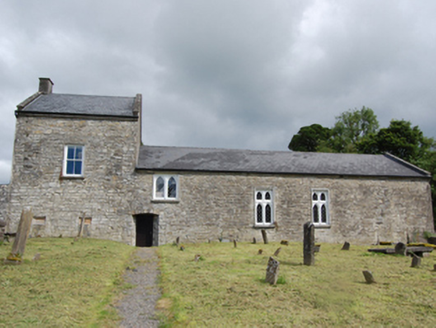
Kilmore Parochial HallCathedral · 6 yd

Explorer Tom Kilmore Parochial Hall in Kilmore Upper has been standing since the fifteenth century, refusing to fall down out of…
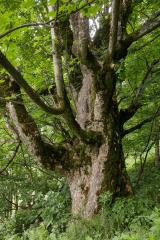
Sycamore52 yd

Explorer Tom Sycamore in County Cavan thinks the road leading to it is a bit of a cheat. It’s probably muttering about the potholes…

TombTomb, chest tomb · 59 yd

Explorer Tom Tomb in Kilmore Upper sits atop a mausoleum where a bishop got buried by his own prisoners. It’s a chest tomb with a…

St Feidhlimidh CathedralCathedral · 146 yd

Explorer Tom St Feidhlimidh Cathedral is a Gothic Revival beauty that has been on this site since the sixth century, so it knows…
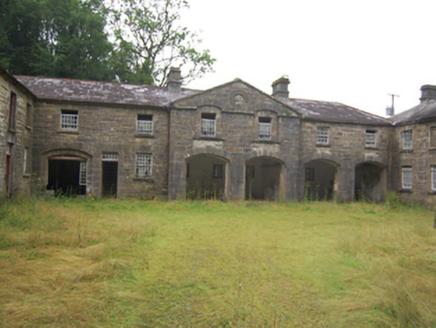
See HouseOutbuilding · 247 yd

Explorer Tom See House stable courtyard in Kilmore Upper is where the Bishop’s horses probably complained about the weather. It’s…
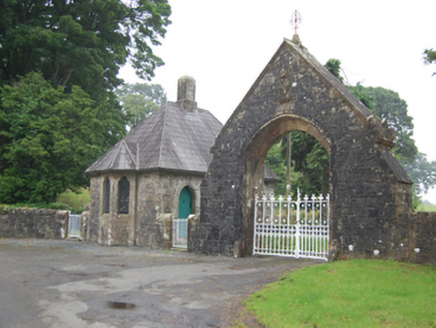
Kilmore CathedralGate lodge · 288 yd

Explorer Tom Kilmore Cathedral gate lodge in Kilmore Upper is a tiny arch that looks way too fancy for its size. It matches the…
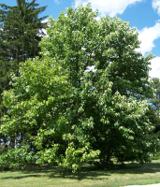
Cucumber Magnolia322 yd

Explorer Tom Cucumber Magnolia in County Cavan is probably older than the concept of trousers, which is a wild claim but totally…

Church in Kilmore UpperChurch · 343 yd

Explorer Tom Church in Kilmore Upper would post 'living my best duplicate life' on social media right now. It’s technically a copy…

Kilmore CemeteryGraveyard · 443 yd

Explorer Tom Kilmore Cemetery is haunted by a fiddler who played all night during a wedding that never ended. The music stops…
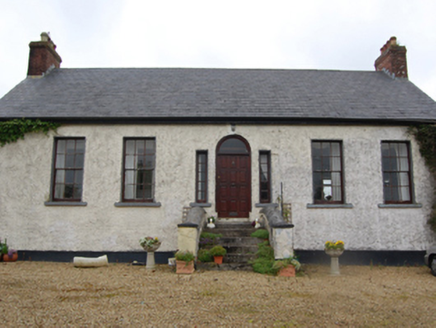
Ricehill HouseHouse · 563 yd

Explorer Tom Ricehill House in Coolnagor has this single-storey front that hides a whole two-story surprise behind it. It’s like…

Castle (in Ruins)Castle, tower house · 1493 yd

Explorer Tom Castle in Tonymore is doing its best impression of a haunted hotel lobby. Three storeys of limestone pretending to be…

Farnham Estate Golf ClubGolf course · 1.1 mi

More archaeology and monuments in County Cavan · All of County Cavan

Add to this placeAdd a picture Add a detailed tip Add a story

Explore the map1,095,414 places to discover

Next place · or swipeKilmore Parochial Hall