DDiscover AloneMapAbout

Church in Crossmoyle

Church

This remains an important historical record, but the official description says the monument is no longer visible or has been destroyed. The monument record does not grant public access. Check the route and ask the landowner before entering private land.

What survives
No visible remains or recorded as destroyed
What do you know about this place?Tap to add a comment or ask a question

What you write will be public.

What is recorded here

Situated towards the bottom of a S-facing slope and now within Clones town. St Tigearnach was descended through his father from the Uí Bhairrce, an obscure Leinster sept who have given their name to the Barony of Bargy in Wexford, but his mother was descended from kings of Oirghialla, at that time a prominent Ulster…

Read the whole record
Situated towards the bottom of a S-facing slope and now within Clones town. St Tigearnach was descended through his father from the Uí Bhairrce, an obscure Leinster sept who have given their name to the Barony of Bargy in Wexford, but his mother was descended from kings of Oirghialla, at that time a prominent Ulster kingdom occupying the area between the Erne and the Upper Bann. According to what are probably fourteenth century and later Lives, he was educated at Whithorn in England and visited Rome where he collected relics of Ss Peter and Paul before establishing a monastery at Clones where he died in AD 549-50 (Ó Riain 2011, 572-3). Three bishops of Clogher after the first, St Macartin or Mac Caorthainn, were based at Clones rather than Clogher (Gwynn and Hadcock 1970, 164) and there are many references to Clones in the annals from 714. The monastery was plundered by Vikings in 836 and destroyed by fire in 1095 (McKenna 1920, vol. 2, 1-12), but probably from the 1140s it had been transformed into the Augustinian abbey of Ss Peter and Paul, under which name it is listed, separate from the church or parish church of Clones (MO011-010016-) in the ecclesiastical taxation (1302-06) of Pope Nicholas IV (Cal. doc. Ire, 5, 212). A copy of the Gospels that had reputedly been given to St Mac Caorthainn by St Patrick was enshrined at Clones in the mid fourteenth century, according to inscriptions on its sides that refer to John O Karbri, abbot of Clones who died in 1353 and John Barrdan, the craftsman who made it. The Domhnach was normally held at Clogher, Co. Tyrone, and it is now part of the Royal Irish Academy collection in the National Museum of Ireland. (Shirley 1879, 169-72; McKenna 1920, 2, 36-49; Bourke 2006) By 1414 the abbey was so impoverished that indulgences were granted to fund necessary works to the church and cloister (Gwynn and Hadcock 1970, 164). It escaped the general Suppression of the monasteries in 1539-40, but c. 1586-7 it was identified by Sir Henry Duke of Castlejordan, Co. Meath (ME052-005----) who leased the premises and land from the Crown as the Manor of Clones. His widow, Mary, married again to Sir Francis Rushe, and the property descended through their daughter Elenor to the Barrett-Leonard family, with whom it remained into the nineteenth century. In a lease of 1629 the remains of the abbey are described as ‘containing half an acre, wherein standeth one church half covered with straw, the kitchen and divers other ruinous edifices, with one garden and orchard’ (Shirley 1879, 173-4; McKenna 1920, 2, 1-27) Of the church founded by St Tigearnach there is no trace. The church known as the Abbey is the chancel of a twelfth century Romanesque style of church, although very plain. It survives as the conserved walls of a structure (ext. dims 12.7m E-W; 6.15m N-S) but most of the N and E walls (H c. 1m) are rebuilt. There is a single round-headed window placed high in the S wall, and the arch (Wth 1.77m) in the W wall led to a nave that has disappeared. On the outer face of the N wall is a carving of a high cross (H 0.25m), much as the Clones high cross (MO011-010005-) appears today, and a shallow hollow (diam. 0.3m) in a nearby stone in the wall is where pilgrims are said to have rested their heads while touching the carving. This church is in a small graveyard (dims c. 25m E-W; c. 20m N-S) that was part of the main graveyard (MO011-010003-) c. 40m to the WSW before the N-S Whitehall St. severed the connection. The round tower (MO010-011002-) is incorporated into the wall of the larger graveyard at W and the stone shrine (MO011-010004-) is inside its S wall. (Wakeman 1875) The earliest map of Clones from c. 1590 (illustrated in Shirley 1879) shows a large church with a crossing tower and transepts close to the round tower. This would be the Augustinian abbey that required work to its cloister in 1414, and it was probably located in the large graveyard E of the round tower (MO011-010002-), as so many churches stand in that relation to their round towers, but of the Clones cloister or the Augustinian transept church there is no trace. This is a National Monument in state ownership: No. 111 See the attached views: _1 from NW; _2 from SE; _3 S window; _4 headstone Compile by: Michael Moore Date of revised upload: 29 November 2016

From the National Monuments Service (Archaeological Survey of Ireland) record MO011-010001

Places near here

Photo credits
  • Simonchadwick1023, Wikimedia Commons · CC BY-SA 4.0
  • Maker not stated on source page, www.alamy.com
  • Kenneth Allen, Geograph · CC BY-SA 2.0
  • Kenneth Allen, Geograph · Creative Commons Attribution-ShareAlike 2.0
  • Maker not stated on source page, ru.pinterest.com
  • Andreas F. Borchert, Wikimedia Commons · CC BY-SA 4.0
  • Andreas F. Borchert, Wikimedia Commons
  • National Inventory of Architectural Heritage
Abbey RuinsHeritage attraction · 6 yd

Explorer Tom The map calls this little Clones ruin “Abbey Ruins”, which is technically fair and about as thrilling as calling a…

Mapped graveyardGraveyard · 9 yd

Explorer Tom this Mapped graveyard in County Monaghan is the kind of spot where map makers got confused because they couldn’t find…

The Cassandra Hand CentreMuseum · 82 yd

Explorer Tom Cassandra Hand's name sits on a little Gothic schoolhouse in Clones, and it sounds as though she might demand your…

Clones CourthouseCourt house · 86 yd

Explorer Tom Clones Courthouse in Crossmoyle was where a priest once lost a bet over whether his hat was square or round. The…

St. Tierney's CemeteryCemetery · 97 yd

Explorer Tom St. Tierney's Cemetery in County Monaghan is constantly picked on by the wind, which seems to think it can rearrange…

Shrine in CrossmoyleShrine · 116 yd

Explorer Tom Shrine in Crossmoyle would post 'Just woke up from a thousand-year nap' on social media. It looks like a tiny wooden…

Clones Round TowerVisitor attraction · 135 yd

Explorer Tom Clones Round Tower rises about 23 metres above the old monastic ground in County Monaghan, its sandstone wall still…
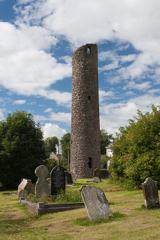
Round Tower136 yd

Explorer Tom Round Tower in Crossmoyle stands there looking all serious, built back when people liked their architecture simple and…

Clones Protestant Recreation HallHall · 216 yd

Explorer Tom Clones Protestant Recreation Hall is a whimsical concrete monster from the twentieth century that looks like it threw…

Clones Masonic HallMasonic lodge/hall · 305 yd

Explorer Tom Clones Masonic Hall is having an identity crisis, asking its younger self why it let that fire happen. It’s all about…

B. McCuskerPublic house · 352 yd

Explorer Tom B. McCusker pub nearly got sold for a horse because the landlord was short on cash, I reckon. It’s still got its old…
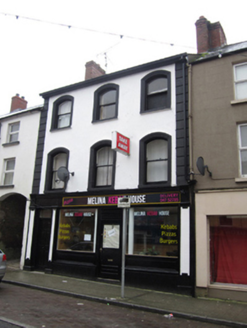
shop/retail outlet412 yd

Explorer Tom This shop’s least favourite visitor is definitely the guy who just peeks in without buying a single biscuit. It’s been…

More historic places in County Monaghan · All of County Monaghan

Add to this placeAdd a picture Add a detailed tip Add a story

Explore the map1,095,414 places to discover

Next place · or swipeAbbey Ruins