
Places near here
Photo credits
- National Inventory of Architectural Heritage
- Hugh Thomson, Wikimedia Commons · Public domain
- C Michael Hogan, Wikimedia Commons · CC BY-SA 2.0
- Picture: Enjoy Irish Culture
- Steve & Jemma Copley on Flickr, Wikimedia Commons · CC BY-SA 2.0
- No machine-readable author provided. Christian1965~commonswiki assumed (based on copyright claims)., Wikimedia Commons · Public domain
- N Chadwick, Wikimedia Commons · CC BY-SA 2.0
- Yosemite, Wikimedia Commons · CC BY-SA 3.0
- Nigel Thompson, Wikimedia Commons · CC BY-SA 2.0
- Mike Searle, Wikimedia Commons · CC BY-SA 2.0
- Rick Crowley, Wikimedia Commons · CC BY-SA 2.0
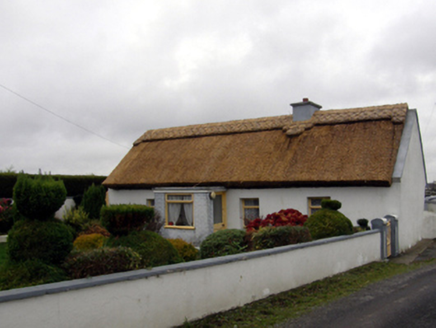 farm house428 yd
Explorer Tom Farm house in Carheens [kilm. by.] hears everything through its thick fieldstone walls, including your questionable life choices from last night. It’s got a thatched roof that looks like it’s trying to fly away! Perfect spot to practise whispering loudly so the neighbours think you're being mysterious instead of drunk.
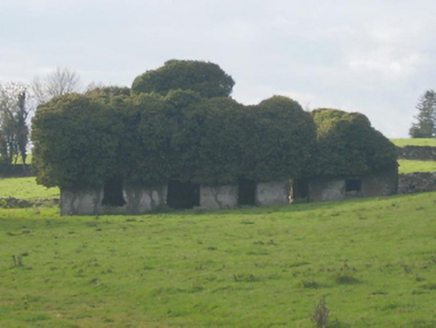 Ballymacgibbon HouseFarm house · 1552 yd
Explorer Tom Ballymacgibbon House is an ivy-enveloped shell of a farmhouse from the eighteenth century that looks like it’s been swallowed by a forest. It represents domestic architectural heritage, which means people used to live here and probably complained about the damp. Just look at the greenery and don’t peek in the windows.
 Ballymacgibbon CairnArchaeological place · 1.4 mi
Explorer Tom Ballymacgibbon Cairn in County Mayo is famous for a tall tale about a hidden tunnel that leads straight to the local pub. Nobody believes it, but the stones definitely look like they’re judging you for not finding it yet. Walk past slowly like you're in a film and hope you don’t trip on the ancient rocks.
 Stone Circle2.5 mi
Explorer Tom Stone Circle in Glebe (kilmaine By.) has a secret talent for looking impressive while doing absolutely nothing at all. It sits on a rise and judges your parking skills from afar. Stop the car, it's worth the hazard lights.
 Ballycurrin CastleCastle · 2.6 mi
Explorer Tom Ballycurrin Castle has a family tree that’s mostly made up by people who wanted free souvenirs. It’s standing in the ruins like it’s waiting for its next big dramatic entrance, but nobody’s clapping yet. The whole place feels like it’s mid-sentence, paused right before the punchline hits. Perfect place to be dramatically windswept.
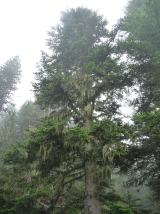 Silver Fir2.9 mi
Explorer Tom Silver Fir in County Galway is standing there acting like it invented the concept of looking mysterious. Apparently, if you don’t wave hello, a curse strikes you with intense boredom and dry socks. Wave fast before your dignity hits the dirt.
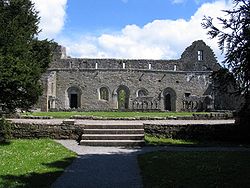 Cong AbbeyHeritage attraction · 3.0 mi
Explorer Tom Cong Abbey gives you a king, a famous cross and a medieval fishing trick. I arrived with a sandwich and immediately felt underprepared. Ruaidrí Ua Conchobair, often called Ireland's last High King, spent his final fifteen years here and died in 1198. The surviving abbey buildings are mainly thirteenth century, with carved doorways worth more than my quick glance. Its last nominal abbot, Patrick Prendergast, kept the Cross of Cong safe until he died in 1829; the cross later went to the Royal Irish Academy. By the River Cong, the monks' little fishing house sits above flowing water, with a floor trapdoor said to have helped keep fish fresh. I would still manage to lose my lunch there. The abbey is a national monument with outdoor remains; follow current access signs and take care near the water and old masonry. Look for the fishing house after the church, and give those practical monks their due.
 Quiet Man StatueStatue · 3.0 mi
Explorer Tom Quiet Man Statue is giving me the silent treatment, which is ironic considering the name. He looks like he’s waiting for someone to tell him he can stop posing now. I bet he’s been here so long he’s got a permanent squint from the wind. You’d think he’d have said something by now, but no, just stone silence. Whisper a secret at it, it's kept worse.
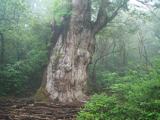 Japanese cedar3.0 mi
Explorer Tom Japanese cedar in County Galway is a tree that would tell its younger self to stop worrying about the wind. It’s tall, it’s green, and it doesn’t care if you take a selfie with it. The branches are spread out like it’s showing off its flexibility. Go with someone who loves old stuff and watch them melt into the scenery.
 Neale CemeteryCemetery · 3.7 mi
Explorer Tom Neale Cemetery in Mayo was supposedly invented by a local lad who just needed somewhere to park his tractor, apparently. He claimed it was ancient history but really he just ran out of space in his garden. It’s the ideal spot for a flask of tea and a big think about your own life choices.
 Kinlough CastleCastle · 4.6 mi
Explorer Tom Kinlough Castle would post on social media about how its foundation is actually made of pure sass and old stone. It’s got that brooding tower-house look that says it’s too cool for your average country house. The crows are currently running the place like a very chaotic management team, making all the important decisions. Count the crows, then count again.
 Inis an GhaillIsland · 4.8 mi
Explorer Tom Inis an Ghaill has a small stone that can stop a boastful guide in mid-sentence. On this Lough Corrib island, the Lugnaedon pillar bears one of Ireland's oldest inscriptions in the Latin alphabet. Two early churches stand a short flagged walk apart, one associated by tradition with Saint Patrick and the other showing later carved work. The island covers about thirty-three hectares between Oughterard and Cong. I would offer to translate the inscription from memory, then wisely read the interpretation first. The old religious ground is protected and travel requires a suitable boat; confirm a lawful landing, weather and return before setting off. Leave the carved stone and church walls untouched. Look at the short path between the buildings. Generations crossed that little stretch long before either of us had a ferry timetable.
More archaeology and monuments in County Mayo · All of County Mayo

What do you know about this place?Tap to add a comment or ask a question