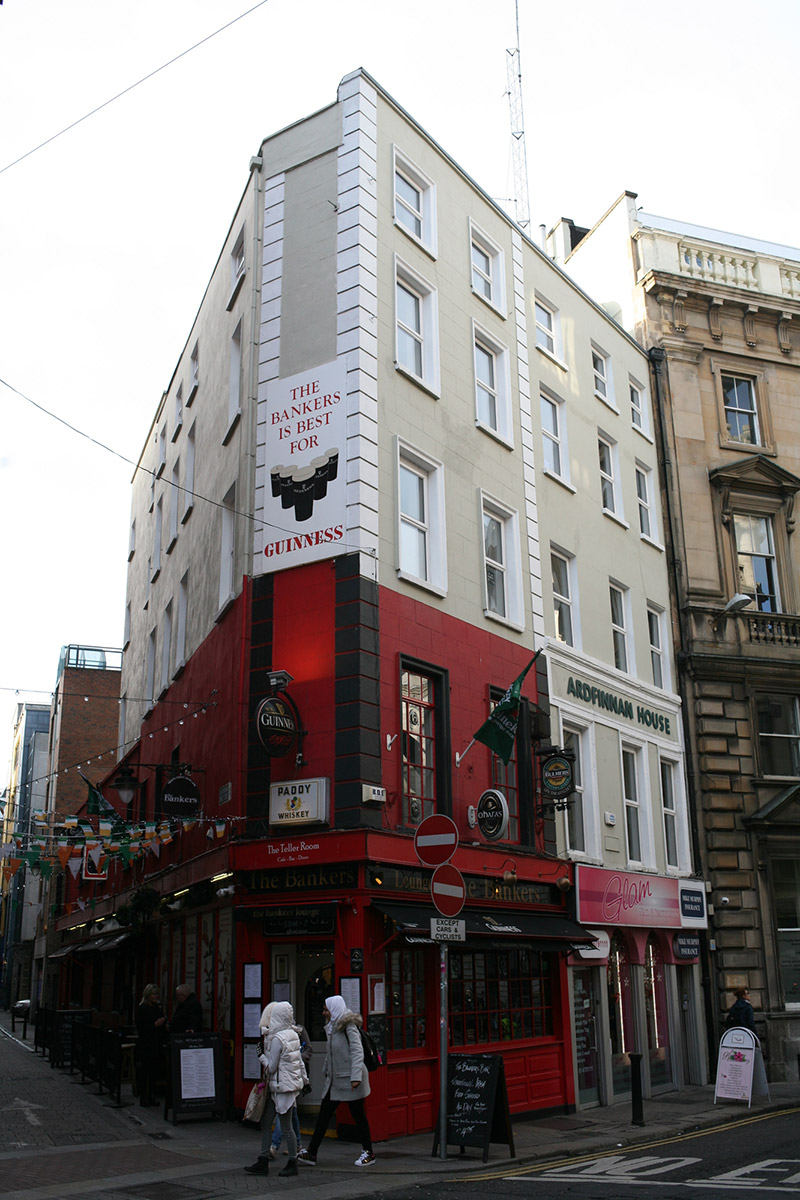
What is recorded here
Corner-sited two-bay five-storey former house over concealed basement, built c. 1740, having skew-plan with chamfered corner to junction, four-bay side elevation onto Dame Lane, and recent pubfront to ground floor. Hipped artificial slate roof, on triangular plan, with stepped rendered chimneystack to apex at centre…
Read the whole record
From the Buildings of Ireland (National Inventory of Architectural Heritage) record 50910225
Places near here
Photo credits
- National Inventory of Architectural Heritage
- Smirkybec, Wikimedia Commons · CC BY-SA 4.0
- Sheila1988, Wikimedia Commons · CC0
- DubhEire, Wikimedia Commons · CC0
- National Library of Ireland on The Commons, Wikimedia Commons · Public domain
- N Chadwick, Wikimedia Commons · CC BY-SA 2.0
- William Murphy from Dublin, Ireland, Wikimedia Commons · CC BY-SA 2.0
- The White House, Wikimedia Commons · Public domain
- Angilbas at English Wikipedia, Wikimedia Commons · Public domain
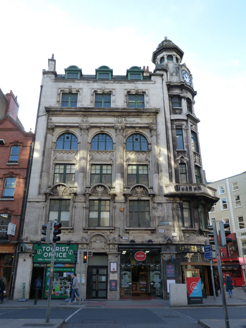 bank/financial institution25 yd
Explorer Tom Bank or financial institution in County Dublin was designed for the Star Life Assurance Society at the turn of the last century. If it had social media, it would post photos of its carved details and complain about the inflation rate. Stop and appreciate the craftsmanship before you rush off.
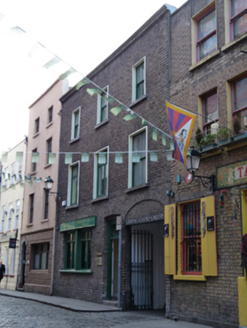 Graphic Studio GalleryHouse · 124 yd
Explorer Tom House in County Dublin on Cope Street has been fighting a long feud with the rain, which is why it looks so serious. It retains its brown brick façade and carriage arch, which is great for stables or hiding from ex-partners. Ideal stop for a quick sneeze before moving on.
 Holy well in Unknown TownlandHoly well · 236 yd
Explorer Tom Holy well in Dublin was dug up in the nineties and turned into a pub-side curiosity outside The Norseman. It’s basically a stone-lined hole with a drinking problem. If it rains, blame me for bringing you to this splashy little secret.
 Garda MuseumMuseum · 281 yd
Explorer Tom Garda Museum in County Dublin shows you how the cops used to do their job. It’s probably full of old uniforms and handcuffs, which is great if you like looking at shiny metal that used to hurt people.
 The Sick and Indigent Roomkeepers' SocietyMemorial · 285 yd
Explorer Tom The Sick and Indigent Roomkeepers' Society in County Dublin sounds like a support group for very tired landlords. I imagine they’re still complaining about the damp walls and the noisy neighbours right now, even if no one is listening to them.
Tourist Information CentreVisitor information · 292 ydExplorer Tom Tourist Information Centre in County Dublin thinks it’s the main event. It’s probably full of maps that are older than your grandparents, yet it still acts all important.
 Battle of DublinMajor battlefield · 304 yd
Explorer Tom Battle of Dublin in County Dublin was a week of street fighting that blew up the Public Records Office. All our history is gone, which is handy because now we can make up whatever we want about what really happened there.
 Millennium BridgeVisitor attraction · 315 yd
Explorer Tom Millennium Bridge in County Dublin wobbles just enough to make you nervous. It's very artsy and a bit wacky. Capture that wobble for me!
 Garda Memorial GardenMemorial · 336 yd
Explorer Tom Garda Memorial Garden in County Dublin is another spot for remembering the police force. It’s basically a garden with statues where you can stand and feel solemn without actually doing any hard work.
Quay in Unknown TownlandQuay · 360 ydExplorer Tom Quay in Dublin is where the 'Dubh Linn' or Viking harbour used to be. The Friends of Medieval Dublin Map shows it. So if you see a viking skeleton, just nod politely and pretend you knew him.
 CastleCastle, Anglo-Norman masonry castle · 385 yd
Explorer Tom Dublin Castle replaced an earthwork site on a ridge bounded by the Poddle river. It had a barbican gate and drawbridge right in the middle of town. Perfect spot to practise your best tour-guide voice, even if you’re wrong.
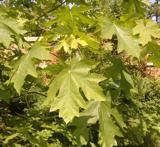 Bigleaf Maple411 yd
Explorer Tom Bigleaf Maple in County Dublin is doing its best impression of a confused tourist from America. It’s got big leaves but seems to have lost its passport somewhere in the Atlantic. Stand on the spot and imagine all the gossip it's overheard while playing possum.
More historic places in County Dublin · All of County Dublin

What do you know about this place?Tap to add a comment or ask a question