Places near here
Photo credits
- Kenneth Allen, Geograph · CC BY-SA 2.0
- National Inventory of Architectural Heritage
- Andreas F. Borchert, Wikimedia Commons · CC BY-SA 4.0
- Wanfried-Dublin, Wikimedia Commons · CC BY-SA 4.0
- Corinna Schleiffer, Wikimedia Commons · CC BY-SA 2.0
- Kenneth Allen, Wikimedia Commons · CC BY-SA 2.0
- James Emmans, Geograph · CC BY-SA 2.0
- Picture: Barrack Hill Town Park
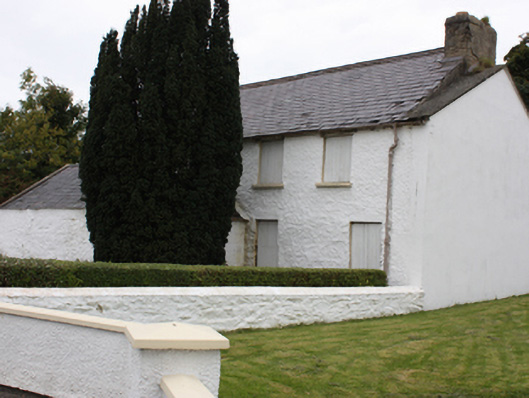
 Orchard BarPub · 46 yd
Explorer Tom Orchard Bar in County Donegal has an unlikely celebrity friend who only visits when the cider is fresh. I’d bet they keep a secret orchard just for their own private boozy harvest. Wave at the cows, they're the real locals.
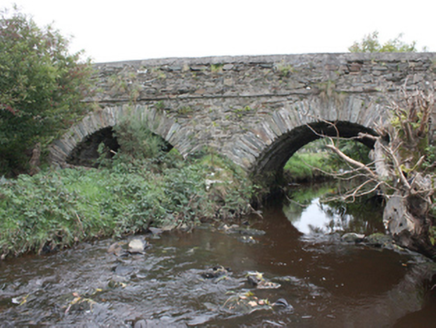 Milltown BridgeBridge · 830 yd
Explorer Tom Milltown Bridge has crossed the Gleneely since c. 1800, showing off fine masonry that outlasted the nearby corn mill and kiln. It’s a sturdy survivor from a bustling trade era, still handling traffic after two centuries of hard work.
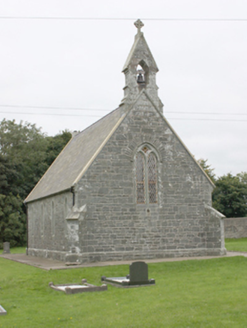 All Saints Church of Ireland ChurchChurch/chapel · 1041 yd
Explorer Tom All Saints Church of Ireland Church has been standing in Aghaglassan since 1856, its green rubble stone walls looking far more dignified than the mud on your boots. Miss Catherine Ball funded this handsome little gem, complete with a Celtic cross that really makes the gable pop. It’s a proper architectural treat that refuses to fade into the rural background.
 Laraghirril Court TombCourt tomb · 1.7 mi
Explorer Tom Laraghirril Court Tomb has two chambers and doubled entrance stones, but the survey found no trace of the court that gives the tomb its name. Tom keeps returning to those extra doorway stones: were they a grand entrance, or are we reading the arrangement wrong?
 Former site of Knockergrana Court TombCourt tomb · 1.8 mi
Explorer Tom Former site of Knockergrana Court Tomb was blasted apart with dynamite in the early 1900s, leaving only a few slabs and boreholes as evidence. It’s a bit messy now, but if you look closely at those broken stones, you can almost feel the tenant’s frustration trying to clear it.
 McGrory'sHotel · 3.1 mi
Explorer Tom McGrory’s in Culdaff looks like it’s been standing there since the last glacial period on Malin Road. Check if the heating works before you commit to staying the night, trust me on this one. Give it a pat on the way past, it's had a long life.
 CrockavishaneMountain / peak · 3.2 mi
Explorer Tom Crockavishane in Donegal is having a very fancy lunch experience that costs nothing but your dignity. It’s all about the ambiance of doing absolutely nothing productive. Have a sandwich here and call it a heritage lunch.
 CuldaffOfficial bathing water · 3.6 mi
Explorer Tom Culdaff Beach looks as if three pieces of the map agreed to meet for tea: dunes to the west, two rock outcrops to the southeast, and the Culdaff River to the northwest. The sand has quite a supporting cast. This protected coast deserves a gentle visit.
 Tremone BayBeach / strand · 3.8 mi
Explorer Tom Tremone Bay has been keeping an icy secret in its rocks. Geological Survey Ireland records debris dropped by ancient ice in the bedrock at White Strand’s northwest end, roughly 590 to 570 million years old. I cannot blame the beach for looking smug; most places would brag about a history half that long.
 CroaghmoreMountain / peak · 4.1 mi
Explorer Tom Croaghmore in County Donegal would win a county fair easily, simply by standing still and looking vaguely impressive while everything else tries too hard. It’s the kind of hill that wins prizes without even entering them, just by existing so grandly. Visit, then text me what you think. I'll pretend to read it.
 CastleCastle, unclassified · 4.2 mi
Explorer Tom Castle in Carthage may survive only as shapeless stone mounds on a promontory. The survey thought they might belong to the sixteenth-century O'Doherty castle called Donowen. A wall closed the landward side, while another guarded a sea approach. Those defences are recorded; the exact shape of the lost castle is not.
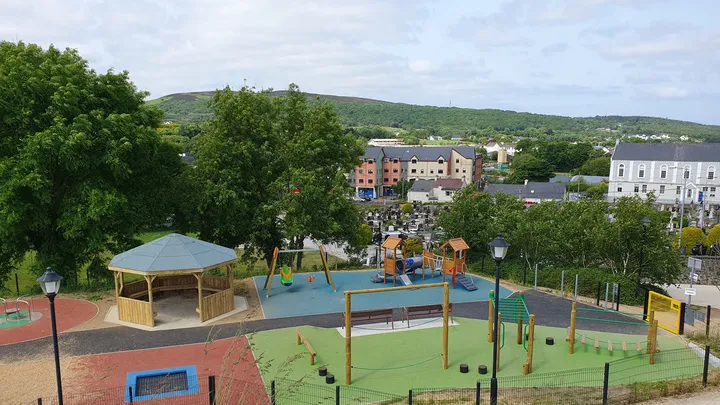 Barrack Hill Town Park PlaygroundChildren's playground · 4.5 mi
Explorer Tom At Barrack Hill, little legs get the climbing frames, swings, balance beams and monkey bars. The roundabout was designed to include more children, and older ones have their own obstacle trail nearby. If I were seven, I would call the monkey bars a test of courage. If I were a parent, I would be looking for the covered shelter. Carndonagh's park committee says local families helped shape the refurbished playground, and the older children's activity area reopened in 2023.
More historic places in County Donegal · All of County Donegal

What do you know about this place?Tap to add a comment or ask a question