
What is recorded here
Detached five-bay single-storey vernacular house, built c. 1820 and extended c. 1870, having modern single-bay addition to the west gable end. Pitched thatched roof, recently renewed, having decorative ropework to ridge, and with two rendered chimneystacks (one to the east gable end, and one to the east side of…
Read the whole record
From the Buildings of Ireland (National Inventory of Architectural Heritage) record 40910802
Places near here
Photo credits
- National Inventory of Architectural Heritage
- Kmcnamee, Wikimedia Commons · CC BY-SA 4.0
- Maker not stated on source page, www.pinterest.com
- Kenneth Allen, Wikimedia Commons · CC BY-SA 2.0
- Tawg, Wikimedia Commons · CC BY-SA 3.0
- Eric Jones, Geograph · CC BY-SA 2.0
- Maker not stated on source page, ca.pinterest.com
- Maker not stated on source page, www.dreamstime.com
- Kenneth Allen, Geograph · CC BY-SA 2.0
 bridge1243 yd
Explorer Tom Bridge in Corlea has two arches and a hump, with an almond-shaped cutwater dividing the Tullybaradaire River. I think…
 Páirc na hEirne, Erne Gaels, BelleekGAA ground · 1360 yd
 Possible megalithic tomb: graveyard in KeenaghanPossible Megalithic Tomb: Graveyard · 1513 yd
Explorer Tom Possible megalithic tomb: graveyard in Keenaghan is where the hero nobody remembers saved the day. He buried his fame…
 Battlefield in Cloghore (carrickboy Ed),corlea (pettigo Ed)Battlefield · 1.2 mi
Explorer Tom Battlefield in Cloghore, Corlea refuses to fall down because it is terrified that if it does, the cows will finally…
 Belleek PotteryHeritage attraction · 1.2 mi
Explorer Tom Belleek Pottery in County Fermanagh is writing its dating profile right now: 'I make pretty blue things, I’m slightly…
 Battle of BelleekBattle · 1.2 mi
Explorer Tom Battle of Belleek, also called the Battle of the Erne Fords, took place at a River Erne crossing near Belleek on 10…
 Belleek Pottery MuseumMuseum · 1.2 mi
Explorer Tom Belleek Pottery Museum is the place to discover that a teacup can have a more dramatic family history than half the…
 Tetunny GraveyardGraveyard · 1.2 mi
Explorer Tom Tetunny Graveyard in County Donegal sounds like a name you’d invent for a pirate’s hideout. I bet the soil here tastes…
 Cliff Generating StationHydroelectric power station · 1.2 mi
Explorer Tom Cliff Generating Station in Cloghore is such an austere Modernist block that Saint Patrick would have walked right past…
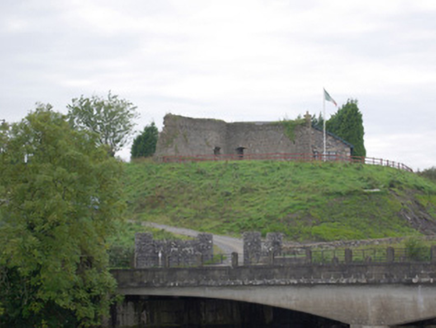 Belleek Battery / FortBattery and garrison fort · 1.3 mi
Explorer Tom Belleek Battery / Fort was raised right after the 1798 rebellion to guard the crucial bridge at Cloghgore. It’s now a…
 Church (in ruins); graveyard; stone head: abbey in TievealoughChurch (in ruins) · 1.6 mi
Explorer Tom Church, graveyard, stone head: abbey in Tievealough has a stone head that looks like it just remembered it left the…
 Melly’s BarPub · 4.7 mi
Explorer Tom Melly’s Bar is parked right on East Port in Ballyshannon, so the fishing stories must be genuinely fresh off the boat.…
More historic places in County Donegal · All of County Donegal

What do you know about this place?Tap to add a comment or ask a question