DDiscover AloneMapAbout

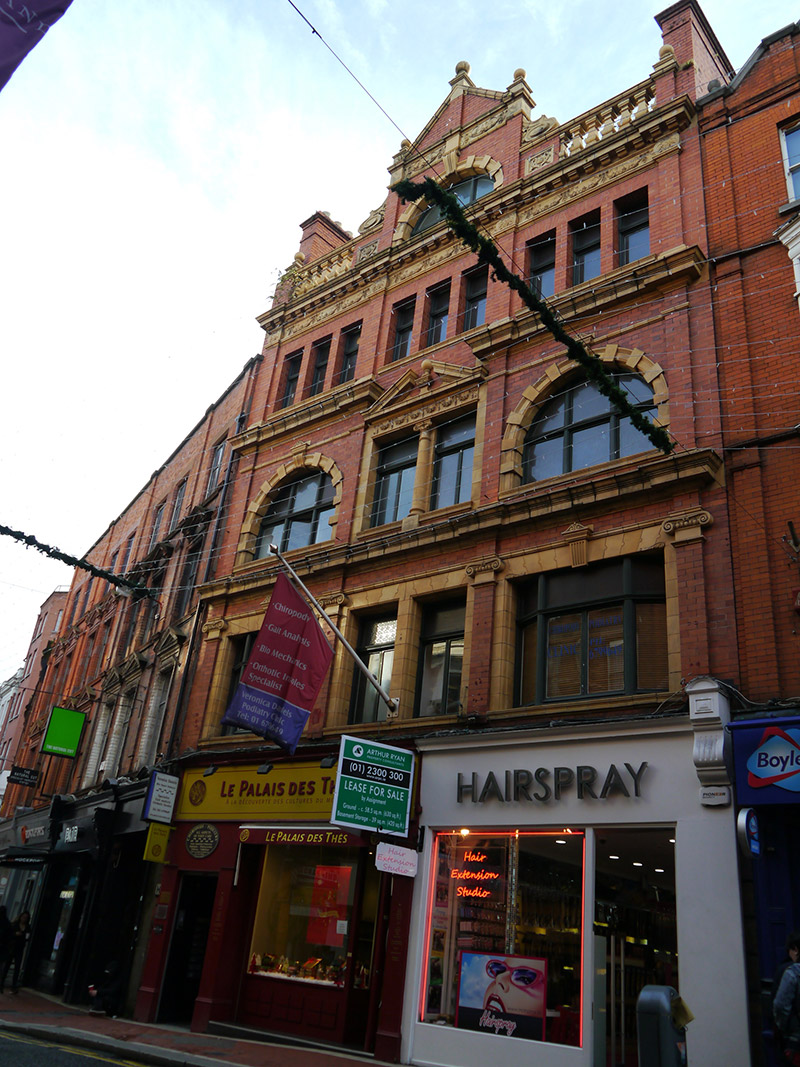
Hotel on Wicklow Street

Hotel
Hotel on Wicklow Street
Photo: National Inventory of Architectural Heritage · Report the wrong picture

This does not grant access. Most recorded buildings are privately owned; view them only from public ground unless the owner allows entry.

Recorded change of use
Originally hotel; recorded by the architectural inventory as shop/retail outlet
What do you know about this place?Tap to add a comment or ask a question

What you write will be public.

What is recorded here

Attached three-bay four-storey former hotel with attic storey, built 1903, rebuilt 1915 as drapery, having brick pilasters defining bays to upper floors, and three recent timber shopfronts to ground floor. Now in commercial retail use with offices over. Pitched roof, hipped to rear, concealed behind balustraded yellow…

Read the whole record
Attached three-bay four-storey former hotel with attic storey, built 1903, rebuilt 1915 as drapery, having brick pilasters defining bays to upper floors, and three recent timber shopfronts to ground floor. Now in commercial retail use with offices over. Pitched roof, hipped to rear, concealed behind balustraded yellow terracotta parapet and central gabled attic bay. Balustrade flanked to outer ends by brick piers and to inner ends by brickwork having decorative terracotta plaques, with moulded copings topped at outer sides by ball finial and at inner by scrolled mouldings. Attic bay topped by pediment with moulded brick coping with ball finials to apex and ends, surmounting decorative terracotta frieze, with Diocletian window beneath. Underneath attic bay and balustraded parapet is yellow terracotta crown cornice comprising heavy moulded course on moulded modillions, above swagged frieze. Flanking chimneystacks to party walls, each having stringcourse and coping, stack to north having yellow clay pots. Concealed rainwater goods. Machine-made red brick walling, laid in Flemish bond, with yellow terracotta heavy moulded cornices to first and second floors, latter interrupted to allow for pedimented window opening. Pilasters flanking bays have Ionic capitals to first floor with egg-and-dart detailing, and moulded stringcourse to second floor. Window openings to first and second floors have yellow terracotta surrounds, with wide openings to end bays and double openings to middle bay, and third floor has triple square-headed openings. All openings have moulded yellow terracotta sills. First floor openings have square-headed joggle-jointed lintels and moulded jambs, with dropped fluted keystones to outer bays with gabled tops. Second floor openings are round-headed to end bays, with moulded architraves having block-and-start surrounds and scrolled keystones with gabled tops, and middle bay openings each have recessed mullion fronted by engaged Ionic colonette, swag frieze to joggle-jointed lintel, topped by moulded open-top pediment, raking sides flanking ball finial atop decorative plinth. Attic window detailing is similar to round-headed openings of second floor. Replacement metal casement windows throughout, with canted sidelights to end bays of first floor.
A strikingly composed former hotel, built 1903 to the designs of Albert Murray and rebuilt as a drapery establishment 1915 to the designs of Patrick Munden. The building has a dramatic presence on Wicklow Street, on a grander scale than the surrounding buildings, and is characterized by lively red brick and yellow terracotta detailing typical of the early Edwardian period. Baroque in spirit, the detailing of each level is distinct and rises to a somewhat frothy balustraded attic storey. The building makes a fine contribution to the retail core of the south area.

From the Buildings of Ireland (National Inventory of Architectural Heritage) record 50910095

Places near here

Photo credits
  • Paul Hermans, Wikimedia Commons · CC BY-SA 4.0
  • Angilbas at English Wikipedia, Wikimedia Commons · Public domain
  • Superchilum, Wikimedia Commons · CC BY-SA 4.0
  • Maker not stated on source page, ru.pinterest.com
  • NateBergin, Wikimedia Commons · CC BY 4.0
  • Maker not stated on source page, www.tripadvisor.ca
  • National Inventory of Architectural Heritage
  • Oisín Ó Doinn, Wikimedia Commons · CC BY-SA 4.0
  • Agence Rol, Wikimedia Commons · Public domain
  • Taken by Fanghong, Wikimedia Commons · CC BY-SA 3.0
Church in Unknown TownlandChurch · 349 yd

Explorer Tom St Anne's on Dawson Street is post-1700, so it's got that classic Dublin church look. Not much else in the record, but…
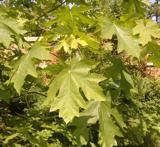
Bigleaf Maple361 yd

Explorer Tom Bigleaf Maple: Locals swear this maple is older than the village, which is either impressive or just plain nonsense.…
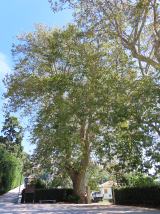
Oriental plane480 yd

Explorer Tom Oriental plane in Dublin once smuggled a whole crate of cabbages up through its hollow trunk during the famine, or so…

Graveyard in Unknown TownlandGraveyard · 697 yd

Explorer Tom Graveyard in Dublin belonged to St John's medieval Parish Church and is marked 'Dis.' on old maps. Rocque's 1756 map…

Cathedral719 yd

Explorer Tom Cathedral. Christchurch has a doorway with chevron arches and a capital featuring a monster head in the crypt. It is…

St. Marys ChurchChurch · 776 yd

Explorer Tom St. Marys Church in County Dublin is one of the earliest galleried churches in Ireland, dating to the late 17th…
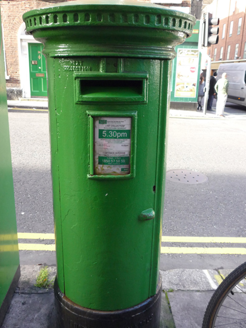
post box811 yd

Explorer Tom Post box in County Dublin is a Victorian-era cast-iron pillar from around 1880 that looks like it’s about to swallow…

Religious houseReligious house, Cistercian monks · 816 yd

Explorer Tom St Mary’s Abbey in Dublin would handle a nosey neighbour by simply closing its windows and pretending it doesn't hear…

Burning of the Custom HouseArmed conflict · 897 yd

Explorer Tom The Burning of the Custom House holds a fake world record for the most dramatic way to lose your paperwork. It still…
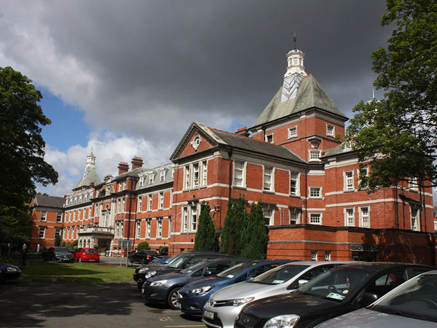
Royal Victoria Eye and Ear HospitalHospital/infirmary · 1290 yd

Explorer Tom Royal Victoria Eye and Ear Hospital in County Dublin looks like a grand mansion that got lost on the way to a royal…
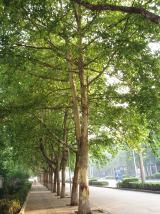
London Plane1405 yd

Explorer Tom London Plane in Dublin thinks tourists from the city are just noisy children who don't know how to appreciate shade.…
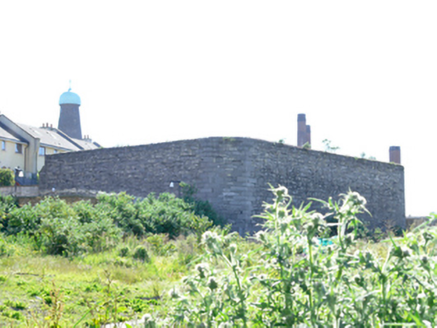
handball alley1551 yd

Explorer Tom This handball alley is the last thing standing from a massive prison complex that vanished in 1975. It’s been bouncing…

More historic places in County Dublin · All of County Dublin

Add to this placeAdd a picture Add a detailed tip Add a story

Explore the map1,095,414 places to discover

Next place · or swipeChurch in Unknown Townland