
What is recorded here
The great quartzite headland above Dunfanaghy. Sheer cliffs falling to the sea, home to one of the biggest seabird colonies in the north west, puffins, guillemots and razorbills. The loop road round the head is one of the finest short drives in the county.
From Placenames Database of Ireland, Corrán Binne / Horn Head
- Access
- easy
Places near here
 Cliffs at Traghlisk PointPublicly named cliff or headland · 200 yd
 Horn Head Signal TowerRuins · 446 yd
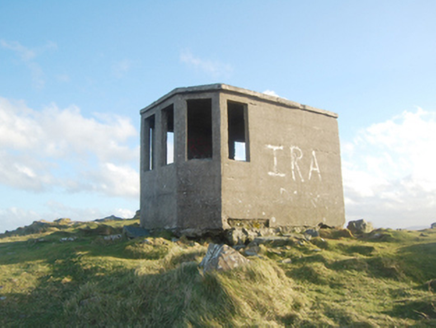 Horn Head Lookout PostWatch tower, signal tower · 1160 yd
 Coastguard HillMountain / peak · 1161 yd
 Cairn, Coastguard HillPublicly named cairn · 1166 yd
 CrocksheeMountain / peak · 1.2 mi
 Horn Head Portal TombPortal tomb · 1.5 mi
 Templebreaga ArchNatural arch · 1.6 mi
 KillahoeyOfficial bathing water · 2.9 mi
 Kill Old Church GraveyardGraveyard · 3.4 mi
 Tramore StrandBeach / strand · 3.6 mi
 Local Wildlife presentationVisitor information · 3.8 mi
Pictures: Colin Park, Wikimedia Commons · CC BY-SA 2.0; N Chadwick, Geograph · CC BY-SA 2.0; National Inventory of Architectural Heritage; N Chadwick, Wikimedia Commons · CC BY-SA 2.0; Chris Gunns, Geograph · CC BY-SA 2.0; C Michael Hogan, Wikimedia Commons · CC BY-SA 2.0; Ross, Wikimedia Commons · CC BY-SA 2.0; Rossographer, Geograph · CC BY-SA 2.0; Kenneth Allen, Geograph · CC BY-SA 2.0
More cliffs, bays and coast in County Donegal · All of County Donegal
What do you know about this place?