DDiscover AloneMapAbout

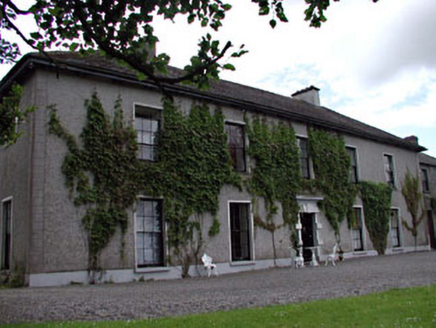
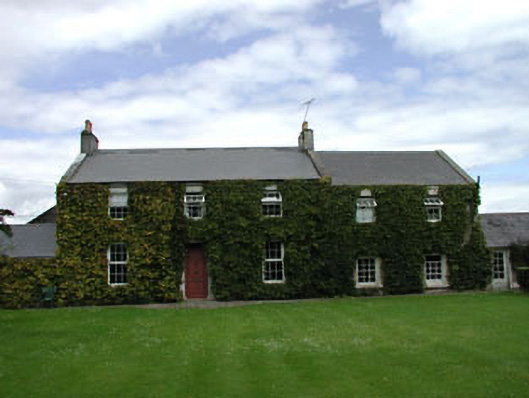
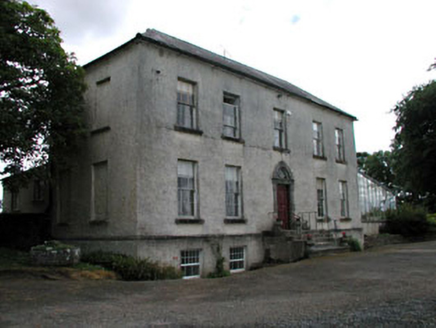
Heath House

Farm house
Heath House
Photo: National Inventory of Architectural Heritage · Report the wrong picture

What is recorded here

Detached three-bay two-storey house, c.1800, with single-bay single-storey end bay to south-west. Extended, c.1845, comprising two-bay two-storey block to north-east with single-bay single-storey end bay to north-east. Reroofed and refenestrated, c.1995. Gable-ended roofs. Replacement artificial slate, c.1995.…

Read the whole record
Detached three-bay two-storey house, c.1800, with single-bay single-storey end bay to south-west. Extended, c.1845, comprising two-bay two-storey block to north-east with single-bay single-storey end bay to north-east. Reroofed and refenestrated, c.1995. Gable-ended roofs. Replacement artificial slate, c.1995. Concrete ridge tiles. Roughcast chimney stacks. Rendered coping to gables. Replacement uPVC rainwater goods, c.1995. Roughcast walls over rubble stone construction. Unpainted (ivy-covered to front elevation to south-east). Replacement roughcast, c.1995, to rear elevation to north-west with rendered strips to corners. Square-headed openings. Stone sills. Replacement uPVC casement windows, c.1995. Two early 9/9 timber sash windows to rear elevation to north-west. Replacement timber panelled door, c.1985. Overlight. Set back from road in own landscaped grounds. Lawns to front. Detached multiple-bay two-storey rubble stone outbuilding, dated 1844, to rear to north-west on a U-shaped plan about a courtyard. Reroofed, c.1980. Gable-ended roof on a U-shaped plan. Replacement corrugated-iron, c.1980. Iron ridge tiles. Rendered coping to gables. Rendered chimney stack to gable to north-east with inscription. Cut-stone bellcote to gable to south-west. Cast-iron rainwater goods. Rubble stone walls. Cut-stone quoins to corners. Square-headed window openings. Cut-stone sills. Cut-stone block-and-start surrounds. Timber panelled shutters. Square-headed door openings. Timber panelled doors. Series of segmental-headed integral carriageways. Red brick piers to range to south-west. Red brick arches with cut-stone keystones. No fittings. Concrete courtyard. Freestanding single-bay single-storey rubble stone mill building, c.1845, to north on a circular plan. Now in ruins. Roof now missing. Rubble stone walls. Square-headed openings. No fittings. Gateway, c.1845, to south comprising four cut-stone piers with cast-iron railings.
Heath House is a fine and well-maintained middle-size farm house of the early nineteenth century. Much altered in the late twentieth century, little of the original features survive in situ, although the re-instatement of timber fenestration might restore a more accurate representation of the original aspect. The estate includes attendant outbuildings to north formally arranged about a courtyard and these have remained little altered since they were first built. Of social and historic interest the farmyard complex was built by the Duke of Leinster on his lands (Heath House is close to Kilkea Demesne) as a model farm. Although now mostly disused the complex was traditionally a major employer in the region and is testament to the importance of agriculture in the economy of the locality. Of an appearance that is more formal than the main house, the elevations of the outbuildings range are composed of graceful proportions and are simply, but attractively, detailed. Features of note are the fine cut-stone surrounds to the openings and the brick work piers to the carriageways. A cut-stone bellcote is also retained, while an unusual feature is the inscription to the chimney stack. The former mill to the north is of some technical interest and was originally used for the grinding of corn, achieved through horse power. The house and farmyard are attractively set in mature, landscaped grounds and are approached by a formal avenue. The estate is announced on the roadside by an attractive gateway, which includes decorative early surviving cast-iron railings.

From the Buildings of Ireland (National Inventory of Architectural Heritage) record 11903701

This does not grant access. Most recorded buildings are privately owned; view them only from public ground unless the owner allows entry.

What do you know about this place?Tap to add a comment or ask a question

What you write will be public.

Places near here

Photo credits
  • National Inventory of Architectural Heritage
  • Picture: kildaregaa.ie
  • Mgtmquinn, Wikimedia Commons · CC BY-SA 4.0
  • Shackleton Experience Athy; photographer not stated, Shackleton Experience Athy
  • Andrewmc, Wikimedia Commons · CC0
  • Andreas F. Borchert, Wikimedia Commons · CC BY-SA 4.0
  • Sheila1988, Wikimedia Commons · CC BY-SA 4.0
forge/smithy276 yd

Explorer Tom Forge or smithy in Ballyroe once hosted a famous actor who forgot his lines. Now it’s just a small building full of…

Grangenolvin GAA pitchGAA ground · 871 ydLeinster LodgeHunting/fishing lodge · 983 yd

Explorer Tom Leinster Lodge was built for hunting the Duke of Leinster, so it smells faintly of aristocratic boredom and old…
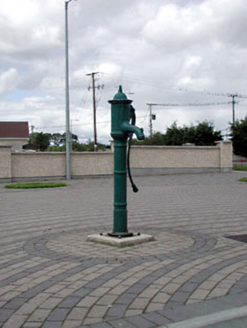
water pump1020 yd

Explorer Tom Water pump in Ballyroe is where a poet once fell into the ditch nearby and wrote a bad sonnet about it. It’s still…
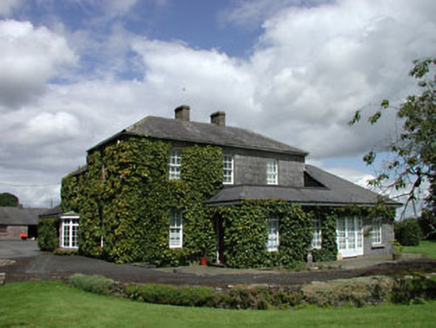
Snugburrow HouseSteward's house · 1284 yd

Explorer Tom Snugburrow House’s builder was really thinking about how much he hated doing extra work, hence all those later…
Grangemellon HouseFarm house · 1.2 mi

Explorer Tom Grangemellon House in Grangemellon hosted a dance where someone definitely danced on the chandelier. It’s all very…

Kilmorony HouseBridge · 1.3 mi

Explorer Tom Kilmorony House is a cast-iron bridge that claims to be much older than eighteen-forty because it was actually built by…

Town HallMuseum · 2.3 mi

Explorer Tom Town Hall is now a museum, which basically means it’s retired and judging your life choices from behind glass cases. It…

Shackleton MuseumMuseum · 2.3 mi

Explorer Tom Athy is a long way from Antarctica, but Ernest Shackleton began his life just outside this County Kildare town. The…

Ernest ShackletonMemorial · 2.3 mi

Explorer Tom Ernest Shackleton in County Kildare is a statue that probably feels out of place next to all these Irish hills, but…

Whites [sic] Castle, Police BarrackCastle, tower house · 2.4 mi

Explorer Tom Whites Castle, Police Barrack in Athy has been through four construction phases, which means it had major commitment…

Woodstock Castle (in Ruins)Castle, hall-house · 2.8 mi

Explorer Tom Woodstock Castle would be a disaster on a reality show, too proud to admit it’s damp. Richard de St. Michael built it…

More historic places in County Kildare · All of County Kildare

Add to this placeAdd a picture Add a detailed tip Add a story

Explore the map1,095,414 places to discover

Next place · or swipeforge/smithy