DDiscover AloneMapAbout

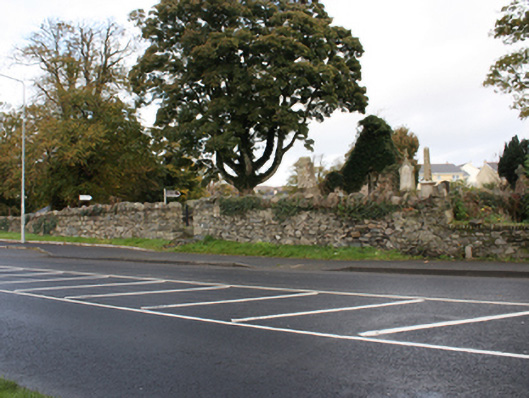
Graveyard or cemetery in Glebe, County Donegal (40820016)

Graveyard/cemetery
Graveyard or cemetery in Glebe
Photo: National Inventory of Architectural Heritage · Report the wrong picture

This does not grant access. Most recorded buildings are privately owned; view them only from public ground unless the owner allows entry.

Official building number
40820016
What do you know about this place?Tap to add a comment or ask a question

What you write will be public.

What is recorded here

Church of Ireland graveyard (see RMP DG038-013004-) on irregular-plan, laid-out c. 1600, containing a collection of upstanding, recumbent, and table-type gravemarkers dating from the early seventeenth-century into the twentieth century. Metal railed enclosures to some sites. Grave of Agnes Elizabeth Jones (1832-68) to…

Read the whole record
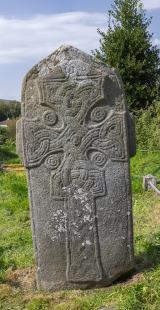
Church of Ireland graveyard (see RMP DG038-013004-) on irregular-plan, laid-out c. 1600, containing a collection of upstanding, recumbent, and table-type gravemarkers dating from the early seventeenth-century into the twentieth century. Metal railed enclosures to some sites. Grave of Agnes Elizabeth Jones (1832-68) to west of site comprising table-type stone memorial having railed enclosure comprising decorative cast-iron gate posts with pinnacle finials over, and with hooped wrought-iron railings. Ruins of former Church of Ireland church (see RMP DG038-013001-) to site, built c. 1600, with only east gable end and short sections of north and south elevations now standing above ground having partially rendered rubble stone walls, now largely covered in ivy, with antae like projections to the east gable end, and with triple-light round-headed window to the east gable having cut stone intersecting\double Y-tracery. Cut stone wall plaque to Hawkshaw family beneath window opening. Built on site of earlier ecclesiastic foundation founded in the late sixth century by St. Columbkille. Seventh to tenth century (suggested dates vary) cut stone cross-slab, St. Mura’s Cross (see RMP DG038-013002-), to the north-west of church having ‘pitched’ head, interlaced ribbon decorative Celtic cross detail to both faces, and with carved figures. Gateway to the south-west corner of site having wrought-iron pedestrian gate. Gateway flanked to the south by reused cut stone slab (see RMP DG038-013003-) with a carved Celtic cross motif and to the north by a perforated round stone (see RMP DG038-013007-). Rubble stone boundary wall surrounding site having soldier coursed rubble stone coping, and with wrought-iron gates. Located to the south-east end of Fahan. Later Church of Ireland church (see 40820014) adjacent to the north-west.
Although primarily an archaeological site of national significance, this graveyard and the church to site were in use throughout the eighteenth and into the nineteenth century. It contains an interesting collection of mainly upstanding and recumbent gravemarkers, some of minor artistic merit, and including a number with iron railed enclosures. Of historical interest is the grave of Agnes Elizabeth Jones (1832-68), a pioneering nurse who trained with Florence Nightingale, and who spent part of her childhood at Fahan House (see 40820013). Agnes Jones is best known for transforming the workhouses in Liverpool during the 1860s, where she contracted and died of typhus. She is also commemorated with a fine stained glass window and a statue in an oratory at the Anglican Cathedral in Liverpool. Agnes grave, a well-carved table tomb, is surrounded by an attractive railed enclosure with cast-iron posts and hooped wrought-iron railings. A plaque to the grave reads 'In memory of Agnes Elizabeth Jones. A great nurse who had much to give and give unto this last. Born 10th November 1832. Died 19th February 1868'. Another grave to the north-east section of the graveyard commemorates a Horatio Nelson, a midshipman of the H.M.S Endymion, who died at Fahan House in 1811. There are also a number of gravemarkers dating to the seventeenth century, and perhaps earlier, to site. To the south of the centre of the graveyard are the fragmentary remains of a former church, which was in use throughout the eighteenth century and into the nineteenth-century. The original date is unclear though it dates to before 1622 when it was described as ‘well and sufficiently repaired' (Royal Commission, 191). This church was replaced in 1820 by the present Church of Ireland church (see 40820014) a short distance to the north-west, and presumably went out of use. Of particular note is the fine window to the east gable with cut stone intersecting or double Y-tracery, which dates to the seventeenth century. The graveyard also occupies the site of one of the most important early ecclesiastic foundations in Donegal, which was founded in the late sixth century by St. Columbkille, with his disciple St. Mura (of the northern branch of the important O’Neill family) as the first abbot and patron. The earliest surviving remains to the site are probably the celebrated St. Mura's cross-slab (DG038-013002-), one of the most important surviving examples of early Irish ecclesiastic art, which is usually dated to the seventh century although some authorities date it as late as the tenth century. This slab features Greek crosses to both faces with Celtic interlacing ribbon; to the west face are two small figures, one to either side of the cross, and to the north edge is an inscription in Greek translating as ‘Glory and honour to the Father, the Son and the Holy Spirit'. This is the only known early Greek inscription in Ireland. Other early fragments and carved stones to site include a reused cut stone slab (see RMP DG038-013003-) with a carved Celtic cross motif, and a perforated round stone (see RMP DG038-013007-), which are both built into the boundary wall to the south-west of site. This important site, with many layers of history spanning the centuries from the Early Medieval period into the nineteenth century, is significant on a national level. The simple enclosing boundary walls and gateways to site add to the setting.

From the Buildings of Ireland (National Inventory of Architectural Heritage) record 40820016

Places near here

Photo credits
  • Maker not stated on source page, commons.wikimedia.org
  • Maker not stated on source page, www.tripadvisor.in
  • Andreas F. Borchert, Wikimedia Commons · CC BY-SA 4.0
  • Maker not stated on source page, www.flickr.com
  • National Inventory of Architectural Heritage
  • Jnoon9145, Wikimedia Commons · CC BY-SA 4.0
  • Maker not stated on source page, www.donegaldaily.com
  • Maker not stated on source page, www.revisitinghistory.com
  • Maker not stated on source page, www.practicalcaravan.com
  • David Dixon, Geograph · CC BY-SA 2.0
Fahan GraveyardGraveyard · 8 yd

Explorer Tom Fahan Graveyard holds a cross-slab that measures exactly 2.1m high and only 0.18m thick, yet its top is deliberately…

St Mura's AbbeyRuins · 14 yd

Explorer Tom St Mura's Abbey is just a name on the map right now, which is honestly a bit cheeky. I bet the monks are still hiding…

Fahan Old ChurchChurch · 15 yd

Explorer Tom Fahan Old Church was still in use after a recorded repair in 1622, then gave way to a new church in 1820. The survey…
Cross in Glebe (fahan Ed)Cross · 19 yd

Explorer Tom Cross in Glebe is a slab that’s been arguing with scholars for centuries. It has two figures standing on either side of…

Holed stone in Glebe (fahan Ed)Holed stone · 35 yd

Explorer Tom This holed stone in Glebe sits wedged into the graveyard wall at Fahan. The hole is 14.5 cm wide, which feels…
GlengollanDemesne walls/gates/railings · 55 yd

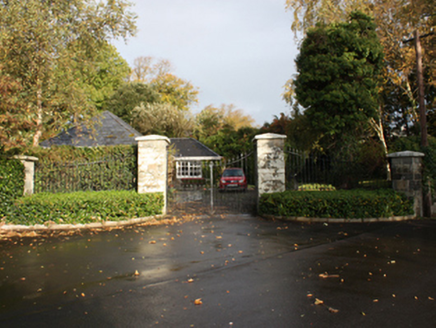
Explorer Tom Glengollan's house is gone, but its entrance remains: tall cut-stone piers, curved railings and arrow-tipped gates. If…
rectory/glebe/vicarage/curate's house115 yd

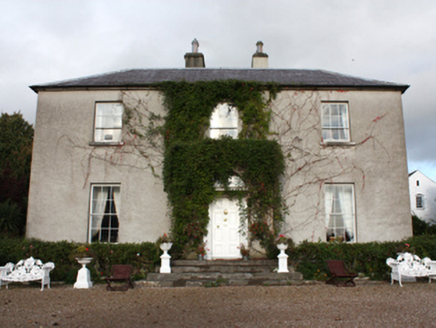
Explorer Tom Rectory in Glebe handles nosey neighbours by pretending its fanlight doesn’t have eyes, which is a bold strategy for a…

St. Mura’s Church of Ireland ChurchChurch/chapel · 129 yd

Explorer Tom St. Mura’s Church of Ireland Church was built in 1820 and has extensions from 1858 and 1897, but it’s the Celtic cross…

Fahan Holy WellSpring · 421 yd

Explorer Tom Fahan Holy Well has a local superstition that if you drink from it with your eyes closed, you’ll forget everything bad…
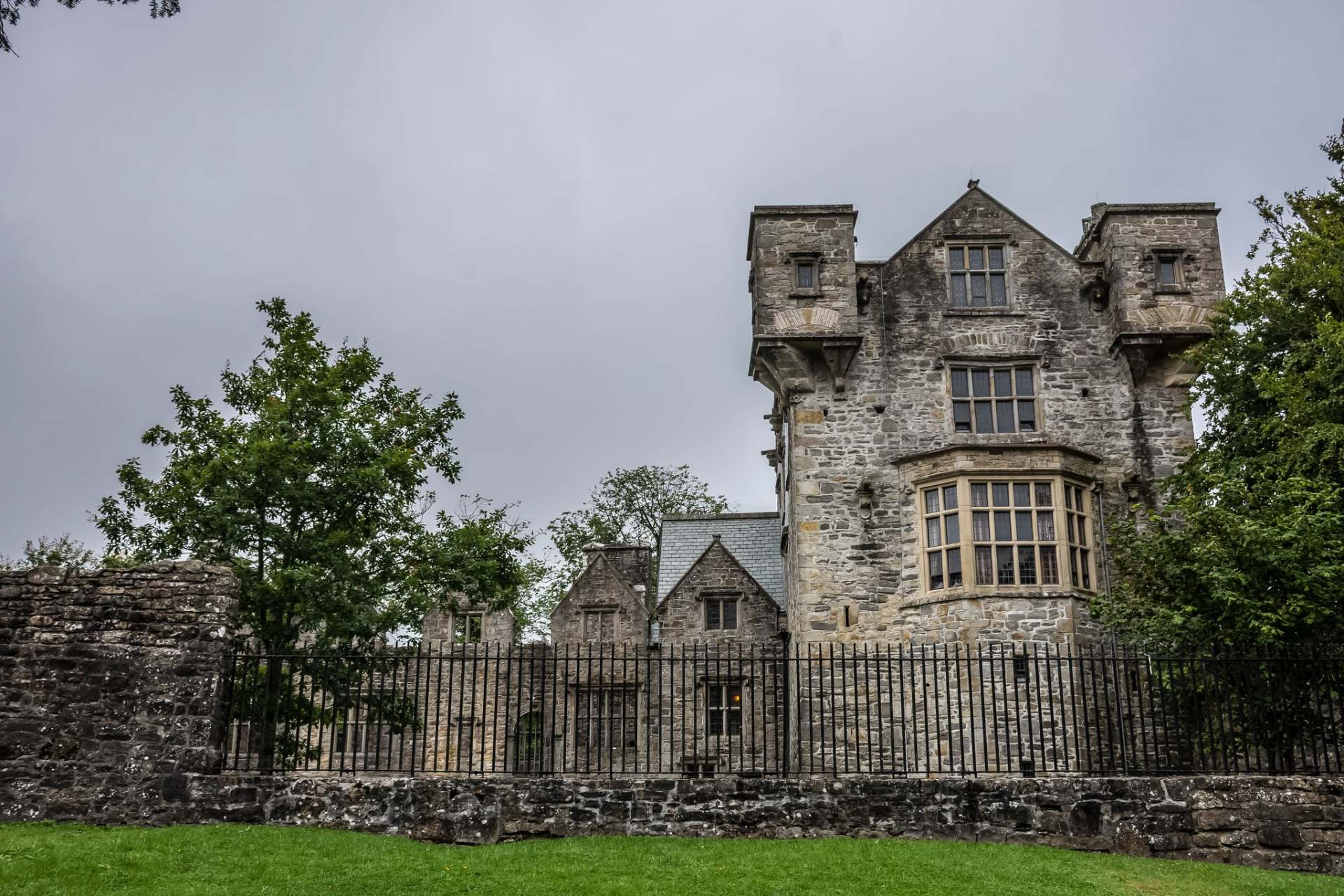
CastletownCastle, tower house · 1455 yd

Explorer Tom Castletown used to be Fahan Castle, but it vanished so thoroughly that digging for it in 2007 found nothing but clay…

Brown ShoreBeach / strand · 1722 yd

Explorer Tom Brown Shore in County Donegal has a five-year retirement plan that involves turning completely gold and moving to the…

LisfannonOfficial bathing water · 1.3 mi

Explorer Tom Lisfannon Beach has a good trick: it makes you walk through low dunes before it shows you the full width of Lough…

More historic places in County Donegal · All of County Donegal

Add to this placeAdd a picture Add a detailed tip Add a story

Explore the map1,095,414 places to discover

Next place · or swipeFahan Graveyard