DDiscover AloneMapAbout

Fahan Old Church

Church
Fahan Old Church
Photo: Andreas F. Borchert, Wikimedia Commons · CC BY-SA 4.0 · Report the wrong picture

The monument record does not grant public access. Check the route and ask the landowner before entering private land.

What do you know about this place?Tap to add a comment or ask a question

What you write will be public.

What is recorded here

The early ecclesiastical site of Fahan consists of a modern graveyard, at a bend in the road. It is possible that this bend may reflect something of an earlier enclosure. Inside the graveyard (DG038-013004-) is part of a ruined church. Fahan old Church (DG038-013001-): In 1622, the parish church was 'well and…

Read the whole record
The early ecclesiastical site of Fahan consists of a modern graveyard, at a bend in the road. It is possible that this bend may reflect something of an earlier enclosure. Inside the graveyard (DG038-013004-) is part of a ruined church. Fahan old Church (DG038-013001-): In 1622, the parish church was 'well and sufficiently repaired' (Royal Commission, 191) and it continued in use until the new church was built in 1820 (Rowan 1979, 289). Only the E gable at full height and 5.67m wide internally, and adjoining sections of N and S walls survive. A low cross wall now devoid of railings at the W end of the latter encloses the burial plot of the Hawkshaw family whose memorial is set below the E window. The walls are built of rubble and the E gable has two antae-like projections; ivy has partly dislodged that on the S. The three-light round-headed E window has simple switch-line tracery and four rows of transverse iron glazing bars. It is probably of 17th century date. There is a blocked-up rectangular window, .76m high with simple jambs and splayed ingoings in the S wall. The general style and dressing is different to that of the E window and point to its being of an undoubtedly earlier date. The exterior of the church is harled and the interior preserves sections of two superimposed coats of plaster. SE of the church is St. Mura's cross-slab (DG038-013002-). The slab is 2.1m high × 1.04m N-S and·.18m thick. The top of the slab has been worked into a triangular shape. A narrow band around the edges, frames the slab on both sides. On each side is carved a cross formed of broad double-edged interlaced ribbon. On both faces this consists of a Greek cross mounted on a stem giving the effect of a Latin cross. There is a boss at the centre of each cross. On the E face of the slab there are two small concentric circles around a small boss, in each of the hollowed angles of the cross. Two rudimentary arms protrude from the slab at a point coinciding with the arms of the cross on the E face. Also on this face, in the triangular space above the cross, are two affronted birds. On the W face of the slab a figure can be seen on either side of the cross stem. It has been suggested by Macalister, that patterns on the dress of each figure are inscriptions; however, this has been rejected by Henry (1965, 125-8). Also on the W face the cross stem expands outwards beneath the figures and acts almost as a platform. Macalister also read the doxology 'Glory and honour to the father the son' and holy spirit', inscribed in Greek characters on the N edge of the slab. This reading has been accepted by other scholars. On the outside wall of the graveyard on the S side of the entrance is a small slab (DG038-013003-) .41mx .32m. On this is a carved wheeled cross. This stone is very similar to another found near. Clonca (DG012-002001-). On the other side of the entrance is a stone (DG038-013007-) .66m × 0.5m built into the wall. Through this is bored a hole 14.5 cms in diameter. The site of Fahan is situated in a valley at the foot of Collan Hill and Carrick Hill close to the shore of Lough Swilly. About 350m NW of the churchyard and close to the shore is a holy well (DG038-012-) dedicated to St. Mura (Ó Muirgheasa No. 89). (Crawford 1980, 29; Gwynn and Hadcock 1970, 36; Macalister 1949, 118 20, No. 951; Spence 1910-11, 17-31) (see also DG004-005001-) The above description was derived from the 'Archaeological Survey of County Donegal. A description of the field antiquities of the County from the Mesolithic Period to the 17th century.' Compiled by: Brian Lacey with Eamon Cody, Claire Cotter, Judy Cuppage, Noel Dunne, Vincent Hurley, Celie O'Rahilly, Paul Walsh and Seán Ó Nualláin (Lifford: Donegal County Council, 1983).

From the National Monuments Service (Archaeological Survey of Ireland) record DG038-013001

Places near here

Photo credits
  • Maker not stated on source page, www.tripadvisor.in
  • Andreas F. Borchert, Wikimedia Commons · CC BY-SA 4.0
  • Maker not stated on source page, commons.wikimedia.org
  • National Inventory of Architectural Heritage
  • Maker not stated on source page, www.flickr.com
  • Jnoon9145, Wikimedia Commons · CC BY-SA 4.0
  • Maker not stated on source page, www.donegaldaily.com
  • Maker not stated on source page, www.revisitinghistory.com
  • Maker not stated on source page, www.practicalcaravan.com
  • David Dixon, Geograph · CC BY-SA 2.0
St Mura's AbbeyRuins · 2 yd

Explorer Tom St Mura's Abbey is just a name on the map right now, which is honestly a bit cheeky. I bet the monks are still hiding…
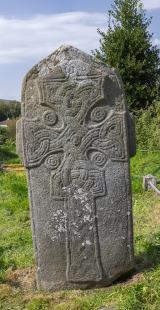
Cross in Glebe (fahan Ed)Cross · 5 yd

Explorer Tom Cross in Glebe is a slab that’s been arguing with scholars for centuries. It has two figures standing on either side of…

Fahan GraveyardGraveyard · 8 yd

Explorer Tom Fahan Graveyard holds a cross-slab that measures exactly 2.1m high and only 0.18m thick, yet its top is deliberately…
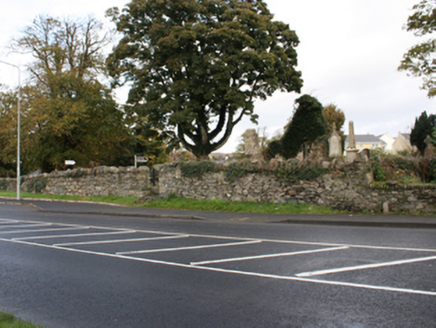
graveyard/cemetery15 yd

Explorer Tom The graveyard in Glebe is sitting on a prophecy that said it would one day be a shopping mall, but it just kept digging…

Holed stone in Glebe (fahan Ed)Holed stone · 23 yd

Explorer Tom This holed stone in Glebe sits wedged into the graveyard wall at Fahan. The hole is 14.5 cm wide, which feels…
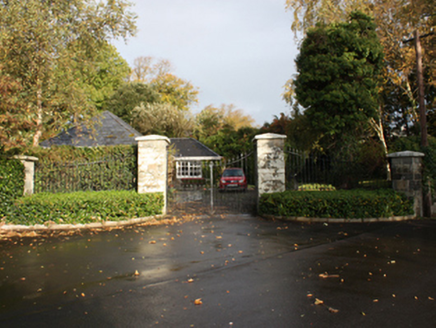
GlengollanDemesne walls/gates/railings · 63 yd

Explorer Tom Glengollan's house is gone, but its entrance remains: tall cut-stone piers, curved railings and arrow-tipped gates. If…
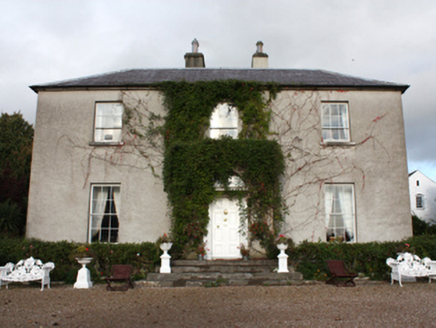
rectory/glebe/vicarage/curate's house116 yd

Explorer Tom Rectory in Glebe handles nosey neighbours by pretending its fanlight doesn’t have eyes, which is a bold strategy for a…

St. Mura’s Church of Ireland ChurchChurch/chapel · 133 yd

Explorer Tom St. Mura’s Church of Ireland Church was built in 1820 and has extensions from 1858 and 1897, but it’s the Celtic cross…

Fahan Holy WellSpring · 414 yd

Explorer Tom Fahan Holy Well has a local superstition that if you drink from it with your eyes closed, you’ll forget everything bad…
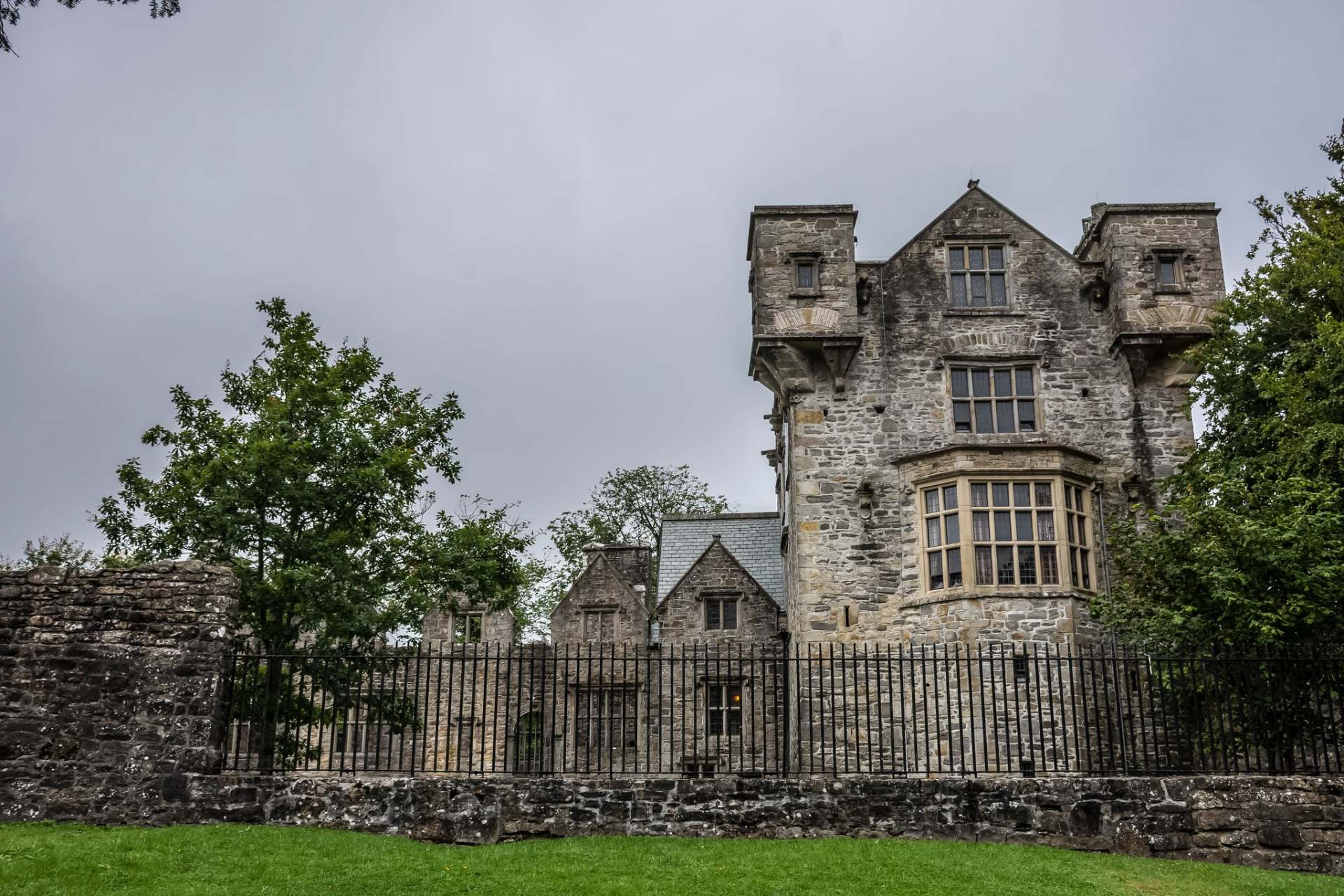
CastletownCastle, tower house · 1448 yd

Explorer Tom Castletown used to be Fahan Castle, but it vanished so thoroughly that digging for it in 2007 found nothing but clay…

Brown ShoreBeach / strand · 1710 yd

Explorer Tom Brown Shore in County Donegal has a five-year retirement plan that involves turning completely gold and moving to the…

LisfannonOfficial bathing water · 1.3 mi

Explorer Tom Lisfannon Beach has a good trick: it makes you walk through low dunes before it shows you the full width of Lough…

More historic places in County Donegal · All of County Donegal

Add to this placeAdd a picture Add a detailed tip Add a story

Explore the map1,095,414 places to discover

Next place · or swipeSt Mura's Abbey