What is recorded here
Kilcrea friary became a graveyard only after ruin, yet MacCarthy lords like Cormac slept in its choir from 1494. The fallen walls now hold cross slabs dated 1625 and 1626, the outlaw Arthur Leary, and Ballyneadig blood. What is missing is not loss but transformation: a sacred house broke open and became a field for the dead.
Within ruins of Kilcrea friary (CO084-024002-). Friary was burial place of MacCarthy, lords of Muskerry, beginning with Cormac 'who was buried in the middle of the choir in the Franciscan habit in 1494' (Gwynn and Hadcock 1988, 251); Latin inscription on founder's tomb noted by Ware (Windele 1844, 262-3) but no identifiable trace remains of tombs located by Windele (ibid.) 'in the middle of the choir'. According to O'Mahony (1907-9), friary 'did not become a general place of burial until it became a ruin, in the Cromwellian period'. Almost entire area of friary has been used for burials. Extant inscriptions and locations recorded by Henchion (1968a, 1-30); earliest monuments are fragments of three early 17th-century rectangular cross slabs, one dated 1625 and another 1626 (ibid., 27, sketch 30; see photograph in JAPMDI vol. 9, 1913-16, opp. 429); amongst other notable burials, altar tomb of outlaw Arthur Leary in SE corner of nave (Henchion ibid., 48), and tomb of Mac Carthys of Ballyneadig (O Murchú 1965, 84-102). Still in occasional use.
The above description is derived from the published 'Archaeological Inventory of County Cork. Volume 3: Mid Cork' (Dublin: Stationery Office, 1997). In certain instances the entries have been revised and updated in the light of recent research.
Date of upload/revision: 14 January 2009
The monument record does not grant public access. Check the route and ask the landowner before entering private land.
- What survives
- Recorded monument
Places near here
 Kilcrea Abbey (in Ruins)Religious house, Franciscan friars · 1 yd
 Kilcrea Bridgebridge · 210 yd
 Fulacht fia in KilcreaFulacht fia · 211 yd
 KilcreaArchaeological place · 335 yd
 Kilcrea Castle (in Ruins)Castle, tower house · 544 yd
 Kilcrea CastleWood · 548 yd
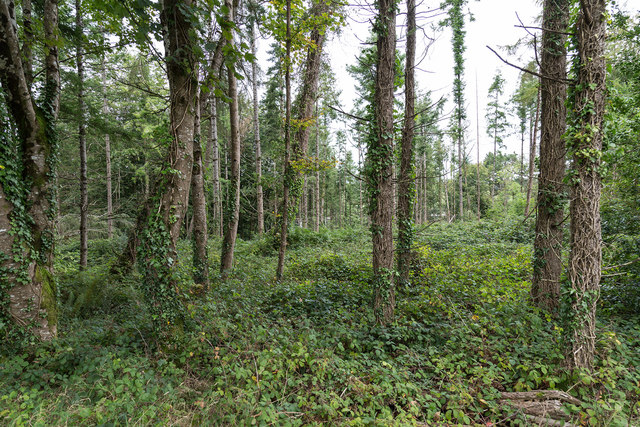 Farran WoodWood · 2.6 mi
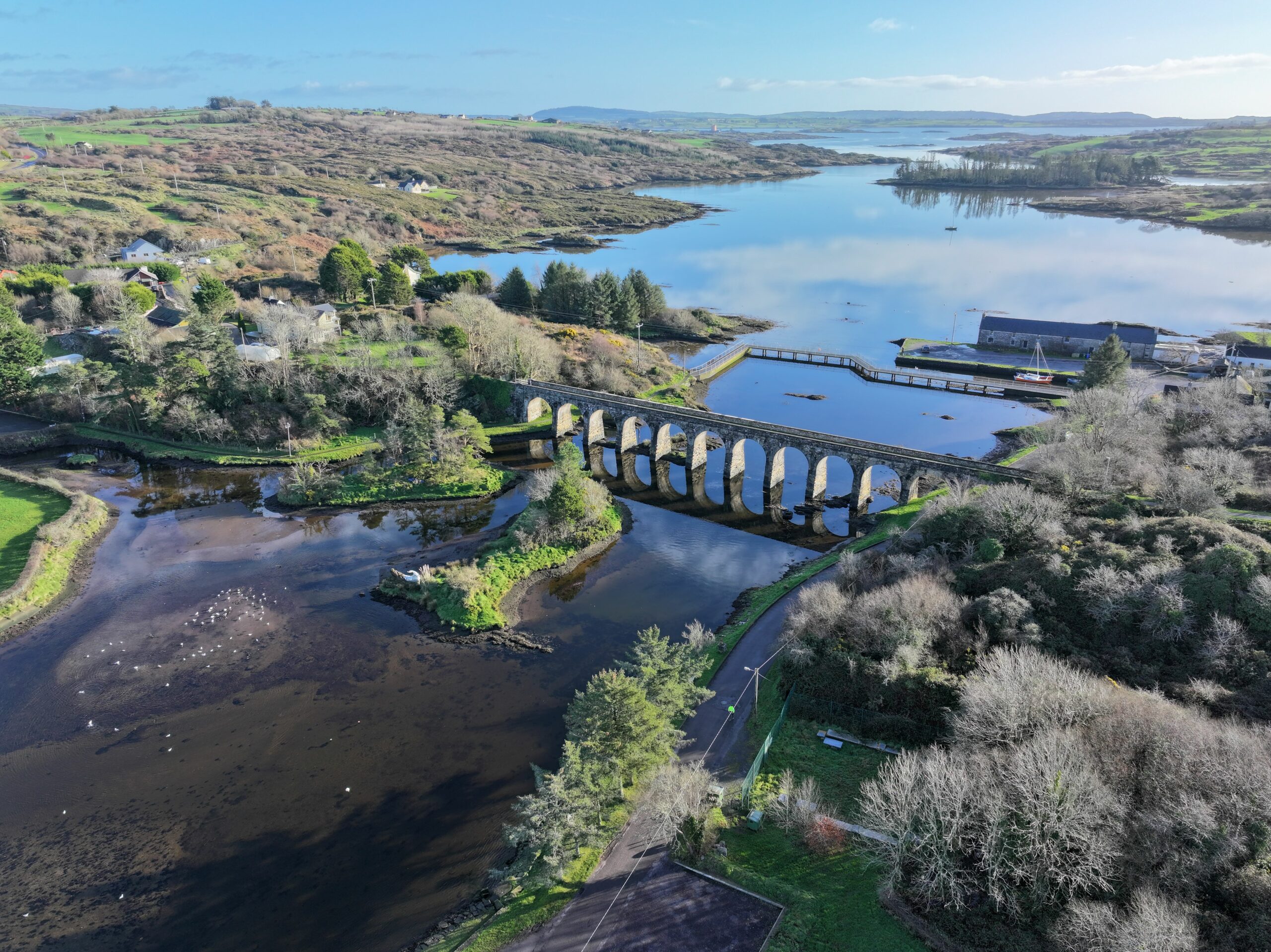 Coachford Greenway (End)Visitor information · 2.7 mi
 Graveyard in Carrigane (muskerry East By.)Graveyard · 2.7 mi
 Iniscarra Dam ViewViewpoint · 2.8 mi
 Castle Inch (in Ruins)Castle, tower house · 2.8 mi
 Bob AdamsMemorial · 3.0 mi