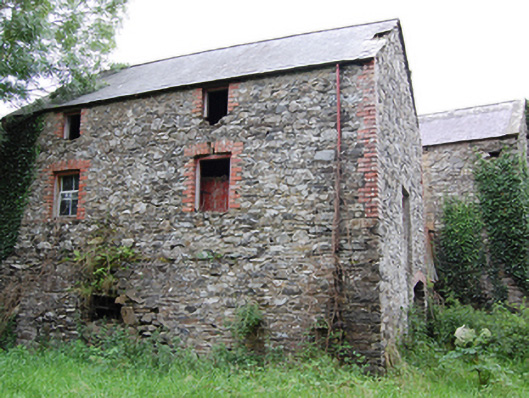
What is recorded here
Pair of detached multiple-bay three-storey mill buildings, built c.1800, having corrugated-iron lean-to to north of west building. Now disused. Pitched slate roof, cast-iron and replacement rainwater goods. Rubble stone walls having brick quoins and brick dressed openings to west building and stone opening to east…
Read the whole record
From the Buildings of Ireland (National Inventory of Architectural Heritage) record 40402802
Places near here
Photo credits
- Kieran Campbell, Geograph · CC BY-SA 2.0
- National Inventory of Architectural Heritage
- Eric Jones, Geograph · Creative Commons Attribution-ShareAlike 2.0
- Oliver Dixon, Geograph · CC BY-SA 2.0
- Wanfried-Dublin, Wikimedia Commons · CC BY-SA 4.0
 St Anne's Roman Catholic ChurchChurch/chapel · 395 yd
Explorer Tom St Anne's Roman Catholic Church is a Gothic Revival cruciform building from 1837, with carved rafters that really stand out.
 Green IslandIsland · 689 yd
Explorer Tom Green Island is a lush little spot in County Cavan that looks like it’s straight out of a stock photo of Irish mountains and trips.
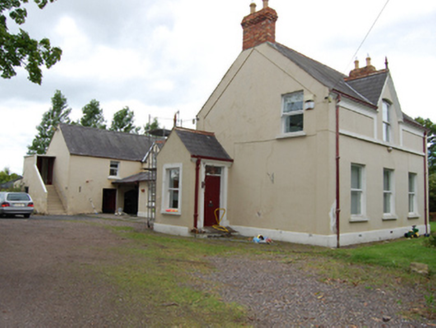 The ManseManse · 776 yd
Explorer Tom The Manse in Glasleck is a detached L-plan house built around 1890, featuring a central gabled dormer and carriage arch.
 Graveyard1.3 mi
Explorer Tom Perched on a knoll above the valley, this graveyard sits beside the church where headwaters trickle toward Milltown Lough.
NolaghWood · 1.4 miExplorer Tom Nolagh is a wood in County Cavan, and it sounds like a place where time slows down for a proper nap.
DerrynureMountain / peak · 1.8 miExplorer Tom Derrynure stands as a modest peak in County Cavan, its name rolling off the tongue like a local greeting.
Bawn in LisdrumskeaBawn · 1.8 miExplorer Tom Sir Henry Piers built this bawn in Lisdrumskea, but there’s no evidence left; perhaps the ground holds a ghost story about his ambitious town plan.
 Bush IslandIslet · 2.0 mi
Explorer Tom Bush Island might actually be a hidden crannog in Lough Sillan, waiting for us to discover its secret, mossy, ancient history today.
 Wedge tomb in LisnadarraghWedge tomb · 3.0 mi
 Welcome to Bailieborough DemesneVisitor information · 3.2 mi
Explorer Tom Welcome to Bailieborough Demesne, where you might spot the famous Castle Lough recreation area.
 Brothers GravesVisitor information · 4.2 mi
Explorer Tom Brothers Graves holds a touching memory, marking seven Marist brothers who lived long lives in this community.
 LoughanleaghForest · 4.5 mi
Explorer Tom Loughanleagh has waymarked paths, so you won’t get lost, but I bet there are plenty of shortcuts for those who know where to look.
More historic places in County Cavan · All of County Cavan
What do you know about this place?Tap to add a comment or ask a question