What is recorded here
Four stone chambers still cross like a crude dagger buried in Donegal soil, their narrow passages waiting for bodies that left no name. Men dug here in 1955 and pulled out burnt and unburnt bone, proving the darkness was not empty but crowded with the remains of someone who lived before writing. The tomb does not need a grand story to be frightening; it is a room built for death, and it is still open.
The remains of a cruciform passage tomb survive here. The end chamber, to the N, the western side chamber and part of the opposed eastern side chamber are exposed. The endchamber is c. 1.5m long internally and widens from lm at its outer end to 1.5m near the backstone. The western side chamber is c. lm long and 0.8m wide, and the eastern one appears to have been of similar size. Unauthorised digging at the site in 1955 uncovered burnt and unburnt bone (information from the late P.J. Hartnett, National Museum, Dublin). Hartnett noted a low round mound c. 18m in diameter around the structure.
Herity (1974, 216) has suggested that a 'ruined cromleac' drawn by Wakeman (1878-82, 58) may be one and the same as a 'rude cist, 14 feet 6 inches [c. 4.4m] long by 6 feet [c. 1.8m] in breadth' noted by Wood-Martin (1887-8, 158-9; 1888, 161) and that the monument may have been a passage tomb (his Dg. 15). It now appears that the 'ruined cromleac' in Wakeman's drawing is the monument described here and that the 'rude cist' referred to by Wood-Martin is the unlocated court tomb (Dg. 57) in this townland.
Wakeman 1878-82, 58 (sketch); Wakeman 1896, 299 ('The cromleac stands, isolated, at a considerable distance from the great carn' seems to refer); Borlase 1897, 238 ('The dolmen marked No. 1…') and sketch fig. 223 on p. 237; Lockwood 1901, 89 ('Another one, near the military wagon camp' seems to refer); Anon. 1956 (photograph); de Valera 1960, 71, fn. 224; Ó Nualláin 1968b, 23, no. 24; Herity 1974, 216, Dg. 16; Ó Nualláin 1983a, 37, no. 88; SMR 1987, 107:106 may refer; Ó Nualláin 1989, 128.
The above description was published in the 'Survey of the Megalithic Tombs of Ireland. Volume VI, County Donegal.' Compiled by: Eamon Cody (Dublin: Stationery Office, 2002).
Cruciform passage tomb; dates to the Neolithic period, c. 3700–2500 BCE. Finner is one of the largest and most complex passage tombs in the Boyne Valley, part of a significant funerary and ceremonial landscape associated with early farming communities.
The monument record does not grant public access. Check the route and ask the landowner before entering private land.
- What survives
- Recorded monument
Places near here
 Finner Ridge Earthen RingfortFairy fort / earthen ringfort · 374 yd
 Church (in Ruins)Church · 638 yd
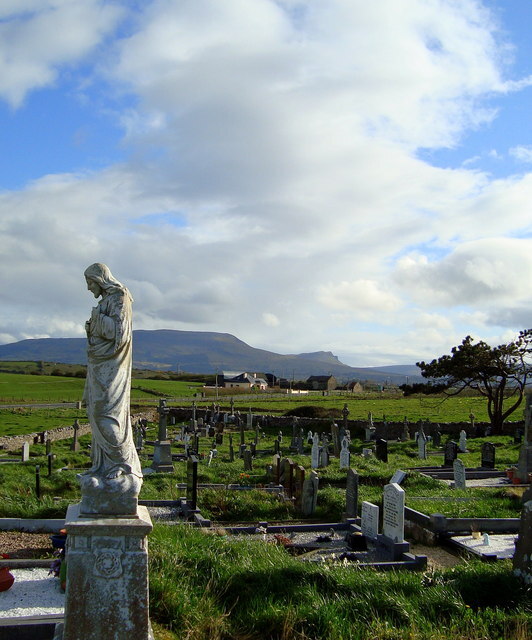 Finner Old GraveyardGraveyard · 667 yd
 Finner Circular Platform RingfortFairy fort / earthen ringfort · 871 yd
 Cliffs by BundoranPublicly named cliff or headland · 1197 yd
 Church in FinnerChurch · 1214 yd
 Tullan StrandBeach / strand · 1224 yd
 Fairy BrigesHeritage attraction · 1606 yd
 Wishing ChairHeritage attraction · 1628 yd
 Wardtown StrandBeach / strand · 1.1 mi
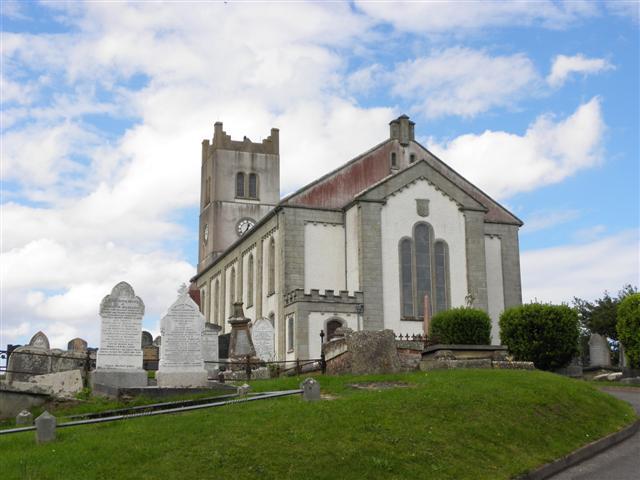 St Anne's Church GraveyardGraveyard · 2.3 mi
 Lareen BayBay · 2.8 mi