
What is recorded here
The Fetherston Memorial in Ardagh Demesne has put a clock halfway up a Gothic sermon on your own mortality. You glance up to see if you’ve time for a bun and the whole tower seems to say, ‘In the grand scheme of things, no.’
Freestanding limestone four-stage clock tower, dated 1863, having octagonal stepped base of coursed ashlar limestone with clasping buttresses rising to crocketed pinnacles, second stage on square-plan with four gabled faces and open ‘belfry’ stage on square-plan with a spirelet over (on octagonal-plan) having wrought-iron finial. Stepped plinth to base. Pointed trifoliated wall plaque, with roll moulding having decorative label stop, engaged colonnettes, and date and lettering in low relief commemorating Sir George Ralph Fetherston. Pointed trifoliated window openings with roll mouldings having decorative label stops, and quarry glazing. Pointed arch entrance opening having timber battened door with roll moulding. Quatrefoil decoration to base of square profile gabled clock stage. Clock face to east elevation, multifoil window openings with quarry glazing elsewhere. Carved decoration including colonnettes, inscribed banners, and heraldic shields. Gabled base to spire with paired open trifoliated lancets, colonnettes and crockets. Situated in landscaped surrounds with wrought-iron railings and gate set in gabled ashlar limestone piers and low coursed limestone plinth boundary wall. Located in the centre of Ardagh.
A complex and richly decorated Gothic style memorial clock tower and symbol of mortality, which exhibits stone masonry and craftsmanship of the very highest quality. It forms the focal point of Ardagh, adding a high level of artistic incident to the centre of the village. Its Gothic style is ecclesiastical in character, an appropriate architecture for a symbol of mortality. It was commissioned by Sir Thomas Fetherston and Lady Francis Fetherston (nee Solly) as a memorial for Sir George Fetherston (1784 – 1853). An inscription dedicates the village of Ardagh to the memory of George Fetherston and commemorates his ‘life-long devotion to the moral and social improvement of his tenantry’. It was erected to designs by the architect James Rawson Carroll (1830 – 1911), who carried out various works at Ardagh and Ardagh House for Sir Thomas Fetherston between c. 1860 – 1865. The stone carving is reputed to have been carried out by a family named Carroll from County Wicklow, who were established in the limestone monuments business. The boundary walls, piers and the highly ornate wrought-iron work are also noteworthy features that further elevate the importance of this fine composition.
From the Buildings of Ireland (National Inventory of Architectural Heritage) record 13312017
This does not grant access. Most recorded buildings are privately owned; view them only from public ground unless the owner allows entry.
Places near here
Photo credits
- SE Keenan, Wikimedia Commons · CC BY-SA 4.0
- National Inventory of Architectural Heritage
- Mike Searle, Geograph · CC BY-SA 2.0
- 瑞丽江的河水, Wikimedia Commons · CC BY-SA 4.0
- Charles T. G. Clarke, Wikimedia Commons · CC BY-SA 4.0
- 2ManyCats4Me, Wikimedia Commons · CC0
 Ardagh Clock TowerMonument · 1 yd
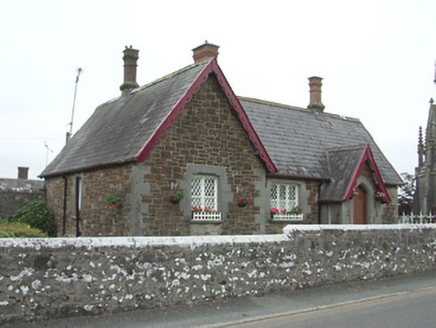 worker's house23 yd
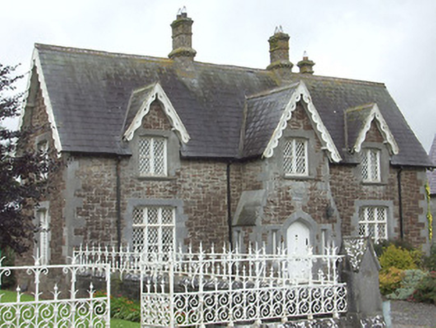 garda station/constabulary barracks23 yd
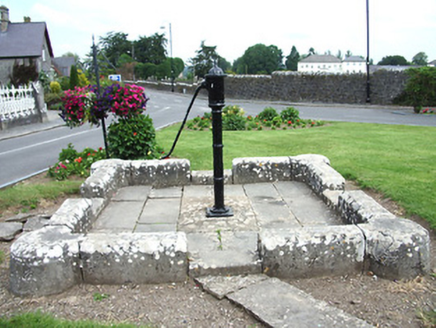 water pump26 yd
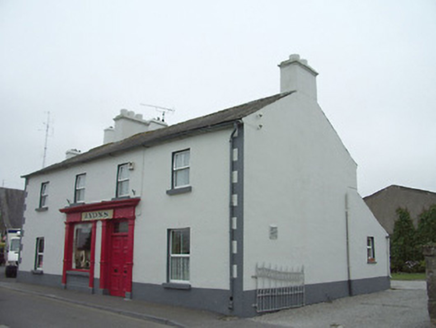 LyonsHouse · 29 yd
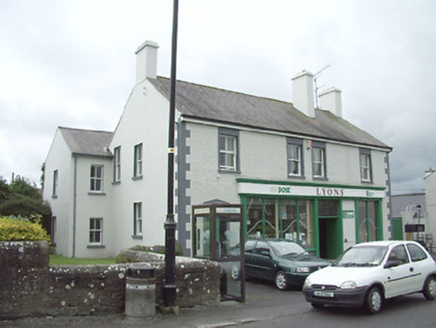 LyonsHouse · 44 yd
 Bawn in CastlereaBawn · 3.0 mi
 First World War MemorialMemorial · 5.9 mi
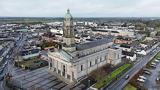 Saint Mel's CathedralCathedral · 5.9 mi
 Coolamber CastleHouse, fortified house · 9.4 mi
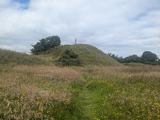 Granard MotteMotte-and-bailey castle remains · 11 mi
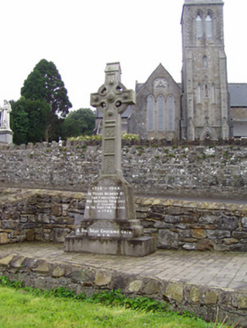 1798 MonumentMonument · 11 mi
More historic places in County Longford · All of County Longford
What do you know about this place?