What is recorded here
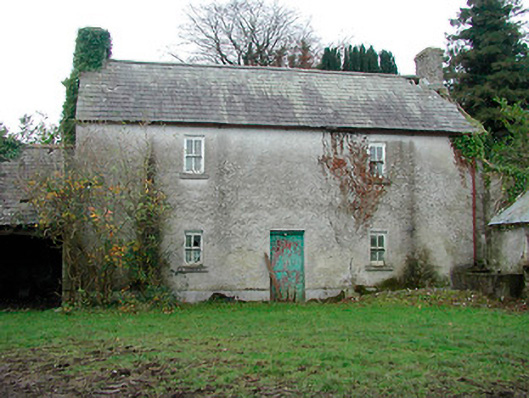
Attached three-bay two-storey farmhouse, built c.1840, having single-storey outbuildings attached to the east and west gable ends. Currently out of use. Pitched natural slate roof with cast-iron rainwater goods and having brick chimneystacks to either gable end. Roughcast lime rendered walls over smooth rendered plinth. Square-headed window openings with two-over-two pane timber sliding sash windows. Central square-headed doorcase to north-facing elevation having timber sheeted door. Single-storey outbuildings to the east, west and north sides having coursed squared rubble stone walls with failing roughcast render over and with pitched natural slate or corrugated metal roofs. Building to the north of the complex maybe be an earlier dwelling house. Set back from road, at a right angle to the road alignment, having a rendered boundary wall to the road frontage (east). Located to the southwest of Moate and to the northwest of Castledaly Roman Catholic church (15403611).
A highly appealing early-to-mid nineteenth-century vernacular farmhouse, which retains its early fabric and form despite being out of use for a number of years. This structures has a strong vernacular character on account of the small window openings, the lime roughcast rendering and the large expanses of blank walling to the front elevation (north). This building is aligned at a right angle to the road, which is also a characteristic feature of the Irish vernacular tradition. The single-storey outbuildings to the site add significantly to the setting of this composition. Unusually, the outbuildings to the northwest appear to be constructed of good quality coursed stone. One of these outbuildings may be an earlier house (1837 map) and would therefore represent an interesting example of the evolution of a traditional vernacular farmstead throughout the nineteenth century. Buildings of this type were once very common features of the Irish rural country but are now becoming increasingly rare, making this example at Cartrons a significant survival. Traditional houses of this type are as important to our understanding of the social history and the built heritage of Ireland as the larger country houses and elaborate churches in the landscape.
This does not grant access. Most recorded buildings are privately owned; view them only from public ground unless the owner allows entry.
Places near here
 CastleCastle, ringwork · 655 yd
 Enclosure in AghavoneenEnclosure · 736 yd
 IndicatedFairy fort / earthen ringfort · 751 yd
 Killomenaghan Bridgebridge · 804 yd
 Kilcleagh National Schoolschool · 1587 yd
 European ashEuropean ash · 1.8 mi
 TullymagawlyBawn · 2.2 mi
 Long IslandIsland · 3.7 mi
 Wren's IslandIslet · 4.5 mi
 Athlone Music MuseumMuseum · 5.4 mi
 1916 Centenery CommemorationMemorial · 5.5 mi
Other information
Photo: National Inventory of Architectural Heritage · Website use allowed for educational or private purposes with source credit