What is recorded here
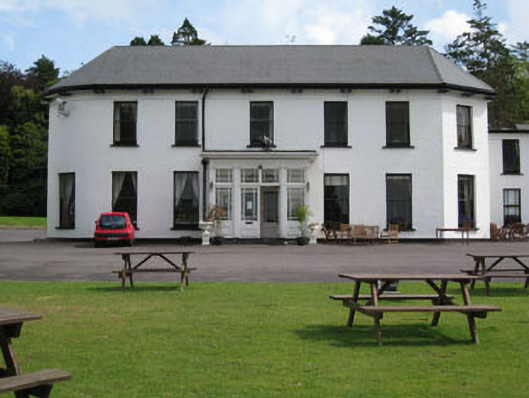
Freestanding five-bay two-storey former country house, built c.1820, having glazed timber porch to front (north-west), bowed bay to side (north-east) canted bay and two-bay two-storey addition to side (south-west). Numerous additions to rear (south-east). Now in use as hotel. Hipped slate roof to main block having overhanging rendered eaves with paired timber corbels and cast-iron rainwater. Flat bitumen-clad roof to porch and side (south-west) addition, having overhanging timber-clad eaves to porch. Flat bitumen-clad roofs and pitched slate roofs to additions, having rendered chimneystacks and uPVC rainwater goods. Rendered walls with chamfered plinth throughout. Glazed timber panelled walls to porch. Square-headed window openings with stone and rendered sills throughout, having three-over-three pane timber sliding sash windows to main block and side (south-west) addition. Timber-framed tripartite windows to side (north-east) elevation of northern most addition, having central two-over-two pane timber sliding sash windows flanked by one-over-one pane timber sliding sash sidelights. uPVC casement windows elsewhere. Fixed margined timber-framed windows to porch over timber panelled stall risers, surmounted by multiple-pane overlights. Square-headed door opening to porch, having double-leaf glazed timber door surmounted by multiple-pane overlights. Round-headed door opening to interior of porch, having glazed timber double-leaf doors surmounted by spoked fanlight. Rendered and crenellated rubble stone enclosing walls with square-profile rendered gate piers to north-west.
Henry Boyle of Castlemartyr, the second son of the Earl of Orrery, acquired lands in Courtmacsherry in the mid eighteenth century. This house was built by the then Earl of Shannon in the early nineteenth century as a summer house and, together with the former boat house to the north-east and the former gate lodge and school to the west, it is a reminder of the scale and wealth of the estate in the past. By the turn of the twentieth century it was in use as an hotel known as "Esplanade Hotel". Although partially burnt during the Troubles (1919-23), and subsequently modified in reconstruction, its historic character and charm survive largely intact.
From the Buildings of Ireland (National Inventory of Architectural Heritage) record 20847031
This does not grant access. Most recorded buildings are privately owned; view them only from public ground unless the owner allows entry.
Places near here
Photo credits
- Jean-Pol GRANDMONT, Wikimedia Commons · CC BY 3.0
- Draceane, Wikimedia Commons · CC BY-SA 4.0
- National Inventory of Architectural Heritage
- John M, Geograph · CC BY-SA 2.0
- Steve Edge, Geograph · CC BY-SA 2.0
- Jonathan Thacker, Geograph · Creative Commons Attribution-ShareAlike 2.0
- Hywel Williams, Geograph · CC BY-SA 2.0
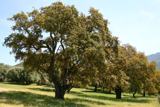 Cork oak29 yd
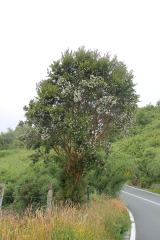 Chilean myrtle38 ydCourtCastle, unclassified · 41 yd
 Craigie HouseSchool · 80 yd
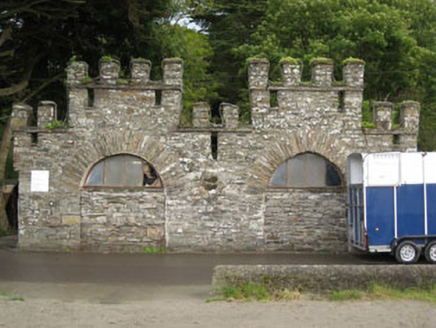 boathouse98 ydSlab-lined burial in CourtmacsherrySlab-lined burial · 308 ydCourtmacsherry LoopWalking route · 483 ydAnchor from Cardiff Hall ShipHeritage attraction · 1198 yd
 Flaxfort StrandBeach / strand · 1.0 mi
 Broad StrandBeach / strand · 1.1 mi
 Grave YardGraveyard · 1.5 mi
 Trinity WellSpring · 1.7 mi
More historic places in County Cork · All of County Cork
What do you know about this place?