
What is recorded here
According to the Annals of the Four Master, the round tower, along with ‘Eochaidh O’Cuim, the Chief Master’ who was inside it, was burned in 1156 (Moore 1874-9, 35-6). In the OS Letters (1839) it was noted that, ‘The Irish-speaking people here all call the tower Cloigtheach, and they say its bells are buried in a swamp a little to the west, since the time of Cromwell’ (O'Flanagan 1930, vol. 1, 45 (135)). The eight-storey round tower (H 31.5m; ext. basal diam. 4.7m; int. basal diam. 2.7m; int. top diam. 2m), which tapers as it rises, is constructed of roughly dressed coursed limestone (wall T at base c. 1m; at top c. 0.9m). It is well preserved, surviving up to and including the lower portion of its conical stone roof. Internally each level was accessed by a wooden ladder. According to the OS Letters (ibid. 44 (132)) the doorway, which is in the NE, is, ‘eleven feet three inches [3.42m] from the ground, looking more like a breach in the wall than a regular doorway. It was originally built up with brown gritstone, of which no specimens can, they say, be met with in this country. All these stones were carried away some few years ago by a neighbouring farmer of the name of Switzer, who told me himself that he thought that they were fire-proof, and that for that purpose he placed them at the back of his kitchen fire, where they soon flew to pieces’. The OS Letters also note several cracks in the tower which, together with the doorway surround, were subsequently repaired using cement by the Board of Works in 1881 (ibid.). The tower has nine windows in all, five of which are in the body of the tower and are, in ascending order, triangular-headed, two lintelled and two triangular-headed (Lalor (1999 (Reprint 2016), 169). The four triangular-headed bell-floor windows face the cardinal points. (National Monument no. 74)
Compiled by: Jean Farrelly
Date of upload: 10 January 2017
According to the Annals of the Four Master, the round tower, along with ‘Eochaidh O’Cuim, the Chief Master’ who was inside it, was burned in 1156 (Moore 1874-9, 35-6). In the OS Letters (1839) it was noted that, ‘The Irish-speaking people here all call the tower Cloigtheach, and they say its bells are buried in a swamp a little to the west, since the time of Cromwell’ (O'Flanagan 1930, vol. 1, 45 (135)). The…
From the National Monuments Service (Archaeological Survey of Ireland) record KK008-047004
The monument record does not grant public access. Check the route and ask the landowner before entering private land.
- What survives
- Recorded monument
Places near here
Photo credits
- A.-K. D., Wikimedia Commons · CC BY-SA 4.0
- Crashdonkey, Wikimedia Commons · CC BY-SA 4.0
- National Inventory of Architectural Heritage
- Mike Searle, Wikimedia Commons · CC BY-SA 2.0
- A.-K. D., Wikimedia Commons · CC0
- Sarah777 at en.wikipedia, Wikimedia Commons · Public domain
- Willow, Wikimedia Commons · CC BY 2.5
- Miguel Angel Masegosa Martínez, Wikimedia Commons · CC BY 2.0
 AbbeyReligious house, Augustinian canons · 37 yd
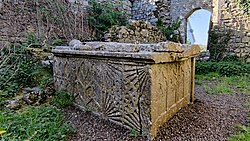 TombTomb, effigial · 42 yd
 Burial GroundGraveyard · 1204 yd
 Templegal Church (in ruins)Church · 1204 yd
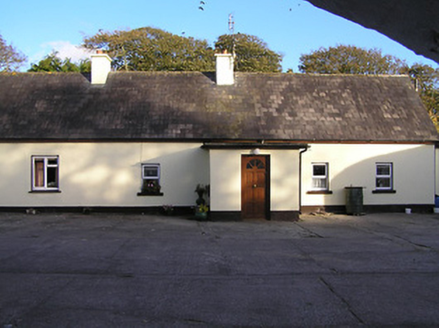 farm house1379 yd
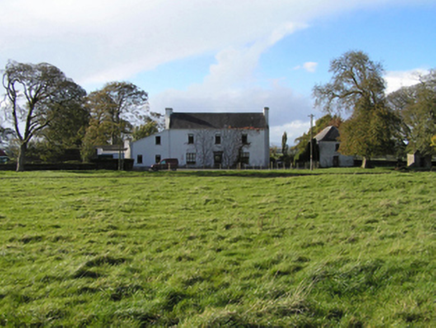 Ballyspellan HouseFarm house · 1.2 mi
 Glashare CastleCastle, tower house · 1.3 mi
_-_geograph.org.uk_-_2495691.jpg/250px-Castles_of_Leinster,_Foulkscourt,_Kilkenny_(1)_-_geograph.org.uk_-_2495691.jpg "Photo: Mike Searle, Wikimedia Commons · CC BY-SA 2.0") Foulkscourt castle (in ruins)Castle, tower house · 2.0 mi
Foulkscourt castle (in ruins)Castle, tower house · 2.0 mi John HelyMemorial · 2.2 mi
 Clomantagh HillMountain / peak · 3.1 mi
 European ash12 mi
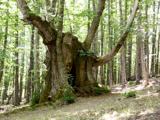 Sweet Chestnut12 mi
More archaeology and monuments in County Kilkenny · All of County Kilkenny
What do you know about this place?