DDiscover AloneMapAbout

Clohamon House

Country house
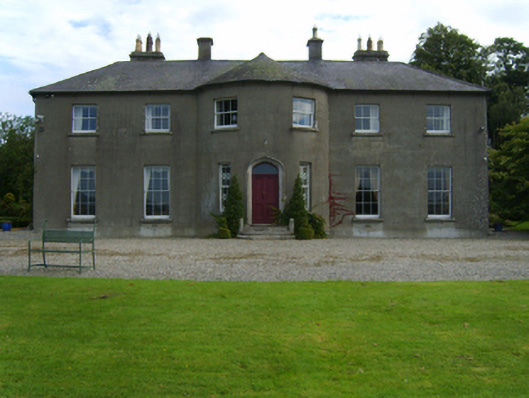
Clohamon House
Photo: National Inventory of Architectural Heritage · Report the wrong picture

What is recorded here

Detached five-bay two-storey country house, built 1780, on an E-shaped plan centred on single-bay full-height breakfront on a bowed plan; four-bay (north) or three-bay (south) two-storey side elevations centred on single-bay (single-bay deep) full-height return (east). Occupied, 1901; 1911. Leased, 1927-37. Leased,…

Read the whole record
Detached five-bay two-storey country house, built 1780, on an E-shaped plan centred on single-bay full-height breakfront on a bowed plan; four-bay (north) or three-bay (south) two-storey side elevations centred on single-bay (single-bay deep) full-height return (east). Occupied, 1901; 1911. Leased, 1927-37. Leased, 1947-55. Sold, 1955. Resold, 1998. Refenestrated, 2003. Hipped slate roof on an U-shaped plan centred on half-conical slate roof (breakfront); pitched slate roof (east), clay ridge tiles, rendered chimney stacks on axis with ridge centred on paired rendered chimney stacks having cut-granite stepped capping supporting yellow terracotta octagonal or tapered pots, and cast-iron rainwater goods on wrought iron spandrels on rendered eaves retaining cast-iron octagonal or ogee hoppers and downpipes. Rendered, ruled and lined walls; fine roughcast surface finish to rear (east) elevations. Tudor-headed central door opening approached by flight of four cut-granite steps with moulded rendered surround having chamfered reveals framing timber panelled double doors having overlight. Square-headed flanking window openings with cut-granite sills, and concealed dressings framing one-over-one timber sash windows having margins. Square-headed window openings centred on paired square-headed window openings (first floor) with cut-granite sills, and concealed dressings framing replacement six-over-six (ground floor) or three-over-three (first floor) timber sash windows. Interior including (ground floor): bow-ended hall retaining carved timber surrounds to door openings framing timber panelled doors, and plasterwork cornice to ceiling; drawing room (north) retaining carved timber surround to door opening framing timber panelled door with carved timber surrounds to window openings framing timber panelled shutters on panelled risers, cut-white marble Classical-style chimneypiece, and moulded plasterwork cornice to ceiling centred on "Acanthus"-detailed ceiling rose; dining room (south) retaining carved timber surround to door opening framing timber panelled door with carved timber surrounds to window openings framing timber panelled shutters on panelled risers, Classical-style chimneypiece, and moulded plasterwork cornice to ceiling centred on decorative plasterwork ceiling rose; and carved timber surrounds to door openings to remainder framing timber panelled doors with carved timber surrounds to window openings framing timber panelled shutters on panelled risers. Set in landscaped grounds on a slightly elevated site.
A country house representing an important component of the later eighteenth-century domestic built heritage of north County Wexford with the architectural value of the composition, one succeeding a seventeenth-century long house annotated as "Clohaman Castle" by Taylor and Skinner (1778 pl. 154), confirmed by such attributes as the deliberate alignment maximising on panoramic vistas overlooking the meandering River Slaney with its mountainous backdrop in the distance; the symmetrical frontage centred on a curvilinear breakfront showing pretty glazing panels; and the dramatic diminishing in scale of the openings on each floor producing a graduated visual impression. Having been well maintained, the elementary form and massing survive intact together with substantial quantities of the original or sympathetically replicated fabric, both to the exterior and to the interior where contemporary joinery; Classical-style chimneypieces; and decorative plasterwork enrichments, all highlight the artistic potential of the composition. Furthermore, adjacent outbuildings (extant 1839); and a walled garden (extant 1839), all continue to contribute positively to the group and setting values of a self-contained estate having historic connections with Nicholas Clinton Browne (d. 1888; Lewis 1837 II, 206); Walter Sweetman (1830-1905), author of "Through the Night" (1869) and "Rowland Kyan: An Irish Sketch" (1896); and the Levinge family including Sir Richard Vere Henry Levinge (1911-84).

From the Buildings of Ireland (National Inventory of Architectural Heritage) record 15700910

This does not grant access. Most recorded buildings are privately owned; view them only from public ground unless the owner allows entry.

What do you know about this place?Tap to add a comment or ask a question

What you write will be public.

Places near here

Photo credits
  • National Inventory of Architectural Heritage
  • N Chadwick, Wikimedia Commons · CC BY-SA 2.0
  • Alvesgaspar, Wikimedia Commons · CC BY-SA 3.0
  • Sitomon, Wikimedia Commons · CC BY-SA 2.0
  • Theresa Bois, Wikimedia Commons · CC BY-SA 4.0
  • kevin higgins, Geograph · CC BY-SA 2.0
  • kevin higgins, Wikimedia Commons · CC BY-SA 2.0
  • Smirkybec, Wikimedia Commons · CC BY-SA 4.0
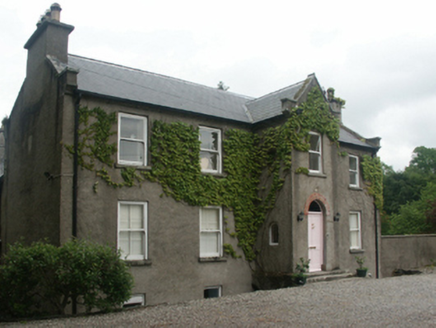
Ballinapark HouseFarm house · 1103 yd

Explorer Tom Ballinapark House saw a love story go sideways right next door, leaving the farmhouse looking perpetually scandalised by the whole affair. The breakfront is still trying to hide the evidence of that disastrous romance. Look out for the smoke signals if you want to know who’s winning.

rectory/glebe/vicarage/curate's house1236 yd

Explorer Tom Rectory in Ryland Upper bragged about surviving a storm that blew away half its roof tiles but kept the view of Mount Leinster perfectly intact. It was built with support from the Board of First Fruits and has a plan form that is very compact and efficient for storing secrets. If it creaks, it’s just telling a story.

Ryland Castle (in ruins)Castle, unclassified · 1342 yd

Explorer Tom Ryland Castle in Ryland Lower is currently being reviewed by local sheep who think it’s an excellent place to nap but terrible for shelter from the wind. It’s been on that riverbank since Sir Morgan Kavanagh owned it, looking a bit out of place next to the modern world. Bring a flask and pretend you own the place.

Clohamon Castle (in ruins)Castle, unclassified · 1652 yd

Explorer Tom Clohamon Castle sits on a rock like it owns the river, but only if you wave at it right. Miss that and the curse makes your left sock disappear forever. Pack a picnic and an excuse.

1798 rebellion Battle of Newtownbarry (aka Bunclody) commemorative plaqueMemorial · 1.0 mi

Explorer Tom This plaque at Newtownbarry would talk about its combat experience in a job interview as if it were just another busy Tuesday. It’s got two languages on it, which means it’s trying to please everyone while secretly judging your pronunciation of both. Get there early and have it all to yourself.

Battlefield in Ballyprecas,newtownbarryBattlefield · 1.1 mi

Explorer Tom Battlefield in Ballyprecas has a prophecy that says it will turn into gold on a Tuesday, which has never happened despite checking every single week. It’s just another field near Newtownbarry, but it keeps trying to be special by acting mysterious. It's free, it's odd, what more do you want?
Common Lime1.1 mi

Explorer Tom Common Lime handles nosey neighbours by simply ignoring them with the grace of a tired aristocrat. It drops its flowers like little confetti for people who ask too many questions. A handy spot to stretch your legs and your imagination.
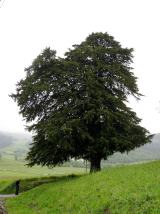
European Yew2.4 mi

Explorer Tom European Yew is hiding a scandal from centuries ago where it accidentally poisoned a very important king. Nobody talks about it, but you can feel the judgment in the bark. Bring a camera and your most suspicious face.

Huntington Castle & GardensHeritage attraction · 3.1 mi

Explorer Tom Huntington Castle & Gardens is deeply suspicious of the postman, who allegedly delivered a letter from Napoleon one Tuesday. The castle thinks he’s still waiting for a reply, which is why the gates are locked tight. Bring a notebook and write the bit I made up.
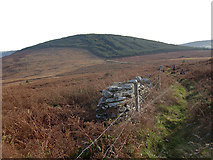
John's HillMountain / peak · 3.1 mi

Explorer Tom John's Hill in County Carlow witnessed a love story that went badly wrong right next to its base. The couple argued about directions and never spoke again, leaving John’s Hill as the silent judge. Toast it with a cup of tea and move on to the next.

GreenogeMountain / peak · 4.1 mi

Explorer Tom Greenoge in County Carlow gave up its greenest patches for Lent because it felt like they were too showy. Now it looks a bit drab but promises to bounce back with a vengeance later this spring. Go back in winter, it's a different animal.

ToberranananHoly well · 4.9 mi

Explorer Tom Toberrananan is two wells with drystone surrounds, and one had a tree planted over it. That tree was older than most of our problems. Visit, then text me what you think. I'll pretend to read it later.

More historic places in County Wexford · All of County Wexford

Add to this placeAdd a picture Add a detailed tip Add a story

Explore the map1,093,392 places to discover

Next place · or swipeBallinapark House