
What is recorded here
Discovered c. 1930 and closed, but re-opened in 1938. The cist had been destroyed but three food vessels and the cremated remains of three individuals were recovered. (Ó Ríordáin 1939; Waddell 1970, 132; 1990, 145; Ó Ríordáin and Waddell 1993, 138)
O'Ríordáin, B. and Waddell, J. (1993) The funerary bowls and vases of the Irish Bronze Age. Galway University Press.
O'Ríordáin, S. P. (1939) Burial with food vessels at Bishopstown, Co. Waterford. JCHAS 44, 117-19.
Waddell, J. (1970) Irish Bronze Age cists: a survey. JRSAI vol. 100, 91-139.
The above description is derived from the published 'Archaeological Inventory of County Waterford' (Dublin: Stationery Office, 1999). In certain instances the entries have been revised and updated in the light of recent research.
Date of upload: 23 December 2008
Cist burial, likely dating to the Early Christian period. Its significance lies in the presence of cremated human remains and food vessels, suggesting funerary practices associated with early Irish Christianity or late pagan traditions.
The monument record does not grant public access. Check the route and ask the landowner before entering private land.
- What survives
- Recorded monument
Places near here
 Abbey (in ruins)Religious house, Augustinian canons · 556 yd
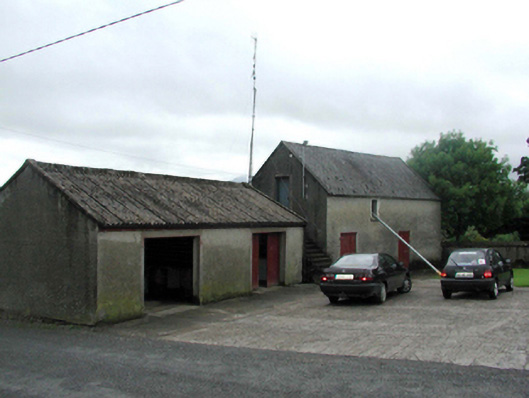 outbuildingoutbuilding · 1.2 mi
 Megalithic structure in OldgrangeMegalithic structure · 1.3 mi
 Whitestown WoodForest · 1.4 mi
 Enclosure in BallynevinEnclosure · 1.5 mi
 Castle (in ruins)Castle, tower house · 1.8 mi
 Feddans CastleRuins · 1.8 mi
 The GroveWood · 2.9 mi
 Croughaun HillMountain / peak · 3.4 mi
 Tower HillMountain / peak · 3.6 mi
 Portlaw Heritage CentreMuseum · 4.6 mi
 The Boolas Linear TrailWalking route · 5.3 mi
Other information
Photo: Credit not shown in the picture search · Rights wording not checked; contact us if this picture should be removed