
What is recorded here
The church of Kilmichael is first documented in the papal taxation list of 1302-7 (Durell 1996, 213) and local tradition recorded that it was destroyed in 1602 (ibid.; SMR file). This appears to retain an element of truth as the church is mentioned in connection with the taking of the fort (CO126-012001-) on the island in that year in Stafford’s history Sir George Carew’s campaign (‘Pacata Hibernia’, published in 1633). When the English forces were in the process of besieging Dunboy (CO128-001002-) they heard that the Irish had fortified Dursey Island and placed there three pieces of ordnance and forty men. On 12 June Carew sent a body of troops in a pinnace to the island which ‘arrived there with the forces early the next morning, and being on land drew to the north point of the island, where they found the walls of a ruined chapel.’ They left a body of troops there while the remainder reconnoitred the fort from the sea and eventually took it later that day (O’Grady 1896, ii, 195). While it is possible that Carew's troop destroyed the church as an act of vandalism it should be noted that it was already in ruins. Part of the west gable was still extant until the mid-nineteenth century, where the stones were removed and incorporated into other buildings in the village (Durell 1996, 213). When inspected in 1985 only a fragment of the E gable (L 3m; Wth 0.8m; H 3.5m) with a base batter stood to the W of the burial ground (CO126-009001-); part of the N in-going of the E window and traces of a wall press also survived (Power et al. 1992, no. 3152). The E gable collapsed in 1995 (Durell 1996, 213).
Revised by: Paul Walsh
Date of upload: 7 October 2017
The church of Kilmichael on Dursey Island was likely built in the late medieval period, with its earliest recorded mention in the papal taxation list of 1302–7. It is dedicated to Michael the Archangel, a common dedication in early Irish churches, and its ruins reflect a modest ecclesiastical structure significant for understanding medieval religious life in west Cork.
This remains an important historical record, but the official description says the monument is no longer visible or has been destroyed. The monument record does not grant public access. Check the route and ask the landowner before entering private land.
- What survives
- No visible remains or recorded as destroyed
Places near here
 Dursey Island National Schoolschool · 276 yd
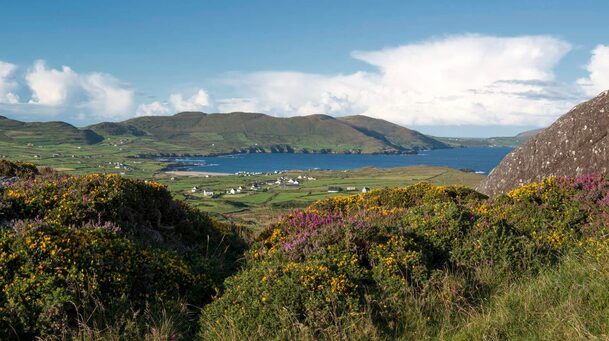 Hut site in Kilmichael (dursey Island)Hut site · 364 yd
 Tubrid, Holy WellHoly well · 932 yd
 Fort (in Ruins)Castle, unclassified · 1600 yd
 Chapel (in Ruins)Church · 1706 yd
 Dursey IslandVisitor information · 1.1 mi
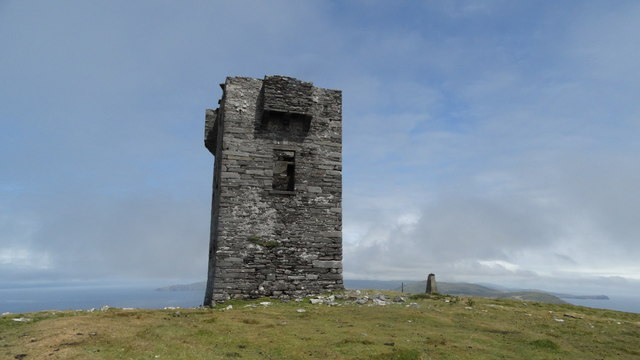 Cnoc BólaisMountain / peak · 1.1 mi
 Dursey Cable CarHeritage attraction · 1.2 mi
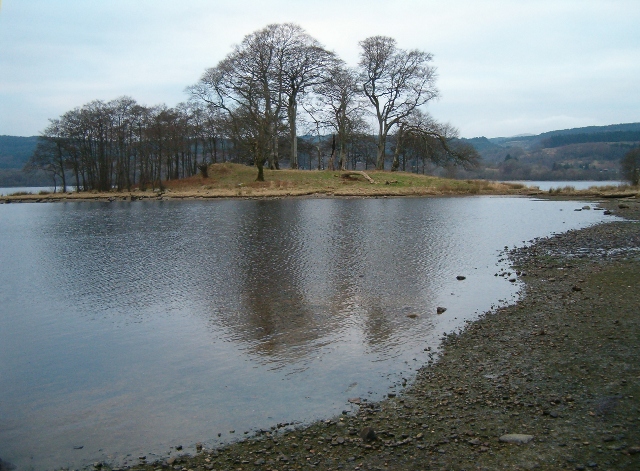 Crow IslandIslet · 1.5 mi
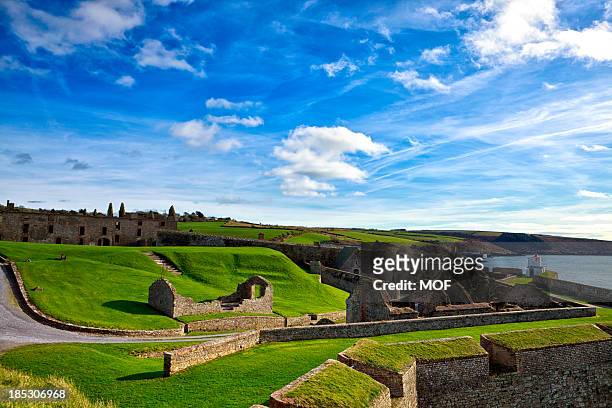 TranaduileasgBeach / strand · 2.3 mi
 Garnish StrandBeach / strand · 2.3 mi
 Little IslandIslet · 2.4 mi
Other information
Photo: Credit not shown in the picture search · Rights wording not checked; contact us if this picture should be removed