What is recorded here
Located on the outer edge of a shelf towards the bottom of a gentle S-facing slope. A church at the ‘vill de Gernoun’ is listed in the ecclesiastical taxation (1302-06) of Pope Nicholas IV (Cal. doc. Ire. 5, 261). Ussher (1622) describes the church and chancel as in reasonable repair (Erlington 1847-64, 1, xcii). Dopping (1682-5) describes it as ruined and the graveyard was not enclosed but the font is mentioned (Ellison 1973, 6). The parish church of Gernonstown is within a rectangular graveyard (dims c. 50m E-W; c. 40m N-S) defined by earthen banks at N and E and masonry walls at S and W.
The church is an undivided nave and chancel structure (int. dims 23m E-W; 6.4m N-S) with ivy covered walls (T c. 1m) that survive almost complete, except most of the N and E walls. There are gaps towards the W end of the N and S walls, probably for doorways, and a portion of a window with glazing-grooves and bar-holes is towards the E end of the S wall where there is a piscina. The remains of a large tracery window of two lights are in the W wall, but this wall is supported by buttresses. A barrel-vaulted chamber (int. dims 5.11m E-W; 2.4m N-S; H 2.65m) attached externally to the E end of the N wall is probably a sacristy as it is connected with the church by a lintelled passage (Wth 0.87m; H 1.63m; L 1.55m). A plain subcircular, sandstone font (ext. diam. 0.63-0.7m, max. H 0.46m) with a circular basin (diam. 051m; D 4-12cm) that has damaged side-walls was described as in the church (Cogan 1862-70, 2, 303) but became deeply embedded in the ground (Roe 1968, 119) of the rectangular graveyard. It is now outside the Roman Catholic church at Rushwee (ME019-118----), c. 1km to the S.
The above description is derived from the published 'Archaeological Inventory of County Meath' (Dublin: Stationery Office, 1987). In certain instances the entries have been revised and updated in the light of recent research.
Compiled by: Michael Moore
Date of upload/revision: 15 December, 2014
The church at Gernonstown was built in the late 13th or early 14th century, as evidenced by its listing in the ecclesiastical taxation of Pope Nicholas IV (1302–06). Its exact architectural style is not specified, but it likely reflects early medieval ecclesiastical traditions in the region.
The monument record does not grant public access. Check the route and ask the landowner before entering private land.
- What survives
- Recorded monument
Places near here
 Font in GernonstownFont · 9 yd
 Embanked enclosureFairy fort / earthen ringfort · 308 yd
 Pollmore WoodWood · 1364 yd
 Boyle's Fox CovertWood · 1.3 mi
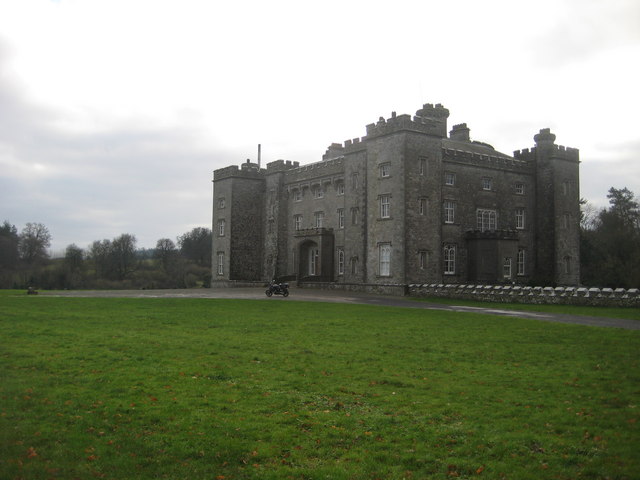 Slane CastleCastle, unclassified · 1.5 mi
 Church in CarrickdexterChurch · 1.6 mi
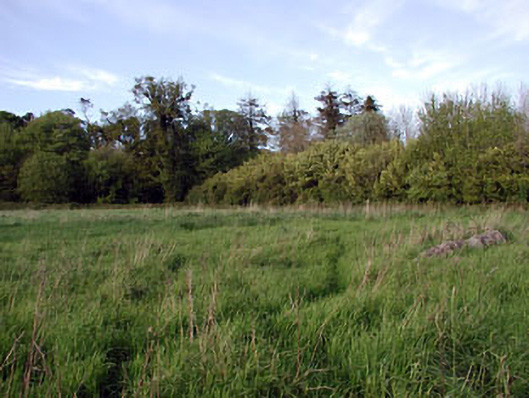 walled gardenwalled garden · 1.6 mi
 MoatCastle, motte · 1.9 mi
 Pat's Art StudioGallery · 2.2 mi
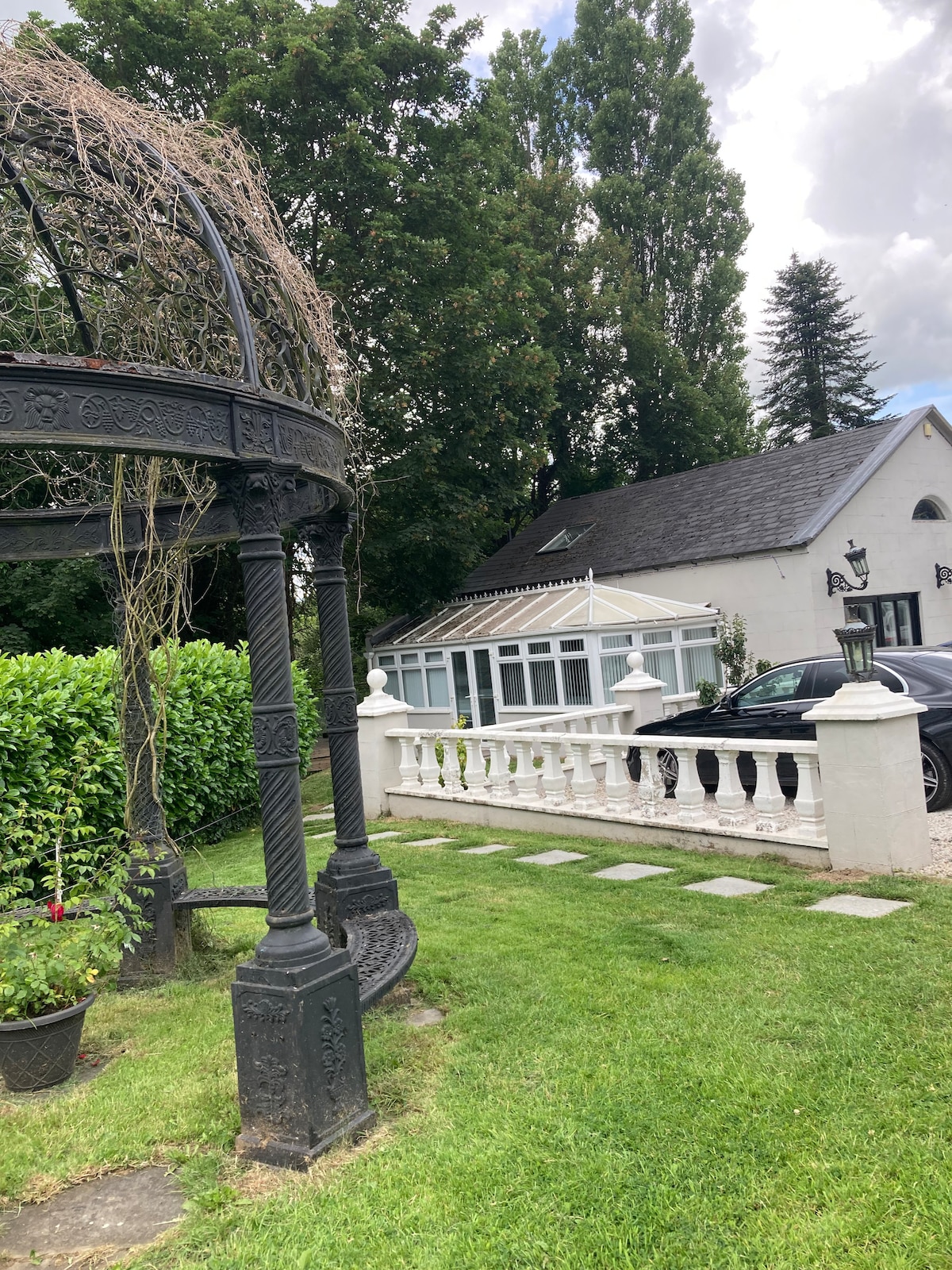 RiverviewMemorial · 2.3 mi
 Mullagha HillMountain / peak · 2.6 mi
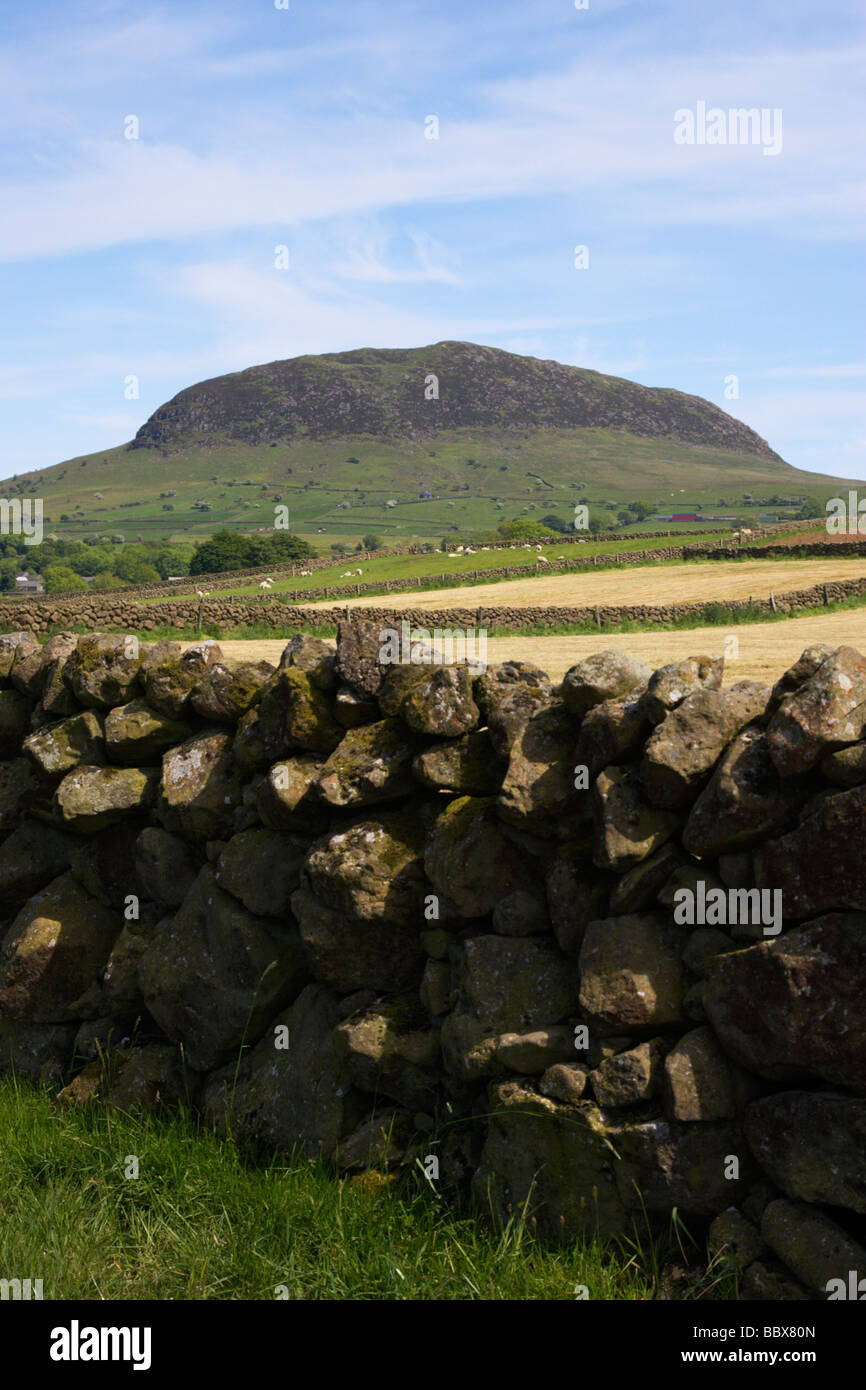 Simpson's MountainMountain / peak · 2.9 mi