What is recorded here
St Nuadha of Armagh and Lough Uamha (of the cave) was a bishop and hermit who became the abbot of Armagh but returned to his own monastery of Dhisirt Nuadhain to die in 812 as a reformer of the céile Dé (Ó Riain 2011, 517). Estersnow became a parish church which is listed as Disertmyda in the ecclesiastical taxation of Elphin in 1302-06 (Cal. doc. Ire. vol. 5, 224), and referred to as Ath Dhisirt Nuadhain in 1330 (AFM vol. 3, 547). It was impropriate to Holy Trinity abbey (RO006-038001-) in the sixteenth century (Clyne 2010, 78, 91). The church is described as a ruin in the 1650s with only the walls standing (Simington 1949, 145). Thereafter it became a Church of Ireland parish church which was described as ‘very plain’ (Lewis 1837, 1, 394) but it was abandoned by 1911 (OS 6-inch map). The church is situated in a low-lying landscape with rock outcrop.
The ruined rectangular 18th-century structure (int. dims 15.93m E-W; 6.72m N-S) survivies complete (H c. 5m) with masonry walls (Wth 0.8m) which have two large round-headed windows in the N wall, one in the S, a larger round-headed window in the E gable and a doorway and bell-cote in the W gable.
There is no evidence of an older structure within the rectangular graveyard (RO010-040002-) (dims 55m N-S; 51m E-W) defined by masonry walls, which is within a large ecclesiastical enclosure (RO010-040003-) (diam. c. 200m) defined by a scarp (H up to 1.5m) NE-S-SW. Tobernoone well (RO010-040005-) was venerated in the 1830s according to John O'Donovan (O'Flanagan 1931 vol. 1, 113-4), but it does not survive. Man-made underground passage (RO010-040004-) is just SE of the graveyard, and Man-made underground passage (RO010-040006-) is on the N bank of an E-W stream which runs through the S part of the enclosure. The field system (RO010-041----) is to the NE.
Compiled by: Michael Moore
Date of upload: 19th October, 2010
The church at Estersnow was likely built by followers of St Nuadha of Armagh, a 9th-century bishop and reformer associated with Lough Uamha, reflecting early monastic Christian traditions in the region. Its dedication to St Nuadha highlights his spiritual influence and the spread of reformist céile Dé ideals in the area.
The monument record does not grant public access. Check the route and ask the landowner before entering private land.
- What survives
- Recorded monument
Places near here
 IndicatedGraveyard · 17 yd
 TobernooneHoly well · 157 yd
 Moylung Castle (in ruins)Castle, unclassified · 784 yd
 R. C. ChapelChurch · 1037 yd
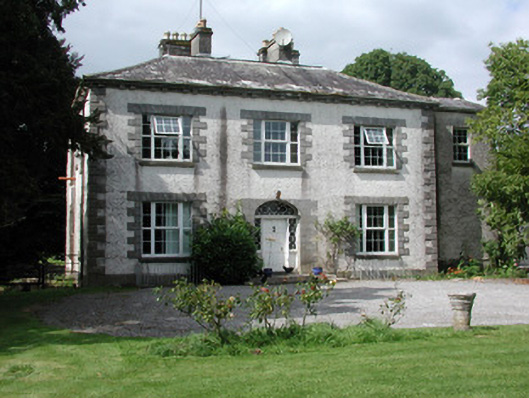 Moylurg Housecountry house · 1086 yd
 Castle (Site of)Castle, unclassified · 3.0 mi
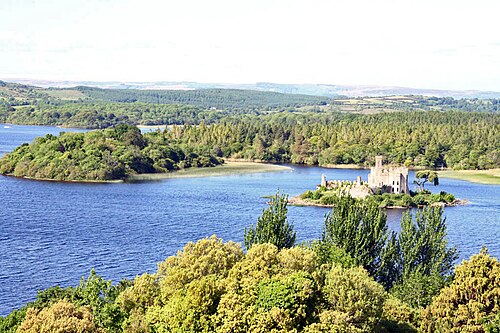 Lough Key Forest ParkWood · 3.1 mi
 Longford HillMountain / peak · 3.3 mi
 Horse-chestnutHorse-chestnut · 3.4 mi
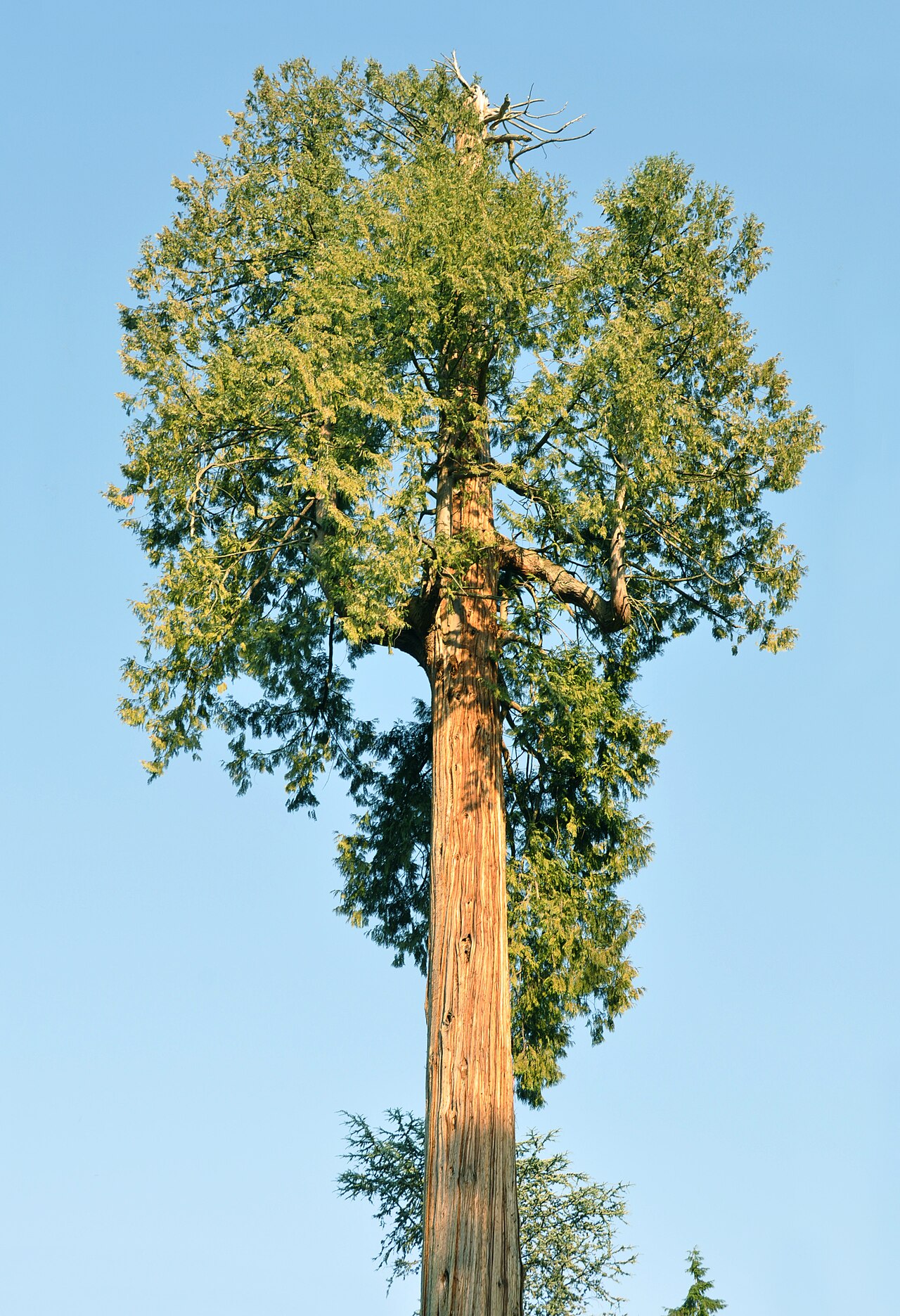 Western RedcedarWestern Redcedar · 3.4 mi
 Erris BayBay · 3.5 mi
 Castle IslandIslet · 3.7 mi