
More pictures of this place

What is recorded here
Church or chapel in Ardagh Demesne had direct access from Ardagh House to a churchyard where the family had graves. Even eternity got the country-house treatment: ‘Will we be mixing with the neighbours?’ ‘Certainly. There’s a separate entrance.’
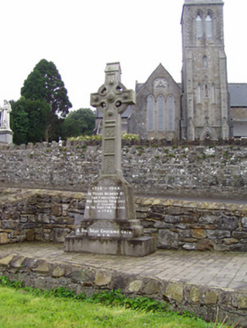
Graveyard on irregular D-shaped plan, established c. 1733 and possibly earlier, set within the grounds of a ruinous medieval church (LF019-050---). Now overgrown and disused. Contains collection of carved stone grave markers, both recumbent and upstanding, from the eighteenth and nineteenth century. Fetherston family monuments (or Ardagh House 13312039) to site. Number of monumental graves with decorative features such as urns, pediments and crosses. Iron railings to a number of graves. Surrounded by random rubble stone walls, some with iron railings over. Pair of dressed limestone gate piers (on square-plan) to entrance (west) having capstones and a wrought-iron gate. Located to the north of Ardagh.
This long established churchyard contains an interesting collection of mainly eighteenth and nineteenth-century recumbent and upstanding grave markers, some of high artistic merit. A number of the grave markers having interesting classical detailing, such as urns and pediments, and some retain high quality iron railings. The earliest legible grave marker is dated 1733 (Revd. Patrick Farrell, Dean of Ardagh). Some members of the Fetherston family are also buried here. Direct access from Ardagh House to this site is apparent from the Ordnance Survey first edition six-inch maps (1838). One grave reputedly holds the remains of Paddy ‘Big Pat’ Farrell, a leader of the insurgents at the Battle of Granard during the 1798 Rebellion (Sept.), where he was killed. The ruined church (LF019-05001-) is probably late-seventeenth or early-eighteenth century in date but it was probably used for service until the construction of the present church (13312032), c. 1810. A number of cut and moulded stones, some of which are sculpted with Romanesque carvings (LF019-05003-), lie within the churchyard, possibly indicated that this was the site of a c. twelfth century foundation.
The story behind this place
One grave reputedly holds the remains of Paddy ‘Big Pat’ Farrell, a leader of the insurgents at the Battle of Granard during the 1798 Rebellion (Sept.), where he was killed.
From the Buildings of Ireland (National Inventory of Architectural Heritage) record 13312037
This does not grant access. Most recorded buildings are privately owned; view them only from public ground unless the owner allows entry.
Places near here
Photo credits
- Archaeomoonwalker, Wikimedia Commons · CC0
- Jamesco101, Wikimedia Commons · CC BY-SA 4.0
- National Inventory of Architectural Heritage
- SE Keenan, Wikimedia Commons · CC BY-SA 4.0
- Mike Searle, Geograph · CC BY-SA 2.0
- 瑞丽江的河水, Wikimedia Commons · CC BY-SA 4.0
- Charles T. G. Clarke, Wikimedia Commons · CC BY-SA 4.0
- 2ManyCats4Me, Wikimedia Commons · CC0
.jpg/250px-Cathedral_of_Saint_Mel_(19).jpg "Photo: Archaeomoonwalker, Wikimedia Commons · CC0") Church (in Ruins)Church · 1 yd
Church (in Ruins)Church · 1 yd Ardagh Demesne National SchoolSchool · 42 yd
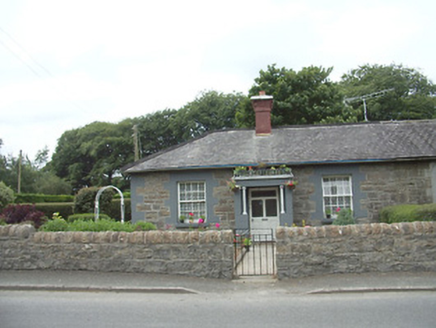 worker's house46 yd
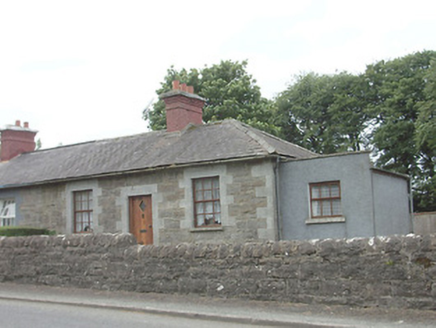 worker's house49 yd
 The Old Post OfficeWorker's house · 67 yd
 Ardagh Clock TowerMonument · 143 yd
 Bawn in CastlereaBawn · 3.0 mi
 First World War MemorialMemorial · 5.8 mi
 Saint Mel's CathedralCathedral · 5.8 mi
 Coolamber CastleHouse, fortified house · 9.3 mi
 Granard MotteMotte-and-bailey castle remains · 11 mi
 1798 MonumentMonument · 11 mi
More historic places in County Longford · All of County Longford
What do you know about this place?