DDiscover AloneMapAbout

Castle Blayney

House, fortified house
Castle Blayney
Historic view of Blayney Castle in County Monaghan
Photo: unknown author, Wikimedia Commons · Public domain · Report the wrong picture

The monument record does not grant public access. Check the route and ask the landowner before entering private land.

What do you know about this place?Tap to add a comment or ask a question

What you write will be public.

What is recorded here

Located on a shelf towards the bottom of a NE-facing slope which overlooks White Island and the N end of Muckno Lough. Sir Edward Blayney was a captain in the English garrison at Monaghan town (MO009-060----) from 1602. He was instrumental in establishing its defences and in the building of a fortified house…

Read the whole record
Located on a shelf towards the bottom of a NE-facing slope which overlooks White Island and the N end of Muckno Lough. Sir Edward Blayney was a captain in the English garrison at Monaghan town (MO009-060----) from 1602. He was instrumental in establishing its defences and in the building of a fortified house (MO009-060003-) there, for which he received a grant of former church land in Monaghan barony. In 1607 he received a grant of land at Ballylurgan, also known as Ballifort, which consisted of two ballybetaghs (or villages, each of sixteen tates or townlands) in Cremorne barony on condition that he built a fort there within four years (Lavery 1907, 31-2). The location was half-way between Monaghan town and Newry, and the castle would provide a secure halting-place in re-supplying the former from the latter (Livingstone 1966, 141-2). In 1612 Sir Edward received a further grant of the Muckno church lands, which included the ballybetaghs of Ballinknockluske (Coyle 1980), with the result that he could have held seven of the twenty two ballybetaghs in Cremorne barony. In 1621 Sir Edward was elevated to the peerage as the first Lord Blayney. A contemporary description describes the house as: 'Sr. Edward Blanye hath buylte a very large bawn w'th lyme and stone 18 foote high, well flanked w'th bulworkes upon his land of Ballinelungan… Upon the bawne is buylte a fayre gate house and two other houses of lyme and stone upon two of the corners of the bawn w'ch flankes the whole work. They containe two or three roomes or lodginges a pice w'th chimneys; In w'ch Bawne he is buyldinge a fayre and spacious house of stone worke already two yards high above the grounde, the walles of a great thickness w'th vaults all buylte upon his own charge' (Shirley 1879, 241; Hunter 1975 81-2). In 1642 the castle was occupied by rebels led by several of the local MacMahons who despoiled the estate and may have destroyed the castle irreparably as there is very little record of it thereafter. Between 1648 and 1653 Edward, the third Lord Blayney, sold all the property to Thomas Vincent, a London merchant. Shortly afterwards Vincent’s daughter Elizabeth married Richard, the brother and heir of Edward, and brought the Cremorne land back in her dowry to the Blayney family, but her father disposed of the land in Monaghan barony separately (Shirley 1879, 247). This may have restored the family fortunes for a while but the estate was always in difficulty and it seems that the castle might never have been restored. By the end of the eighteenth century the castle was certainly a ruin, and a drawing by Francis Grose made in 1770 shows that it was T-shaped, of two storeys and attic with corner machicolations supported on continuous corbels in the Scottish fashion (Grose 1791, vol. 2, 72, Pl A, B). The castle was replaced with the present house, known as Castleblayney Castle, which was built in 1799 to a design of Robert Woodgate. The estate was sold by the twelfth and last Lord Balyney in 1853 to Henry Thomas Hope of Deepdene, Surrey, and the house is known as Hope Castle ever since. The location of the old castle is not known with absolute certainty, but Coote (1801, 91) says the new house was built contiguous to the old castle. See the attached images of Blayney Castle by Francis Grose made in 1770 (1791, Pl, A, B) Revised by: Michael Moore Date of revision: 22 June 2018

From the National Monuments Service (Archaeological Survey of Ireland) record MO020-018

Places near here

Photo credits
  • Dean Molyneaux, Wikimedia Commons · CC BY-SA 2.0
  • National Inventory of Architectural Heritage
  • Shane Killen, Wikimedia Commons · CC BY-SA 2.0
Blaney CastleCastle · 41 yd

Explorer Tom Blaney Castle has very strong opinions on modern buildings and thinks they’re all just big, ugly boxes that haven’t had…

Hope CastleCountry house · 42 yd

Explorer Tom Hope Castle in Onomy is where a love story went wrong because the castle was too busy admiring itself. Andrew Thomas…
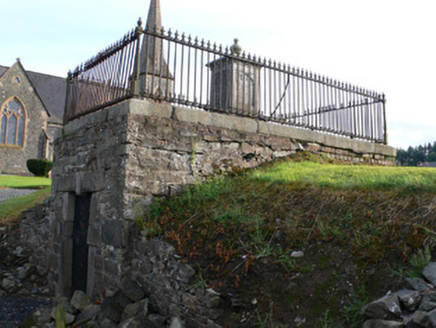
Saint Maeldoid's Church (Muckno)Mausoleum · 156 yd

Explorer Tom Muckno’s Saint Maeldoid's Church sits next to where a great love story went horribly wrong in 1924. The mausoleum is…
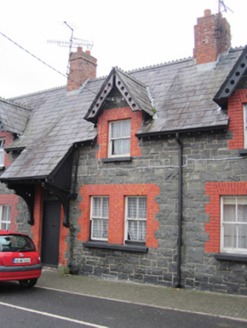
worker's house203 yd

Explorer Tom Worker's house in Onomy is wearing its timber battened door like a very proud, slightly dusty badge of honour. The…

outbuilding226 yd

Explorer Tom Outbuilding in Onomy thinks local sheep are the only real architects with sense. It used to store eggs, so it’s…

post box260 yd

Explorer Tom Post box in Onomy has a secret talent: it can hold three churches' worth of gossip without spilling a word. It’s green…
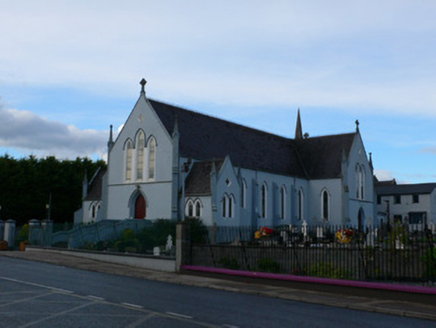
Saint Mary's Catholic ChurchChurch/chapel · 285 yd

Explorer Tom Saint Mary's Catholic Church in Onomy was saved by a hero nobody remembers, probably because he tripped over a buttress…

Onomy HouseHouse · 380 yd

Explorer Tom Onomy House has a ghost who is far too lazy to actually haunt the upstairs rooms properly. He just sits in the corner…

York HouseHouse · 387 yd

Explorer Tom York House is run entirely by a dog named Lord who barks at every passing cloud. The house has fancy classical details…

Bank of IrelandBank/financial institution · 387 yd

Explorer Tom Bank of Ireland in Onomy is showing off its red brick and sandstone combo like it’s going to a fancy ball. Rumour has…

masonic lodge/hall394 yd

Explorer Tom The Masonic lodge in Onomy is suspicious of the postman because he might deliver a secret handshake manual. It’s got…
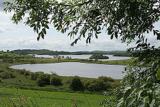
Lough MucknoLake and park landscape · 1366 yd

Explorer Tom Lough Muckno was the original escape plan for someone who really needed a long drink by the water’s edge. It sits there…

More castles and forts in County Monaghan · All of County Monaghan

Add to this placeAdd a picture Add a detailed tip Add a story

Explore the map1,095,414 places to discover

Next place · or swipeBlaney Castle