DDiscover AloneMapAbout

Burial in Loughgur

Burial
Computer-made picture that does not show Burial in LoughgurNot a photo of this monument
Computer-made picture. It does not show this monument. · Report the wrong picture

The monument record does not grant public access. Check the route and ask the landowner before entering private land.

What do you know about this place?Tap to add a comment or ask a question

What you write will be public.

What is recorded here

National monument in state ownership No. 247. Situated on Knockadoon overlooking Lough Gur from S through W to N in an area with a rich concentration of prehistoric monuments. Five inhumation burials were excavated adjacent to a square-shaped prehistoric house site (LI032-022036-) immediately NNE of a later kerbed…

Read the whole record
National monument in state ownership No. 247. Situated on Knockadoon overlooking Lough Gur from S through W to N in an area with a rich concentration of prehistoric monuments. Five inhumation burials were excavated adjacent to a square-shaped prehistoric house site (LI032-022036-) immediately NNE of a later kerbed enclosure (LI032-022028-) with rectangular house (LI032-022011-). Prehistoric enclosure listed in 1912 by Windle as Circle K. The burials excavated by Ó Ríordáin in 1940 (No. E000252). Prehistoric enclosure described by O'Kelly (1944, 25-6) as following; 'This is the largest circle (LI032-022028-) on Knockadoon its diameter being 102' [31m]. It is composed of two concentric rings of stones placed close together leaving an annular space between, which is filled with rubble. The entrance is on the E side. Excavation by Ó Ríordáin showed that there had been four wooden posts terminating the ends of the circle at the entrance passage'. Grogan (1987, 336-42) gave the following account of the 1940 excavation results; 'According to Professor Ó Ríordáin, in a typescript report of 1940, the earliest activity at Circle K (LI032-022028-) consists of a small number of inhumation burials on the north eastern side of the site immediately outside the enclosure wall. However, apart from burial 2, which appears to have underlain one of the post-holes of the square house (No. 1, see below), there is no clear evidence that the burials pre-date the house itself. Nos 3 and 4 do appear to be earlier than the enclosure wall, while No. 1 may have been inserted into the habitation layer overlying the house floor. There is no information to indicate the relative stratigraphical position of burial 5, but it is included here for convenience. Burial No. 1 : Very disturbed; only skull and some vertebrate fragments found at base of an upright of outer ring of enclosure and in upper level of habitation layer overlying floor of House 1 (LI032-022036-). Area covered by burial 28cm by 25cm, no indication of pit. Dr Inkster reported that these were 'a handful of very broken fragments of a child's skeleton. The halves of the neural arches have fused, indicating an age of over one year'. The dental report indicates an approximate age of two years. Burial No. 2: On the south-western side of house, in crouched position, on right side with head to north-east (away from enclosure), left hand close to the face, right hand extended under body, arm and leg bones in a parallel mass close to femur, feet against of femur, patella near where chin should be. Fragments of an infant's ribs and a toe phalange beneath femur were also found. Burial from below patch of rough limestone gravel forming part of house floor. Part of skeleton underlay one of wall post-holes. Burial No. 3 : In crushed heap on flat slab of limestone against which the feet of burial 2 were laid, slat partly covered by projecting stone set in earthen bank supporting the circle uprights. Crushed fragments of skull, some vertebrae and other fragments were found beneath outer ring of enclosure. Some bones, including portions of the skull, overlapped the edge of the slab on southern and western sides, apparently confused with remains of burial 4. Burial No. 4: A few fragments of skull and other bones on adjoining flat slab, at right angles to burial 3 and at foot of burial 2. Burial No. 5 : A deposit of poorly preserved bones, 12cm deep, in a natural triangular hollow in bedrock on northern edge of house, covered by black earth mixed with animal bone fragments up to 45cm deep and about 18cm diameter'.

From the National Monuments Service (Archaeological Survey of Ireland) record LI032-022037

Places near here

Photo credits
  • Maker not stated on source page, www.pinterest.com
  • Maker not stated on source page, www.irishamerica.com
  • Maker not stated on source page, nexusnewsfeed.com
  • No machine-readable author provided. Christian1965~commonswiki assumed (based on copyright claims)., Wikimedia Commons · Public domain
  • Ballyhoura Failte, Wikimedia Commons · CC BY-SA 2.0
  • Maker not stated on source page, www.alamy.com
  • Ruhrfisch, Wikimedia Commons · CC BY-SA 4.0
  • Maker not stated on source page, ru.pinterest.com
  • Maker not stated on source page, www.freepik.com
  • National Inventory of Architectural Heritage
Stone CirclesSettlement platform · 538 yd

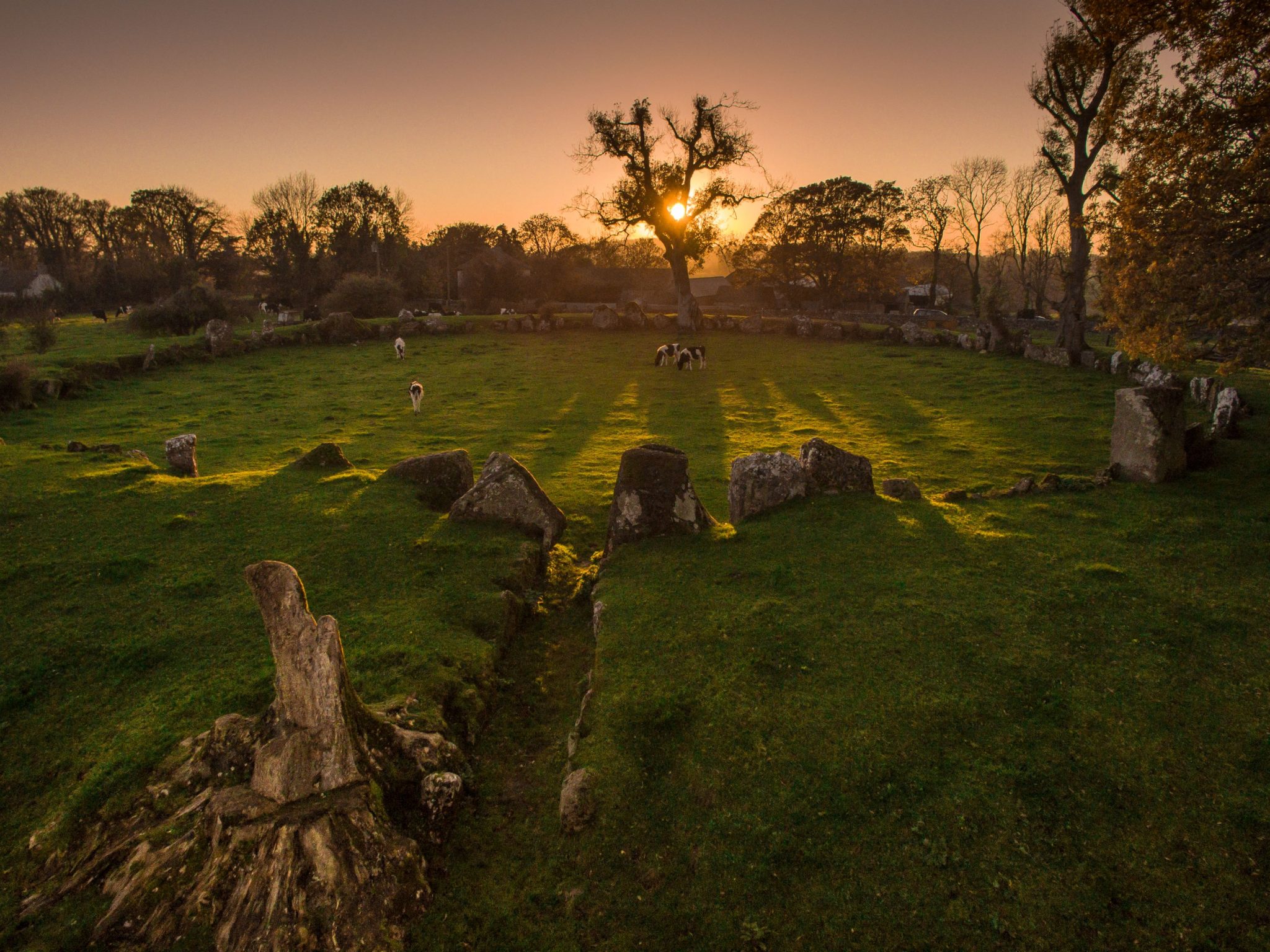
Explorer Tom Stone Circles in Loughgur hates tourists who wear flip-flops because the mud is personal and extremely mean-spirited.…
Cist in LoughgurCist · 901 yd

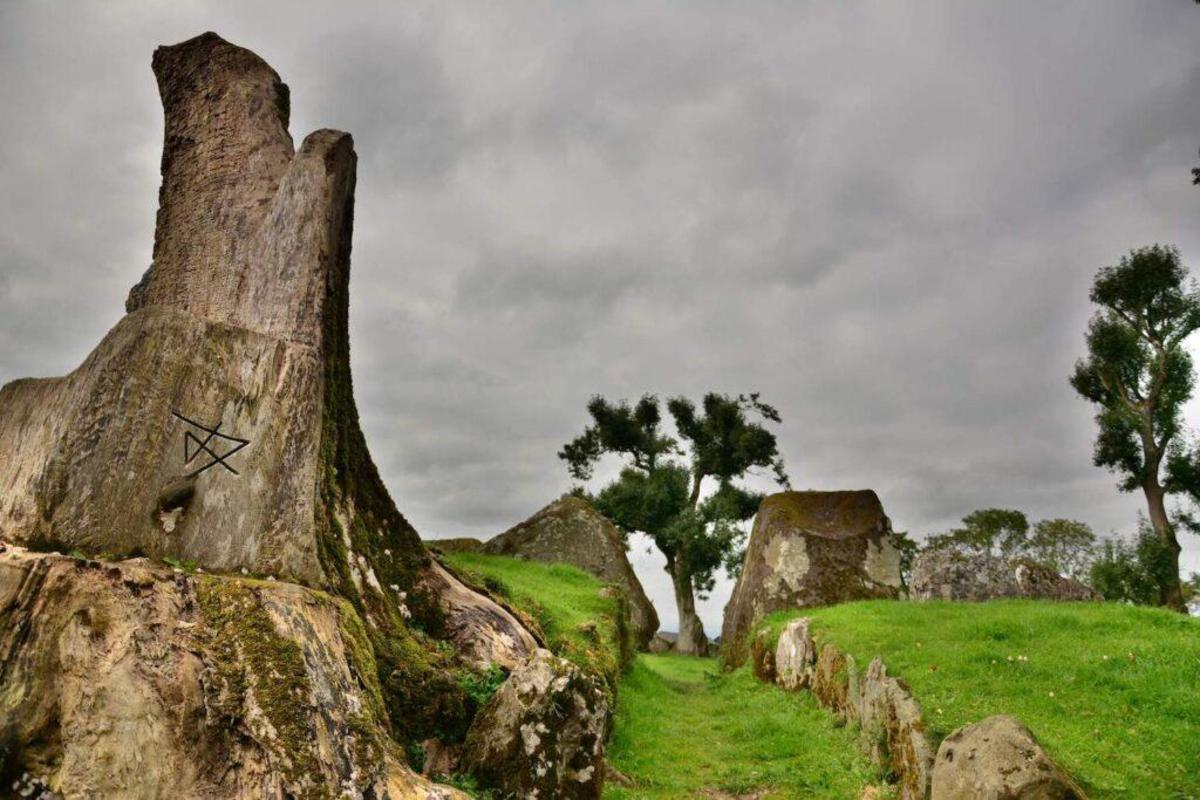
Explorer Tom Cist in Lough Gur loves 'Bohemian Rhapsody' because it fits right in with the rock opera vibe of being buried in a…
Anomalous stone group in Grange (smallcounty By.)Anomalous stone group · 925 yd

Explorer Tom Anomalous stone group in Grange is proud of being invisible to most people, which is a power move. It’s just magnetic…
Áine and Gearóid Iarla: Lough GurLegend location · 929 yd

Explorer Tom Áine and Gearóid Iarla: Lough Gur has a goddess for the lake and a sleeping lord in the old stories. I thought I was…

Giants GraveMegalithic tomb · 1042 yd

Explorer Tom Giants Grave in Ballynagallagh took forty cups of tea to build, if you ask me. The stones lean so hard they're…

Standing stone in LoughgurStanding stone · 1058 yd

Explorer Tom Standing stone in Lough Gur would survive Big Brother by just standing still and ignoring everyone who tries to talk to…
Grange Stone CircleArchaeological place · 1072 yd

Explorer Tom Grange Stone Circle has a forty-tonne stone that makes me reconsider every complaint I have made about carrying…

Dolmen (site of)Megalithic structure · 1120 yd

Explorer Tom Dolmen in Grange makes a weird clicking sound at night, probably because it’s missing a tooth. It sits next to a…

Fairy fort / stone ringfort in LoughgurFairy fort / stone ringfort · 1231 yd

Explorer Tom The matchmaker who worked at this Fairy fort in Loughgur never made it to the wedding, only the ring. It sits on rocky…

Stone Circles, HachuredStone circle, embanked · 1383 yd

Explorer Tom Stone Circles on the Hill of Knockroe are huddled together like old friends sharing secrets that nobody else quite…
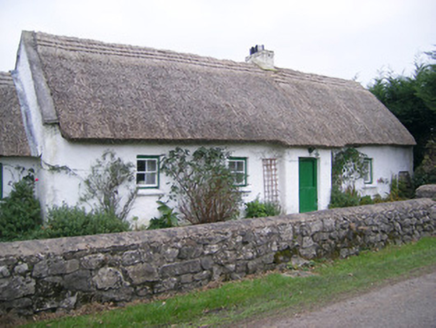
Maura's CottageHouse · 1450 yd

Explorer Tom Maura’s Cottage in Loughgur is thick on thatch and thin on privacy, so I suspect two fairies are currently fighting…

Ballynagallagh CottageHouse · 1655 yd

Explorer Tom Ballynagallagh Cottage thinks the road leading to it is an insult to its high-quality limestone sills, which is…

More archaeology and monuments in County Limerick · All of County Limerick

Add to this placeAdd a picture Add a detailed tip Add a story

Explore the map1,095,414 places to discover

Next place · or swipeStone Circles